


Report Overview
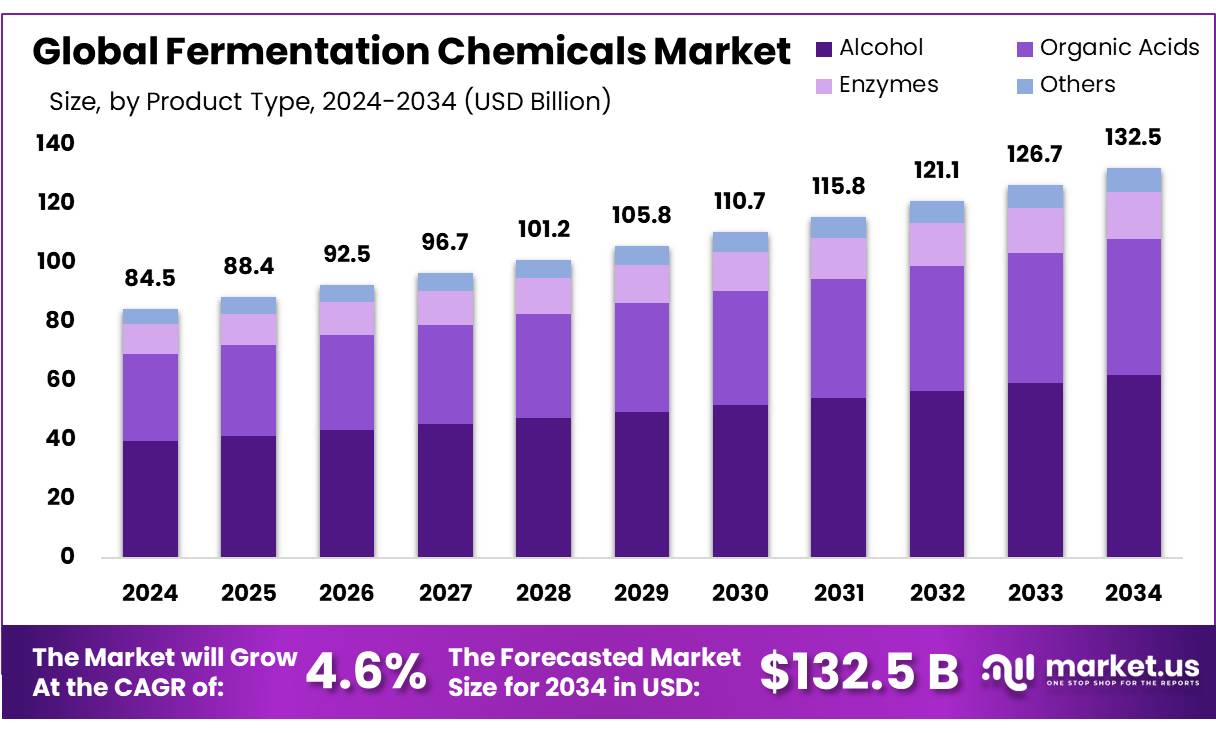
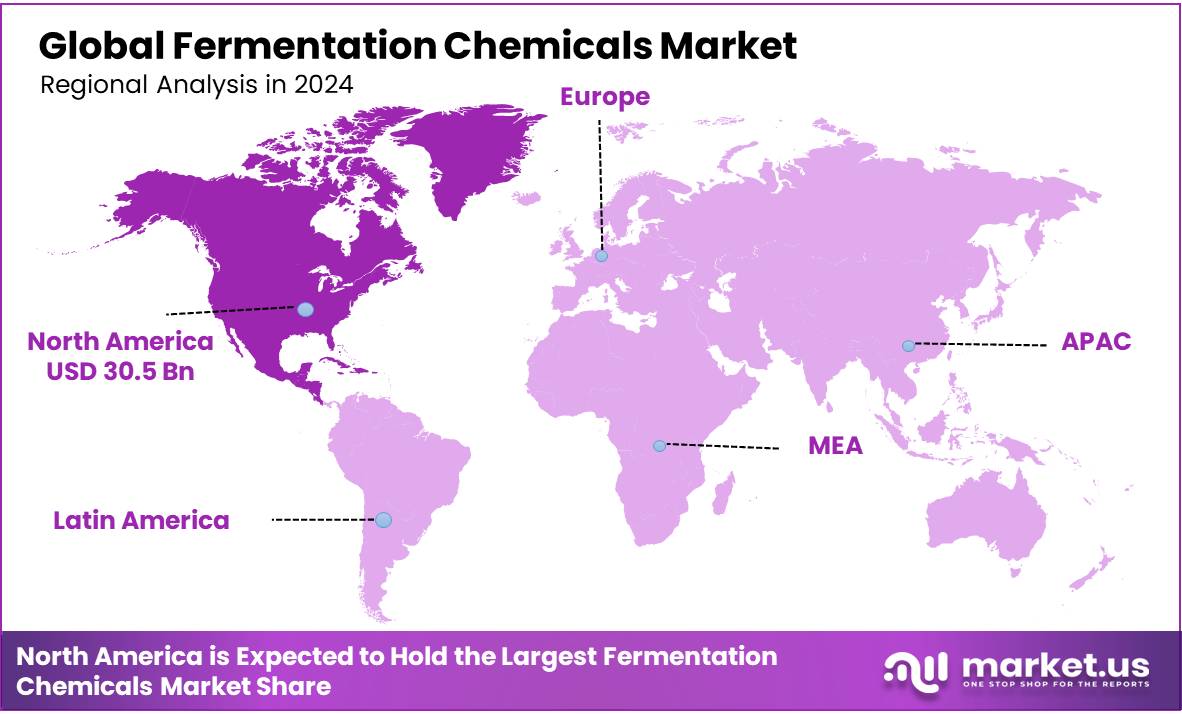
The Global Fermentation Chemicals Market size is expected to be worth around USD 132.5 Billion by 2034, from USD 84.5 Billion in 2024, growing at a CAGR of 4.6% during the forecast period from 2025 to 2034. In 2024, North America held a dominant market position, capturing more than a 36.2% share, holding USD 30.5 Billion revenue.
Fermentation chemicals are the various organic compounds produced during the metabolic process of fermentation, where microorganisms such as yeast and bacteria convert carbohydrates into energy in the absence of oxygen. Common fermentation chemicals include ethanol, lactic acid, acetic acid, and carbon dioxide. The fermentation chemical market is driven by various key industries such as food & beverage and energy & fuel. Ethanol is a key component in alcoholic beverages such as beer and wine, and is widely used in the energy sector as well.
In 2022, ethanol production in the world reached 28 billion gallons per year, of which the United States and Brazil comprised 80% of the production. Lactic acid is produced by bacteria and used in the production of yogurt, sauerkraut, and other fermented foods. Enzymes used in various pharmaceutical processes, such as digestion or drug delivery, are often derived from fermentation.
Additionally, fermentation chemicals are considered more environmentally friendly than petroleum chemicals as they are generally made from feedstock derived from sugars, biomass, and even waste gases. Despite the eco-friendliness of the chemicals, the market might face challenges like high production costs.
Key Takeaways
- The global fermentation chemicals market was valued at USD 84.5 billion in 2024.
- The global fermentation chemicals market is projected to grow at a CAGR of 4.6% and is estimated to reach USD 132.5 billion by 2034.
- In the product segment, alcohol dominates the market with around 46.8% of the total market share.
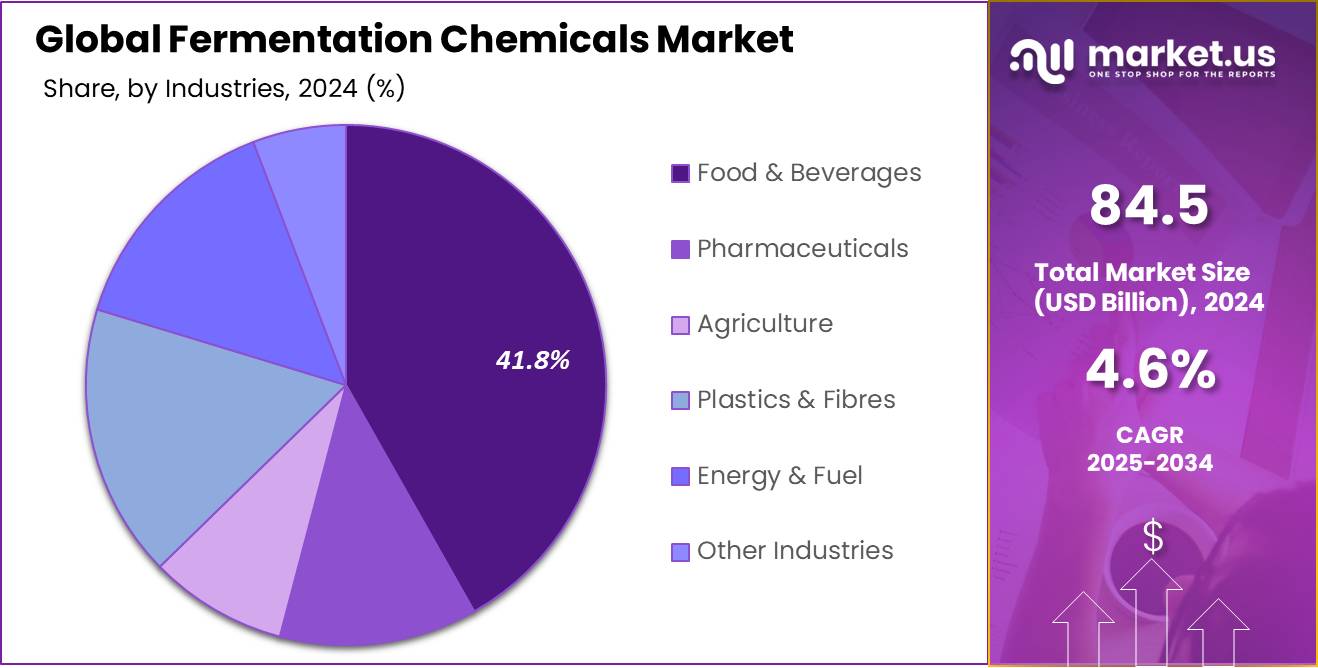
- Based on end-use industry, the market was led by the food & beverage industry with a substantial market share of 41.8% in 2024.
- In 2024, North America dominated the global fermentation chemicals market with a significant market share of 36.2%.
Product Type
Alcohols Dominate the Fermentation Chemicals Market due to Their Application in Food, Energy, and the Healthcare Industry.
The fermentation chemicals market is segmented based on product type as alcohols, organic acids, enzymes, and other chemicals. Alcoholsdominate the fermentation chemicals market with 46.8% of the total market share due to their application in food, energy, and the healthcare industry. Alcohol, particularly ethanol, plays a significant role in both the food and beverage industry. It serves as a key ingredient in alcoholic beverages such as beer, wine, and spirits. Beyond beverages, alcohol acts as a solvent, preservative, and processing agent in various food applications.
Additionally, ethanol and methanol are used in the energy industry as both fuel and fuel additives. Ethanol is a renewable fuel derived from biomass and is commonly blended with gasoline to improve air quality and reduce carbon emissions. Methanol can be used as a fuel in some engines and the production of biodiesel.
End-Use Industry Analysis
Food & Beverage Industry Dominates the Market with Around 41.8% Market Share.
Based on end-use industry, the market can be segregated into pharmaceuticals, food and beverages, agriculture, plastics & fibres, energy & fuel, and other industries. In 2024, the food & beverage industry dominated the global market with a market share of 41.8%, driven by its importance in preserving, enhancing flavor, and improving the nutritional quality of various perishable foods.
This trend is accompanied by the increasing importance of natural and minimally processed products in the food and beverage industries. These fermentation chemicals hinder the development of harmful microorganisms in the food being processed through the production of inhibitory compounds. Additionally, there are various enzymes created through fermentation that are used in various practices, such as baking and pickling.
Key Market Segments
By Product Type
- Alcohol
- Organic Acids
- Enzymes
- Others
By End-Use Industry
- Pharmaceuticals
- Food and Beverages
- Agriculture
- Plastics & Fibers
- Energy & Fuel
- Other Industries
Drivers
Expansion of the Food and Beverage Industry Drives the Fermentation Chemicals Market
One of the major drivers of the fermentation chemicals market is the expansion of the food & beverage sector. According to the National Health Institute, 5% to 40% of all food consumed by humans belongs to the fermented category. In recent years, diseases such as cardiovascular disease, type 2 diabetes, cancer, and allergies have been prevalent. For instance, according to the Heart Failure Epidemiology and Outcomes Statistics of 2024, approximately 6.7 million Americans over the age of 20 live with heart failure.
- Similarly, according to the U.S. Centers for Disease Control and Prevention, in 2024, more than 38 million Americans suffered from diabetes, and over 90% of them had type 2 diabetes. In this regard, scientific investigations have demonstrated that shifting to a diet that contains fermented foods can reduce the risk of non-communicable diseases.
Originally used to preserve foods, fermentation is now applied to improve their physicochemical, sensory, nutritional, and safety attributes. Fermented dairy, alcoholic beverages like wine and beer, fermented vegetables, fruits, and meats are all highly valuable due to their increased storage stability, reduced risk of food poisoning, and enhanced flavor. Additionally, the growth in the cosmetics industry also propels the market forward, as very well-known chemicals such as kojic acid, hyaluronic acid, and amino acids are the by-products of fermentation.
Restraints
High Production Costs to Pose a Significant Challenge to the Market of Fermentation Chemicals.
One significant challenge for the fermentation chemicals market is the high production costs required due to several factors. Fermentation relies on specific feedstocks such as sugars and starches, which can be costly and subject to supply chain fluctuations. Fermentation requires bioreactors, specialized equipment, and sterile environments, which can be expensive to establish and maintain.
Optimizing fermentation processes to achieve high titer (product concentration), rate (production speed), and yield (product amount per substrate) is crucial for cost-effectiveness. Improvements in these areas significantly impact the production costs of the chemicals. Additionally, the cost of separating and purifying the desired product from the fermentation broth can be substantial.
Opportunity
Product Innovation in the Energy Sector using Fermentation Chemicals is Anticipated to Create More Opportunities for Emerging Players.
Biofuels, such as bioethanol and biodiesel, which offer sustainable alternatives to gasoline and diesel, are generally derived from the fermentation process. Fermentation also enables the production of various chemicals from renewable resources, including platform chemicals, biopolymers, and other valuable compounds. As regulations in several countries regarding fossil fuels grow stringent, there is a demand for bio-based fuels in the energy sector. This demand for biofuels is anticipated to create more opportunities in the fermentation chemicals market.
During the production, some fermentation processes, such as gas fermentation, can capture and utilize carbon dioxide, further reducing greenhouse gas emissions. For instance, NREL researchers are developing a CO2-free fermentation technology that combines electrochemistry with fermentation to increase fuel yields and recycle carbon dioxide.
Similarly, in October 2024, LanzaTech, the carbon recycling company transforming above-ground carbon into sustainable fuels, chemicals, materials, and proteins, announced plans to develop a commercial-scale carbon capture and utilization facility in Norway. LanzaTech’s proprietary technology is a fermentation process that biologically converts carbon-rich gases into sustainable raw materials, such as ethanol for fuel.
Trends
Increased Demand for Plastic Alternatives such as Polylactic Acid
Several countries have implemented laws to reduce plastic pollution, increasing the demand for bio-based plastics such as Polylactic acid. Polylactic acid (PLA) is a biodegradable polymer synthesized from lactic acid, which is commonly produced through the fermentation of sugars derived from renewable resources like corn or sugarcane.
This fermentation process utilizes microorganisms to convert sugars into lactic acid, which is then purified and polymerized to form PLA. There is a noticeable shift towards using Polylactic acid (PLA) as a more sustainable alternative to traditional petroleum-based plastics, driven by growing environmental concerns and the increasing demand for biodegradable materials.
- For instance, according to the National Health Institute (NIH), in 2024, the global production of bio-plastics reached 2.43 million tons, with PLA leading the market. PLA is widely used in packaging materials such as bottles, containers, and blister packs, particularly in applications where biodegradability is a key requirement.
Geopolitical Impact Analysis
Geopolitical Tensions Between Several Countries Disrupt the Global Supply Chain, and New Tariffs Impact the Cost of Fermentation Chemicals
Geopolitical tensions, such as trade wars and political instability, significantly impact the global fermentation chemicals market by disrupting supply chains, increasing costs, and altering trade patterns. These tensions can lead to higher prices, reduced availability of certain products, and shifts in consumer behavior as they adapt to the changing landscape. The most affected trade due to geopolitical tensions in the fermentation chemicals market is the alcohol trade.
For instance, the U.S. implemented a 200% tariff on European alcoholic beverages, effectively shutting down most transatlantic wine and spirits trade. The EU’s planned 50% reciprocal tariff on American whiskey, and Canada maintains its boycott of American alcohol. Due to these changes, prices jump sharply for imported drinks, where European wines are seeing a 20-30% retail price increase, with severe shortages in categories like Champagne and Scotch whisky.
Additionally, geopolitical conflicts in the Middle East, especially tensions between Iran and Israel, are disrupting global supply chains and affecting the global chemical industry. Iran itself exports huge volumes of chemicals like methanol and urea; if those exports are disrupted, global supplies tighten and prices spike.
- For instance, in 2023, Iran exported US$ 554 M of methanol, making it the 6th largest exporter of methanol in the world. The main destinations of Iran’s methanol exports were India at US$ 277 million, China at US$ 277 million, Pakistan US$ 790 thousand, Armenia US$160 thousand, and Georgia at US$ 21.9 thousand. The manufacturers in these areas that depend on feedstock from Iran now have to deal with both rising costs and delivery delays.
Regional Analysis
North America Held the Largest Share of the Global Fermentation Chemicals Market.
In 2024, North America dominated the global fermentation chemicals market, holding about 36.2% of the market share, valued at approximately USD 30.5 billion. The dominance of the region is attributed to the expanding industries of healthcare and pharmaceuticals in the region. Additionally, the market in the region is also characterized by extensive investments in research and development for advancements in fermenting technology.
- For instance, in March 2025, Biotech firm Liberation Labs secured US$ 50.5 million to build a large-scale facility for precision-fermented foods in Richmond, Indiana. The Richmond factory is expected to have a 600,000-liter fermentation capacity and a fully dedicated downstream process.
Moreover, the presence of major players from the food, pharmaceutical, and cosmetics industries in the region creates opportunities for more participants in the market. Another prominent region in the market is Europe, which is driven by sustainable manufacturing processes and advancements in the energy sector. The support of the European Union’s regulations for bio-based chemicals and enzymes boosts the market.
Key Regions and Countries
- North America
- The US
- Canada
- Europe
- Germany
- France
- The UK
- Spain
- Italy
- Russia & CIS
- Rest of Europe
- APAC
- China
- Japan
- South Korea
- India
- ASEAN
- Rest of APAC
- Latin America
- Brazil
- Mexico
- Rest of Latin America
- Middle East & Africa
- GCC
- South Africa
- Rest of MEA
Key Players Analysis
Several market players, such as BASF SE, DuPont Nutrition & Biosciences, Valero, ADM, Ajinomoto, Cargill, Evonik Industries, and Futerro, invest in their research and development activities for product development in the competitive space of the fermentation chemicals market. Additionally, various companies are undergoing strategic changes such as investments, partnerships, and mergers to gain a competitive edge in the market.
BASF SE is a major player in the fermentation chemicals space, utilizing microorganisms to produce a variety of products. BASF is investing in new fermentation plants and technologies, including gas fermentation, to advance sustainable production and expand its product portfolio. The company emphasizes the sustainable aspects of fermentation, including the use of renewable resources and the potential for lowering carbon footprints.
Futerro is a company specializing in the production of lactic acid, lactide, and polylactic acid (PLA), a biodegradable and recyclable polymer. It uses fermentation to convert sugars (from sources like corn or wheat) into lactic acid. The company is known for its collaborations with companies like Tereos and Galactic to develop and produce lactic acid and PLA.
Key Development
- In May 2025, DMC Biotechnologies, a leading U.S.-based biomanufacturer, announced the commercial launch of fermented myo-inositol. According to the company, this is a next-generation product, which is available for health-focused brands and formulators seeking high-quality, naturally produced, sustainable solutions, with improved supply resilience.
- In May 2025, Amyris, Inc., a vertically integrated synthetic biology company and leading innovator in the field of industrial biotechnology, announced that it had acquired Ingredion’s 31% stake in the RealSweet Joint Venture to take full ownership of the industrial precision fermentation plant in Barra Bonita, Brazil.
The Major Players in The Industry
- BASF SE
- Amyris, Inc.
- DuPont Nutrition & Biosciences
- Valero
- ADM
- Hubei Artec Biotechnology Co., Ltd.
- Foodchem International Corporation
- Fengchen Group
- Ajinomoto Co., Inc.
- Cargill, Incorporated
- Evonik Industries AG
- Futerro
- DMC Biotechnologies
- Other Key Players









