


Report Overview
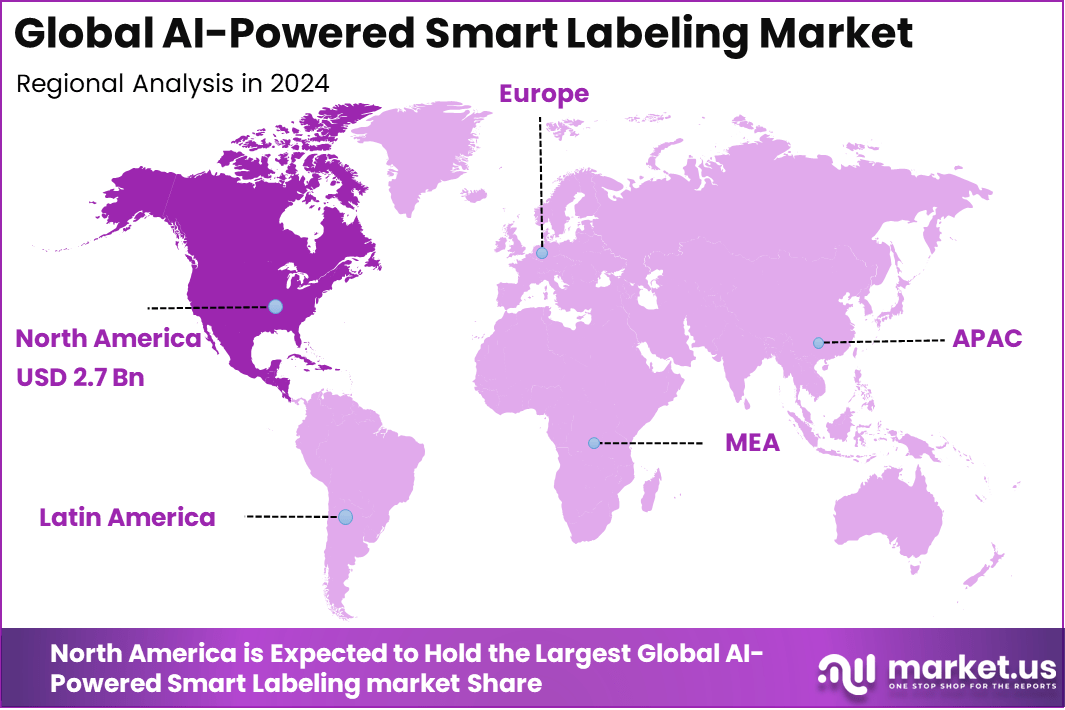
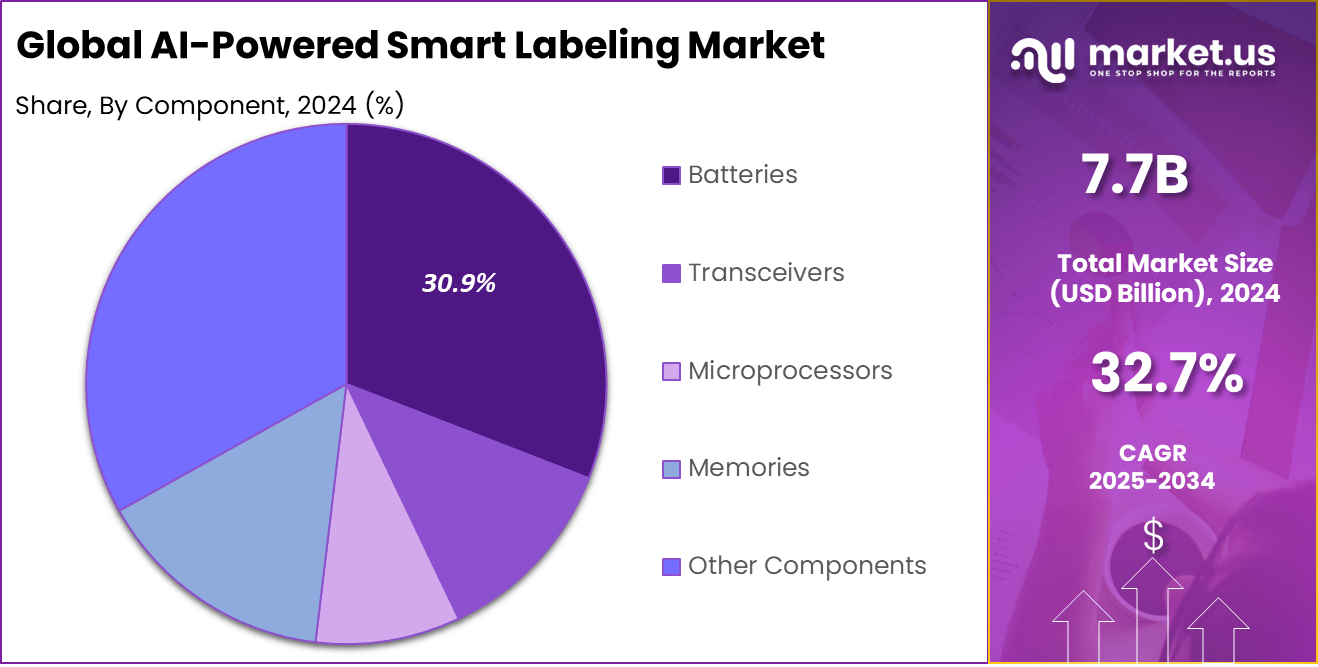
The Global AI-Powered Smart Labeling Market size is expected to be worth around USD 674.1 Billion By 2034, from USD 7.7 billion in 2024, growing at a CAGR of 32.7% during the forecast period from 2025 to 2034. In 2024, North America held a dominan market position, capturing more than a 35.8% share, holding USD 2.7 Billion revenue.
The AI-Powered Smart Labeling market is experiencing rapid expansion due to the rising demand for automation in packaging, supply chain monitoring, and product authentication. Organizations are increasingly relying on intelligent labeling solutions to enhance traceability, improve inventory management, and ensure compliance with evolving regulations.
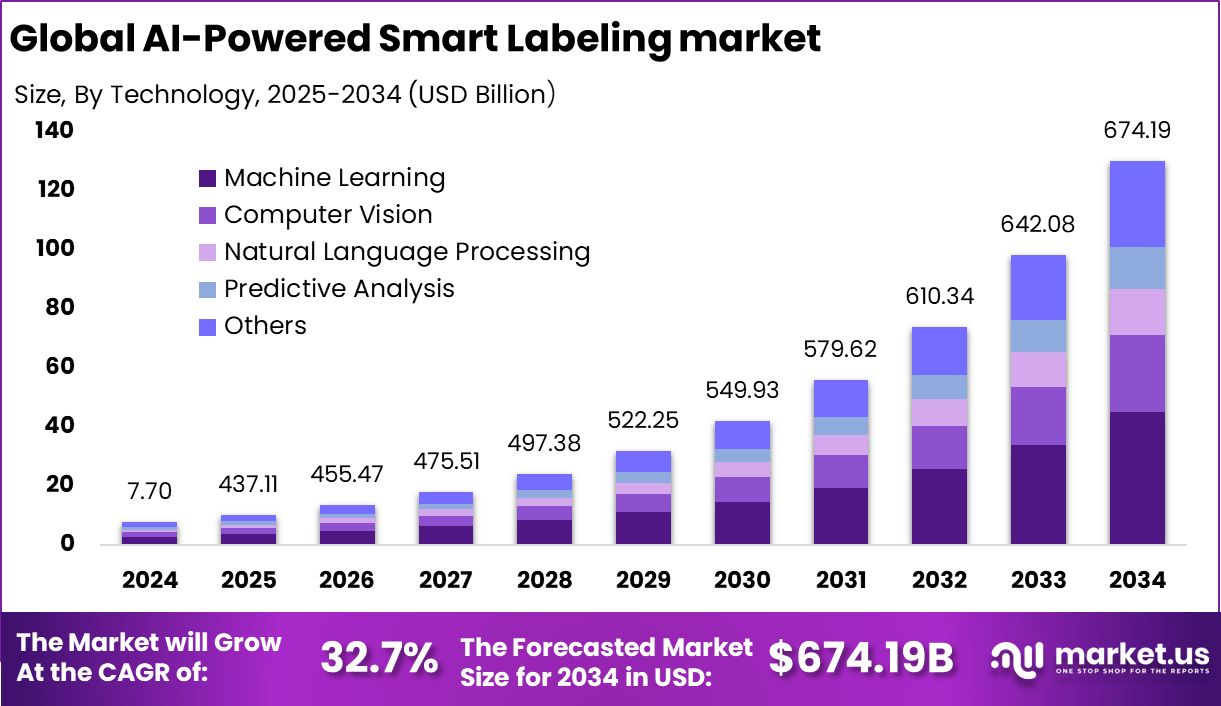
The growing need for real-time data insights and the ability to integrate labels with connected technologies such as IoT and machine learning has further accelerated adoption. Enhanced consumer expectations for transparency and sustainability are also driving greater investments in these advanced systems, strengthening their role in global industries.
Market Size and Growth
| Trend/Innovation | Description |
|---|---|
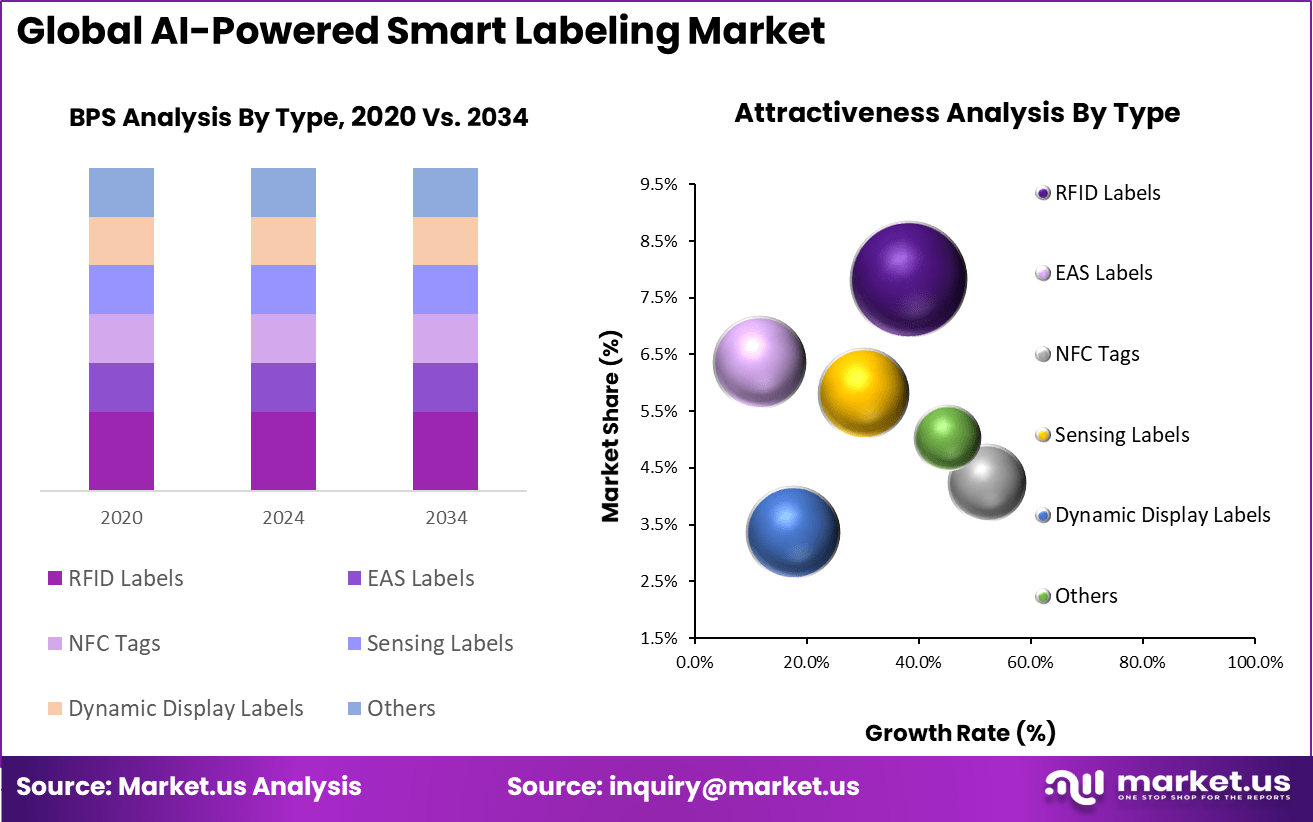
| Embedded Sensors (Temp/Gas/Humidity) | Labels include advanced sensors for freshness, cold-chain, or theft detection |
| Battery-Free & Printed Electronics | NFC/BLE/RFID tags with no battery, printable smart circuits, recyclable substrates |
| Blockchain-Linked Authenticity | AI and DLT for end-to-end product traceability and anti-counterfeiting (food, pharma, luxury) |
| Dynamic/Interactive Smart Labels | Real-time info, AR experiences, consumer data capture via smartphone scanning |
| Edge Intelligence & On-Label AI | Localized, real-time analytics or feedback from the label itself (not just cloud-based AI) |
Top Growth Factors
| Growth Factor | Description |
|---|---|
| Industry 4.0 & IoT Expansion | Need for real-time tracking, asset management, and supply chain visibility |
| Rise of Digital & Direct-to-Consumer | E-commerce, omnichannel retail automation, and customer engagement |
| Sustainability Pressures | Demand for eco-friendly, recyclable, and digitally traceable packaging |
| Regulatory & Traceability Mandates | Compliance for pharma, food safety, and anti-counterfeiting drives adoption |
| Data-Driven Decision Making | Brands seek actionable insights from smart label analytics |
Driver Analysis
Growing Need for Inventory Management and Product Transparency
A key driver for AI-powered smart labeling adoption is the increasing demand for efficient inventory management and transparent product information. Industries want to know exactly where products are at any time, both to reduce losses and respond faster to changes in demand. Smart labels powered by AI make this possible by automatically tracking goods, updating inventories, and sending alerts about low stock or potential product issues.
For consumers, there is also a rising desire to access detailed information about product origin, safety, and authenticity. Smart labeling satisfies this need at the point of purchase or even at home, building trust and loyalty by ensuring accurate, easily accessible information. This is particularly important in sensitive sectors like healthcare and food, where accuracy and reliability can be critical.
Restraint Analysis
High Upfront Costs and System Integration Barriers
Despite their advantages, adopting AI-powered smart labeling is not always straightforward. The main restraints are high initial costs for hardware, software, and staff training, along with technical hurdles in connecting new systems to existing operations. Small and mid-sized businesses in particular may find these barriers hard to overcome.
Implementing smart labels also demands clean, organized data; poor data quality or incompatible software can lead to errors and inefficiencies. Many organizations struggle with finding IT expertise or managing large-scale deployments, sometimes slowing or limiting the benefits of smart labeling technology.
Opportunity Analysis
Sustainable Materials and Advanced Label Design
Sustainability is emerging as an important opportunity for the smart labeling market. Companies are beginning to roll out labels made from biodegradable or recycled materials, along with liner-free and compostable adhesives to reduce waste. These choices appeal to both regulators and consumers, who are increasingly prioritizing eco-friendly products and responsible packaging.
Meanwhile, advances in digital printing and sensor technology allow for highly customized labels that can update information dynamically or track product freshness. Businesses that develop flexible, sustainable, and innovative labels stand to gain a competitive advantage as both environmental and customization demands grow.
Challenge Analysis
Data Privacy, Compliance, and Workforce Adaptation
A major challenge for AI-powered smart labeling systems is ensuring data security, privacy, and compliance, especially given the increased data collection involved. Regulations around data use in packaging and inventory management are getting stricter, and any mishandling can harm reputation or result in fines. Companies must constantly review and update practices to match local and international laws.
In addition, workforce adaptation is needed. Employees must shift from manual labeling tasks to managing and reviewing automated, data-led processes – often requiring new training and a cultural change within organizations. Managing this transition smoothly, while keeping operations efficient and secure, will remain a top priority for companies moving forward.
Competitive Analysis
Zebra Technologies Corporation, Alien Technology, and Impinj, Inc. represent the technology-focused group that has been driving innovation in the AI-powered smart labeling space. These companies have advanced capabilities in RFID, data capture, and automation, enabling them to provide scalable and efficient labeling solutions. Their focus has been on improving accuracy, speed, and real-time data visibility for industries such as retail, logistics, and healthcare.
MPI Labels, Invengo Information Technology, and Murata Manufacturing have contributed by developing specialized labeling systems that address niche industry needs. These companies emphasize durability, cost-effectiveness, and compliance with global standards. Their offerings integrate seamlessly with smart supply chain operations, ensuring efficient product tracking and inventory management.
NXP Semiconductors, Avery Dennison, CCL Industries, Smartrac, Mühlbauer Group, and Checkpoint Systems form the group of diversified leaders with strong portfolios. They have established themselves with integrated solutions covering tags, sensors, chips, and enterprise platforms. Their strategies include building eco-friendly products, enhancing interoperability, and supporting large-scale deployments.
Top Key Players in the Market
- Zebra Technologies Corporation
- Alien Technology, LLC.
- Impinj, Inc.
- MPI Labels
- Invengo Information Technology Co., Ltd.
- Murata Manufacturing Co., Ltd.
- NXP Semiconductors
- Avery Dennison Corporation
- CCL Industries Inc.
- Smartrac Technology GmbH
- Mühlbauer Group
- Checkpoint Systems, Inc
- Others
Recent Developments
Mergers and Acquisitions
- In March 2025, Elon Musk’s xAI acquired the social media platform X (formerly Twitter) for $33 billion. This move aims to combine xAI’s artificial intelligence capabilities with X’s global user base to improve labeling systems and content management at a large scale.
- Meta completed a $14 billion acquisition of Scale AI in June 2025. Scale AI is a well-known company in data labeling technology used in logistics, healthcare, and e-commerce.
- Salesforce made an $8 billion deal with Informatica in May 2025. This acquisition will help integrate smart labeling and data management across Salesforce’s cloud services.
Funding and Investment
- In the second quarter of 2024, global AI funding rose by 59% quarter-over-quarter, reaching $23.2 billion. Smart labeling startups received a significant portion of these investments.
- By the first quarter of 2025, AI funding had increased to $66.6 billion over more than 1,130 deals, with many focusing on smart labeling and related AI infrastructure.
- The average size of AI deals in 2024 rose to $23.5 million, a 28% increase from the previous year, driven partly by the growing adoption of smart labeling tools for supply chain management and error reduction.
New Product Launches and Technology Trends
- In 2025, smart labels that combine AI with Internet of Things (IoT) technologies like RFID and NFC gained greater adoption. These improved labels offer real-time updates, predictive analytics, and help automate processes in sectors such as healthcare, logistics, and retail.
- Companies including Avery Dennison, Zebra Technologies, and Identiv have increased efforts to develop smart labels with machine learning capabilities that adapt and learn over time.
- The food and beverage industry is adopting smart labels more widely to monitor freshness, provide origin traceability, and ensure regulatory compliance in 2024.

- 蓝茶市场(2026—2031)
0评论2026-09-15

- 泡沫材料市场(2026—2031)
0评论2026-09-15

- 重铬酸钠市场(2026—2031)
0评论2026-09-15

- 家族性淀粉样多发性神经病(FAP)市场(2026—2031)
0评论2026-09-15

- 次氯酸钙市场(2026—2031)
0评论2026-09-15

- 海上储能市场(2026—2031)
0评论2026-09-12

- 混凝土市场(2026—2031)
0评论2026-09-12

- 矫形器械市场(2026—2031)
0评论2026-09-12

- 木质素基树脂市场(2026—2031)
0评论2026-09-12

- 聚碳酸酯二元醇市场(2026—2031)
0评论2026-09-12