


Report Overview
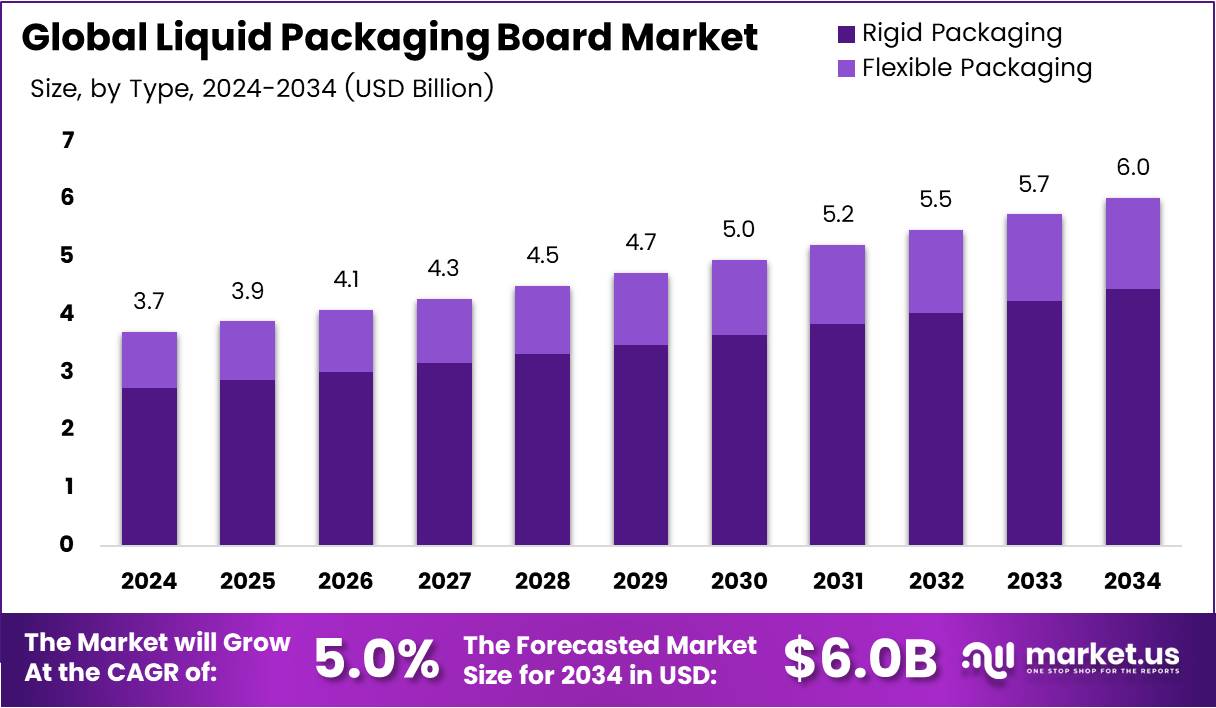
The Global Liquid Packaging Board Market size is expected to be worth around USD 6.0 Billion by 2034, from USD 3.7 Billion in 2024, growing at a CAGR of 5% during the forecast period from 2025 to 2034.
The Liquid Packaging Board (LPB) market is a significant segment within the packaging industry, focused on materials used to package liquid products such as beverages, dairy, and liquid foods. This sector is essential for ensuring the preservation, transportation, and consumer appeal of liquid goods. Over the past decade, the market has experienced steady growth due to rising demand for eco-friendly packaging and the increasing need for durable, lightweight packaging solutions.
In recent years, the market has seen a surge in demand for sustainable packaging materials. The growing environmental awareness among consumers and manufacturers has driven the adoption of Liquid Packaging Boards made from recycled and biodegradable materials. Companies are investing in greener technologies to meet regulatory requirements and satisfy consumer demand for environmentally friendly options. This shift towards sustainability presents both opportunities and challenges for the market.
Growth in the Liquid Packaging Board market is largely driven by the beverage and food sectors, where liquid products require effective packaging solutions. The expanding consumer preference for premium and eco-friendly packaging materials has opened up new avenues for market players.
Furthermore, the rising production of machine-made paper and paperboard, especially in countries like China, contributes to the availability of raw materials for LPB production. According to sources, from January to December 2024, China’s production of machine-made paper and paperboard reached 158.469 million tons, an 8.6% increase year-on-year.
The government also plays a crucial role in shaping the future of the Liquid Packaging Board market. Regulatory frameworks focused on sustainability and waste reduction have led to increased demand for recyclable packaging. As governments implement stricter environmental regulations, manufacturers are investing in research and development to meet these standards.
According to sources, 67% of consumers are willing to pay more for eco-friendly packaging, underscoring the growing importance of sustainable practices in the liquid supplement industry.
Key Takeaways
- The Global Liquid Packaging Board Market is expected to reach USD 6.0 Billion by 2034, growing at a CAGR of 5% from 2025 to 2034.
- Rigid Packaging holds a dominant position in the By Type Analysis segment with a 73.8% share in 2024.
- Virgin materials dominate the By Material Type Analysis segment with an 85.3% share in 2024.
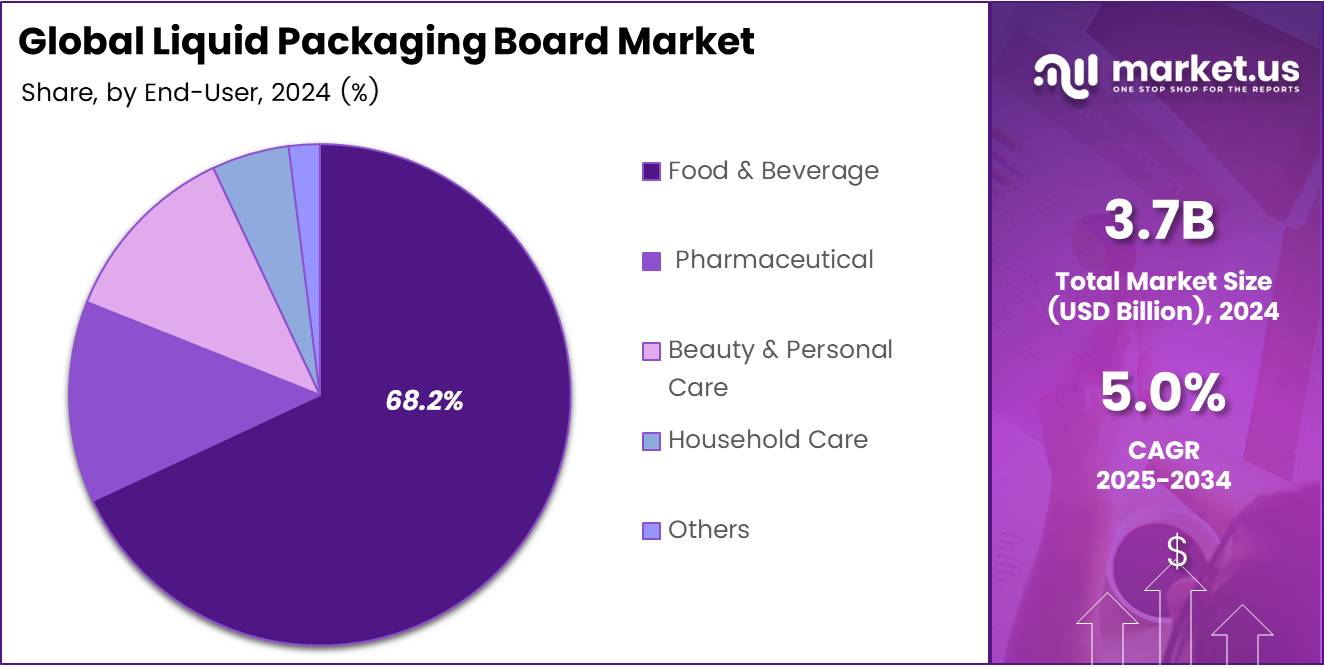
- Food & Beverage is the leading sector in By End-User Analysis with a 68.2% share in 2024.
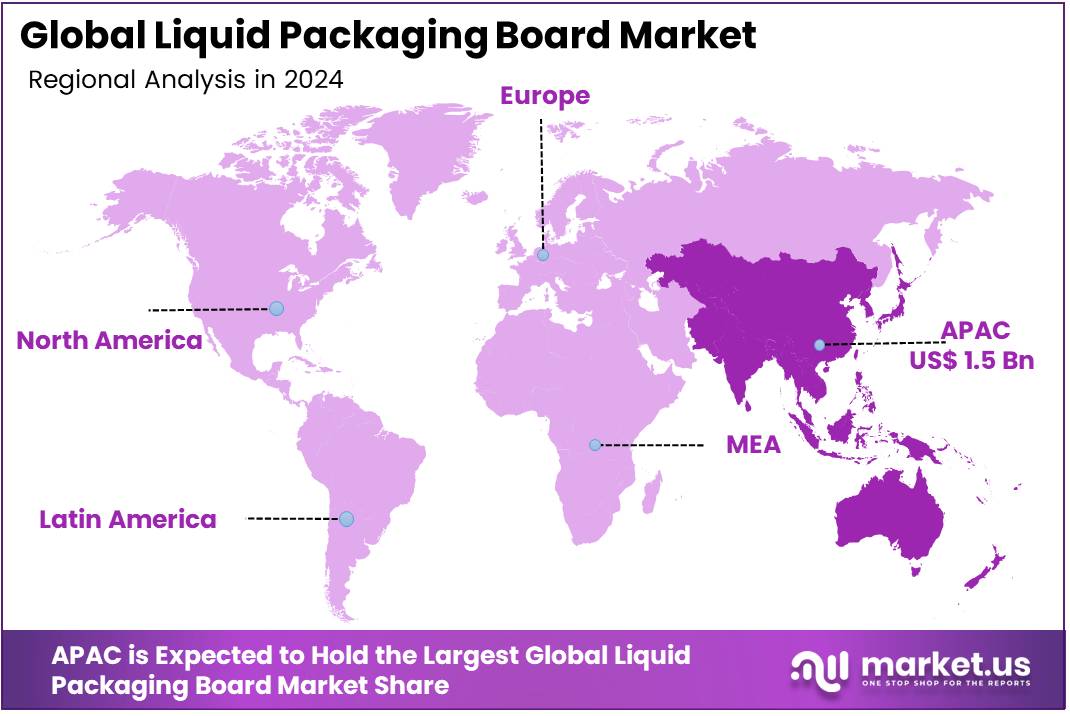
- The Asia Pacific region is expected to dominate the market in 2024, holding 42.7% of the global market, valued at USD 1.5 Billion.
Type Analysis
Rigid Packaging dominates with 73.8% due to its superior product protection and structural integrity.
In 2024, Rigid Packaging held a dominant market position in By Type Analysis segment of Liquid Packaging Board Market, with a 73.8% share. This substantial market leadership reflects the growing consumer preference for packaging solutions that offer enhanced product safety and extended shelf life.
Rigid packaging’s dominance stems from its exceptional barrier properties and structural stability, making it ideal for liquid products requiring long-term storage. The segment benefits from increasing demand across various industries, particularly in food and beverage applications where product integrity is paramount.
Flexible Packaging, while representing a smaller market share, continues to gain traction due to its lightweight nature and cost-effectiveness. However, rigid packaging maintains its competitive edge through superior protection against contamination and physical damage, ensuring product quality throughout the supply chain.
The rigid packaging segment’s growth is further supported by technological advancements in manufacturing processes and increasing consumer awareness about product safety standards.
Material Type Analysis
Virgin dominates with 85.3% due to its superior quality and food safety compliance.
In 2024, Virgin held a dominant market position in By Material Type Analysis segment of Liquid Packaging Board Market, with a 85.3% share. This overwhelming market dominance demonstrates the industry’s continued reliance on virgin materials for critical liquid packaging applications.
Virgin material’s supremacy is attributed to its pristine quality characteristics and consistent performance standards. The segment benefits from stringent food safety regulations that favor virgin materials over recycled alternatives, particularly in direct food contact applications.
The virgin material segment maintains its leadership through superior barrier properties, enhanced printability, and compliance with international food safety standards. These attributes make it the preferred choice for premium liquid packaging applications where product integrity cannot be compromised.
Recycled Paper represents a smaller market segment but is gradually gaining attention due to increasing environmental consciousness and sustainability initiatives. However, virgin materials continue to dominate due to regulatory requirements and quality specifications demanded by end-users across various industries.
End-User Analysis
Food & Beverage dominates with 68.2% due to extensive liquid product portfolio and consumer demand.
In 2024, Food & Beverage held a dominant market position in By End-User Analysis segment of Liquid Packaging Board Market, with a 68.2% share. This commanding market presence reflects the sector’s massive consumption of liquid packaging solutions across diverse product categories.
The Food & Beverage segment’s dominance is driven by the extensive range of liquid products including dairy items, juices, soups, and ready-to-drink beverages. This sector’s growth is fueled by changing consumer lifestyles, urbanization, and increasing demand for convenient packaging solutions.
Pharmaceutical represents a significant secondary market, driven by liquid medications and healthcare products requiring specialized packaging with enhanced barrier properties. Beauty & Personal Care continues expanding through liquid cosmetics, shampoos, and personal hygiene products.
Household Care maintains steady demand through liquid detergents, cleaning solutions, and home care products. The Others category encompasses various niche applications, contributing to overall market diversification and growth opportunities across multiple industrial sectors.
Key Market Segments
By Type
- Rigid Packaging
- Carton
- Paper board
- Glass
- Cans
- PET Bottles
- Others
- Flexible Packaging
- Film
- Pouches
- Bag-in-box
- Others
By Material Type
- Virgin
- Recycled Paper
By End-User
- Food & Beverage
- Pharmaceutical
- Beauty & Personal Care
- Household Care
- Others
Drivers
Rising Demand for Eco-friendly Packaging Solutions Drives Market Growth
The liquid packaging board market is experiencing strong growth due to increasing environmental awareness among consumers and businesses. More people are choosing products with sustainable packaging, pushing companies to adopt eco-friendly alternatives to traditional plastic containers.
Consumer preference for recyclable and biodegradable materials is reshaping the packaging industry. Liquid packaging boards made from renewable wood fibers offer an excellent solution, as they can be easily recycled and have a lower carbon footprint compared to plastic packaging options.
Technology improvements in liquid packaging board production are making these products more efficient and cost-effective. Advanced manufacturing processes now create boards with better barrier properties, longer shelf life, and improved printing capabilities, making them more attractive to beverage and food companies.
The rapid expansion of e-commerce and online grocery shopping is creating new opportunities for liquid packaging boards. These platforms require packaging that can withstand shipping and handling while maintaining product quality. Liquid packaging boards provide the durability needed for safe transportation while meeting sustainability requirements that online retailers increasingly demand.
Restraints
Stringent Regulatory Standards for Packaging Materials Limit Market Expansion
The liquid packaging board market faces significant challenges from strict government regulations regarding food safety and packaging materials. Regulatory bodies require extensive testing and certification processes before approving new packaging materials, which increases development costs and time-to-market for manufacturers.
These regulatory requirements vary across different countries and regions, creating complexity for global manufacturers who must meet multiple standards. The need for continuous compliance monitoring and documentation adds operational costs and can slow down product innovation in the liquid packaging board sector.
The availability of cheaper alternative packaging options presents another major restraint for market growth. Traditional plastic containers and glass bottles often cost less to produce and purchase, making them attractive to cost-conscious manufacturers and consumers despite environmental concerns.
Price-sensitive markets, particularly in developing countries, may choose lower-cost alternatives over liquid packaging boards. This creates pressure on liquid packaging board manufacturers to reduce costs while maintaining quality and sustainability benefits, which can be challenging to achieve without compromising product performance.
Growth Factors
Integration of Smart Packaging Technologies Creates New Market Opportunities
The integration of smart packaging technologies presents exciting growth opportunities for the liquid packaging board market. These advanced solutions include QR codes, NFC chips, and temperature indicators that provide consumers with product information, authenticity verification, and freshness monitoring capabilities.
Emerging markets with growing beverage consumption offer substantial expansion potential. Countries in Asia, Africa, and Latin America are experiencing rising disposable incomes and changing lifestyle patterns, leading to increased demand for packaged beverages and liquid foods that require sustainable packaging solutions.
The adoption of liquid packaging boards in non-food industries is opening new market segments. Industries such as chemicals, automotive fluids, and personal care products are exploring sustainable packaging alternatives, creating opportunities for specialized liquid packaging board applications beyond traditional food and beverage uses.
The growing trend toward personalized and customizable packaging is driving innovation in the liquid packaging board sector. Brands are seeking unique packaging designs that enhance consumer engagement and brand differentiation. Digital printing technologies enable cost-effective customization, making personalized liquid packaging boards more accessible to companies of all sizes.
Emerging Trends
Innovations in Barrier Coatings for Enhanced Product Preservation Drive Market Trends
Recent innovations in barrier coatings are revolutionizing the liquid packaging board industry by significantly improving product preservation capabilities. These advanced coatings provide better protection against moisture, oxygen, and light, extending shelf life and maintaining product quality without compromising recyclability.
The industry is experiencing a notable shift toward lightweight packaging solutions that reduce transportation costs and environmental impact. Manufacturers are developing thinner yet stronger liquid packaging boards that maintain structural integrity while using fewer raw materials, appealing to cost-conscious and environmentally aware businesses.
Digital printing adoption for packaging customization is transforming how brands approach liquid packaging board design. This technology allows for shorter production runs, faster turnaround times, and more creative packaging designs, enabling smaller companies to compete with larger brands through unique and eye-catching packaging solutions.
There is an increased focus on reducing plastic use in packaging across all industries. Liquid packaging boards are benefiting from this trend as companies seek alternatives to plastic-lined containers. New coating technologies are eliminating the need for plastic barriers while maintaining the functional properties required for liquid packaging applications.
Regional Analysis
Asia Pacific Dominates the Liquid Packaging Board Market with a Market Share of 42.7%, Valued at USD 1.5 Billion
In 2024, the Asia Pacific region is anticipated to dominate the global liquid packaging board market with a share of 42.7%, valued at USD 1.5 Billion. This dominance can be attributed to the region’s robust manufacturing sector and increasing demand for eco-friendly packaging solutions. The growth is also supported by the expanding e-commerce sector and increasing consumer preference for sustainable packaging options.
North America Liquid Packaging Board Market Trends
North America is expected to hold a significant share of the liquid packaging board market due to rising consumer awareness regarding sustainability and eco-friendly packaging. The U.S. is a key contributor, driven by stringent environmental regulations and a preference for recyclable materials in the packaging industry. The region is projected to experience steady growth as industries adopt more sustainable packaging solutions.
Europe Liquid Packaging Board Market Trends
Europe is projected to witness strong growth in the liquid packaging board market, driven by increasing consumer demand for recyclable and biodegradable packaging materials. The region’s high focus on environmental sustainability, along with stringent regulations, supports the adoption of eco-friendly packaging solutions. Countries such as Germany and the U.K. are expected to contribute significantly to this growth.
Latin America Liquid Packaging Board Market Trends
In Latin America, the liquid packaging board market is expected to experience moderate growth, supported by the increasing demand for sustainable packaging in food and beverage industries. As environmental awareness rises, manufacturers in the region are expected to adopt more eco-friendly packaging options. However, the market’s growth will be slower compared to other regions due to limited infrastructure in some countries.
Middle East and Africa Liquid Packaging Board Market Trends
The liquid packaging board market in the Middle East and Africa is projected to grow gradually, driven by the increasing demand for packaged beverages and food products. The region is also experiencing a shift towards more sustainable packaging solutions, though the growth rate may be limited by regional economic challenges and competition from alternative packaging materials.
Key Regions and Countries
North America
- US
- Canada
Europe
- Germany
- France
- The UK
- Spain
- Italy
- Rest of Europe
Asia Pacific
- China
- Japan
- South Korea
- India
- Australia
- Rest of APAC
Latin America
- Brazil
- Mexico
- Rest of Latin America
Middle East & Africa
- GCC
- South Africa
- Rest of MEA
Key Liquid Packaging Board Company Insights
The global Liquid Packaging Board market is led by several influential players, each contributing to the market’s expansion and innovation. Billerudkorsnas AB continues to establish its dominance by focusing on sustainable packaging solutions, offering a range of environmentally friendly liquid packaging boards. The company’s commitment to reducing carbon footprints makes it a key player in the market.
Elopak AS remains a top competitor, recognized for its advanced aseptic packaging solutions. The company’s robust distribution network and cutting-edge packaging technologies are crucial in catering to the growing demand for convenient, long-shelf-life packaging options, further strengthening its position in the market.
Greatview Aseptic Packaging Co. Ltd has significantly impacted the market with its innovative and cost-effective aseptic liquid packaging products. The company is highly regarded for its efficient supply chain and its focus on expanding its footprint in emerging markets, which positions it as a growing force in the industry.
IPI SRL stands out for its expertise in providing high-quality paperboard solutions for liquid packaging. The company’s strategic investments in sustainable production methods and its focus on enhancing product quality ensure its continued success in the liquid packaging board market.
These companies, driven by a commitment to innovation, sustainability, and quality, are shaping the future of the liquid packaging board sector, addressing the demand for eco-friendly solutions while ensuring the reliability and efficiency of packaging materials.
Top Key Players in the Market
- Billerudkorsnas AB
- Elopak AS
- Greatview Aseptic Packaging Co. Ltd
- IPI SRL
- Mondi PLC
- Nippon Paper Industries Co. Ltd
- Refresco Group NV
- SIG Global Pte. Ltd
- Smurfit Kappa
- Tetra Laval International SA
Recent Developments
- In April 2025, Reusables.com raised a $3.6M funding round to address the growing $100B+ packaging waste opportunity. The company also launched a partnership with the University of California to drive sustainability efforts in packaging solutions.
- In October 2024, Suzano successfully completed the acquisition of two U.S. industrial facilities from Pactiv Evergreen. This strategic move is aimed at expanding Suzano’s footprint in the North American market for sustainable packaging solutions.
- In September 2024, RMB Corvest acquired stakes in Nampak businesses located in South Africa, Zambia, and Malawi. This acquisition strengthens RMB Corvest’s presence in the packaging sector across the African continent.









