


Report Overview
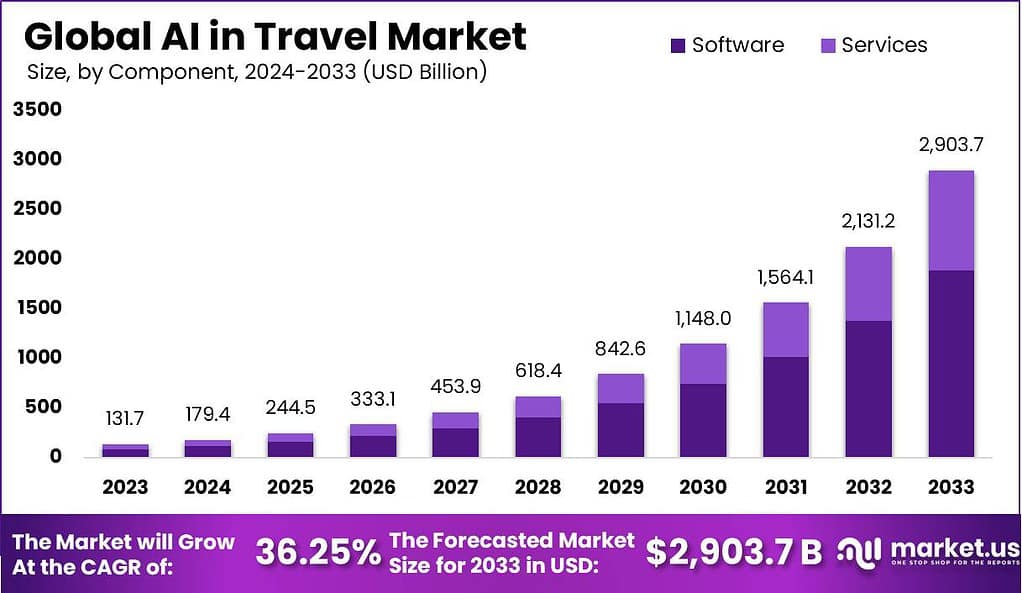
The Global AI in Travel Market size is expected to be worth around USD 2,903.7 Billion By 2033, from USD 131.7 Billion in 2023, growing at a CAGR of 36.25% during the forecast period from 2024 to 2033.
The AI in Travel Market involves the use of artificial intelligence technologies to transform various aspects of the travel and tourism industry. This includes personalizing travel experiences, optimizing booking and pricing, enhancing customer service with AI-driven chatbots and virtual assistants, and improving operational efficiency through advanced data analytics.
AI tools analyze traveler behavior, preferences, and historical data to deliver tailored recommendations and dynamic offers, creating more engaging and customized journeys. As a result, AI is becoming fundamental to improving service quality, boosting customer satisfaction, and driving revenue growth in the travel sector.
Several top driving factors fuel this market. The growing demand for personalized and seamless travel experiences pushes service providers to implement AI tools that can analyze vast datasets to predict traveler preferences and behaviors. Rising internet penetration and smartphone adoption enable easy access to AI-powered platforms, accelerating consumer engagement.
According to WorldMetrics, AI-enabled virtual tours have experienced a 45% increase in usage during the pandemic-related travel restrictions, showcasing the potential of AI to enhance the traveler experience. Furthermore, industry experts estimate that AI could help the travel industry recover $400 billion in lost revenue due to the COVID-19 pandemic. Additionally, AI chatbots in the industry are predicted to produce annual savings of $0.50 billion by 2023, highlighting the cost-saving benefits of AI-powered customer service solutions.
Interestingly, 75% of travelers trust AI for accommodation planning, indicating a growing acceptance of AI-driven recommendations and decision-making in the travel planning process. Additionally, 40% of US adults are interested in AI-powered virtual travel agents, demonstrating the demand for personalized and intelligent travel planning assistance.
However, it is important to note that 37% of customers in the travel industry still prefer human interaction to artificial intelligence technologies, underscoring the importance of striking a balance between AI-driven solutions and human-centric services.
Looking ahead, the industry is poised for further AI-driven advancements. AI-driven automated travel bookings are expected to reach 2.9 billion by 2023, and AI can reduce flight disruption costs, bringing about 16% savings – approximately $265 billion worldwide. Airlines that invest in AI could increase their operational efficiency by 75%, while more than 50% of hoteliers are prioritizing investments in AI to improve operational efficiency.
Furthermore, around 36% of corporate travel decision-makers have invested in AI, expecting it would greatly enhance traveler experience. Additionally, almost 70% of travel agencies believe travel planning can be completely automated using AI, and AI can reduce the time spent on travel research and bookings by over 50%.
Key Takeaways
- The AI in Travel Market size is estimated to reach USD 2,903.7 billion in the year 2033 with a CAGR of 36.25% during the forecast period and was valued at USD 131.7 billion in the year 2023.
- In 2023, the software segment held a dominant market position in the AI in Travel Market, capturing more than a 65% share.
- In 2023, the cloud-based segment held a dominant market position in the AI in Travel Market, capturing more than a 61% share.
- In 2023, the customer service segment held a dominant market position in the AI in Travel Market, capturing more than a 25.1% share.
- In 2023, North America held a dominant market position, capturing more than a 34.5% share with revenues amounting to USD 45.4 billion.
Component Analysis
In 2023, the software segment held a dominant market position in the AI in Travel Market, capturing more than a 65% share. This segment’s leadership can be attributed to the extensive adoption of AI-driven software solutions by travel companies seeking to enhance operational efficiency and customer experience.
These software solutions encompass a wide range of applications, including booking management systems, personalized travel recommendation engines, and dynamic pricing tools. The ability of AI software to process large volumes of data in real time, provide insights, and automate routine tasks has significantly contributed to its widespread acceptance and usage in the travel industry.
The dominance of the software segment is also driven by the growing need for advanced analytics and decision-making tools that help travel companies optimize their operations. AI-powered software enables businesses to analyze customer behavior, predict travel trends, and tailor their services to meet individual preferences, thereby improving customer satisfaction and loyalty.
Additionally, the integration of AI in customer service, through chatbots and virtual assistants, has revolutionized the way travel companies interact with their customers, providing immediate support and enhancing the overall travel experience.
Deployment Mode Analysis
In 2023, the cloud-based segment held a dominant market position in the AI in Travel Market, capturing more than a 61% share. This segment’s leadership is driven by the increasing preference for cloud solutions due to their scalability, cost-efficiency, and accessibility.
Cloud-based AI solutions offer travel companies the flexibility to scale their operations quickly and efficiently without the need for significant upfront investments in IT infrastructure. This advantage is particularly beneficial for small and medium-sized enterprises (SMEs) in the travel industry, enabling them to compete with larger players by leveraging advanced AI technologies.
The popularity of the cloud-based segment is further fuelled by its ability to provide real-time data processing and analytics, which are crucial for delivering personalized travel experiences and optimizing operations. With cloud-based AI, travel companies can access and analyze vast amounts of data from various sources, including customer interactions, booking patterns, and market trends.
This real-time capability allows for more accurate predictions, tailored recommendations, and dynamic pricing strategies, enhancing customer satisfaction and operational efficiency. Additionally, cloud-based solutions offer seamless integration with other digital tools and platforms, facilitating a more cohesive and streamlined workflow for travel businesses.

Application Analysis
In 2023, the customer service segment held a dominant market position in the AI in Travel Market, capturing more than a 25.1% share. This segment’s prominence is primarily due to the growing demand for enhanced customer interactions and support in the travel industry.
AI-powered customer service solutions, such as chatbots and virtual assistants, have revolutionized the way travel companies engage with their customers, providing instant responses and 24/7 support. These AI tools are capable of handling a wide range of queries, from booking inquiries to travel itinerary updates, significantly improving the efficiency and responsiveness of customer service operations.
The customer service segment’s leadership is also driven by its ability to deliver personalized experiences. AI systems can analyze customer data to understand preferences and behaviors, enabling travel companies to offer tailored recommendations and solutions. This level of personalization enhances customer satisfaction and loyalty, as travelers feel more valued and understood.
Additionally, AI-powered customer service tools help reduce operational costs by automating routine tasks, allowing human agents to focus on more complex and high-value interactions. This not only improves the overall efficiency of customer service departments but also contributes to higher levels of customer retention and repeat business.
Key Market Segments
By Component
- Software
- Services
By Deployment mode
- On-premises
- Cloud-based
By Application
- Customer Service
- Booking and Reservations
- Travel Planning and Personalization
- Marketing and Advertising
- Operations Management
- Security and Fraud Detection
Driver
Enhanced Customer Experience Through AI Personalization
Artificial intelligence (AI) significantly drives growth in the travel market by enabling highly personalized travel experiences, increasing customer satisfaction and retention. AI-powered travel assistants, such as Roam Around and Copilot2trip, offer tailored travel recommendations based on user preferences, budget, and travel style.
These tools help plan trips efficiently by providing real-time updates on flight schedules, hotel availability, and local attractions, thus making travel planning much simpler and more enjoyable for consumers. This level of personalization not only enhances the travel experience but also encourages repeat business, positioning AI as a pivotal tool in the travel industry’s growth.
Restraint
High Costs and Complexity of Implementing AI Systems
Despite its benefits, the implementation of AI in the travel industry is often hampered by high initial costs and the complexity of integrating sophisticated AI systems with existing IT infrastructure. The expenses associated with AI development, including data collection, processing, and analysis, as well as the need for continuous maintenance and updates, can be substantial. Moreover, the integration of AI requires skilled personnel and significant time investment, which can be a major restraint for small to medium enterprises (SMEs) that lack the necessary resources.
Opportunity
AI-Driven Operational Efficiency and Revenue Management
AI offers vast opportunities for operational efficiencies and enhanced revenue management in the travel industry. Advanced AI solutions enable businesses to optimize pricing, manage inventory, and streamline operations. For instance, AI can automate and enhance revenue management for hoteliers, helping to adjust prices dynamically based on demand forecasts.
This not only maximizes revenue but also improves resource allocation, making operations more efficient and responsive to market conditions. The adoption of AI thus opens up new avenues for revenue growth and operational excellence in the travel sector.
Challenge
Keeping Pace with Rapid Technological Advancements
One of the significant challenges facing the travel industry in its adoption of AI is keeping pace with rapid technological advancements. The fast-evolving nature of AI technologies requires continuous learning and adaptation. Companies must regularly update their systems and train their staff to leverage the latest AI tools effectively.
Additionally, there’s the challenge of ensuring the interoperability of new AI technologies with existing systems, which can be both costly and time-consuming. Staying current with AI advancements is crucial for companies to remain competitive and to fully realize the potential benefits of AI in travel.
Growth Factors
- Enhanced Customer Experience: AI-driven chatbots and virtual assistants provide 24/7 customer support, improving response times and customer satisfaction. Personalization algorithms offer tailored travel recommendations, itineraries, and promotions based on user preferences and behavior.
- Operational Efficiency: Automation of routine tasks such as booking management, check-ins, and customer inquiries reduces operational costs and streamlines processes. Predictive analytics optimize inventory and resource management, ensuring better allocation of assets and reducing wastage.
- Data-Driven Decision-Making: Advanced data analytics offer insights into customer behavior, market trends, and operational performance, aiding in strategic planning and decision-making. Real-time data processing enables dynamic pricing strategies, enhancing revenue management and profitability.
- Cost Reduction: AI-powered automation decreases the need for human intervention in repetitive tasks, lowering labor costs. Efficient resource management through AI reduces operational overheads and improves profitability.
- Improved Safety and Security: AI systems enhance security through real-time monitoring and threat detection, ensuring safer travel experiences. Facial recognition and biometric systems streamline security checks and reduce waiting times at airports and other travel hubs.
- Sustainability Initiatives: AI optimizes route planning for transportation, reducing fuel consumption and emissions, and contributing to environmental sustainability. Efficient resource utilization through AI helps in reducing waste and promoting eco-friendly travel practices.
- Market Competitiveness: The adoption of AI technologies provides a competitive edge by offering innovative services and superior customer experiences. Companies leveraging AI can adapt more quickly to market changes and consumer demands, maintaining relevance and competitiveness in a dynamic market.
Latest Trends
- Personalized Travel Experiences: AI-driven algorithms analyze customer data to offer personalized travel recommendations, itineraries, and promotional offers tailored to individual preferences.
- AI-Powered Chatbots and Virtual Assistants: Increasing use of AI chatbots for 24/7 customer support, handling inquiries, and bookings, and providing real-time information, enhancing customer service efficiency.
- Predictive Analytics for Demand Forecasting: Utilization of predictive analytics to forecast travel demand, optimize pricing strategies, and manage inventory more effectively, leading to improved revenue management.
- Facial Recognition and Biometric Systems: Implementation of facial recognition and biometric systems for seamless check-ins, security checks, and border control, reducing wait times and enhancing security.
- AI-Enhanced Travel Planning: Integration of AI in travel planning apps to provide dynamic recommendations, real-time updates, and travel tips based on current conditions and user preferences.
- Smart Luggage and Tracking Systems: Development of smart luggage equipped with AI-powered tracking systems, ensuring real-time monitoring and reducing the risk of lost baggage.
Regional Analysis
In 2023, North America held a dominant market position, capturing more than a 34.5% share with revenues amounting to USD 45.4 billion. This leadership can be attributed to several key factors. Primarily, the region benefits from the presence of major technology giants and pioneering startups dedicated to integrating AI across various sectors, including travel.
Companies such as Google, IBM, and Microsoft have been at the forefront, investing significantly in AI to optimize travel services, from personalized travel planning to real-time customer support and intelligent management systems. Furthermore, the high adoption rate of advanced technologies by consumers and businesses in North America has fostered a conducive environment for AI applications in the travel sector.
The region’s strong economy and high consumer spending power have encouraged travel agencies and related businesses to adopt AI-driven solutions for enhancing customer experience and operational efficiency. This is supported by data indicating a surge in investment towards AI in customer relationship management (CRM) tools and predictive analytics in the travel industry, aimed at improving personalized offerings and demand forecasting.

Key Regions and Countries
- North America
- US
- Canada
- Europe
- Germany
- France
- The UK
- Spain
- Italy
- Russia
- Netherlands
- Rest of Europe
- Asia Pacific
- China
- Japan
- South Korea
- India
- Australia
- Singapore
- Thailand
- Vietnam
- Rest of APAC
- Latin America
- Brazil
- Mexico
- Rest of Latin America
- Middle East & Africa
- South Africa
- Saudi Arabia
- UAE
- Rest of MEA
Key Players Analysis
In the rapidly evolving AI in Travel Market, several key players are distinguishing themselves by pioneering innovative AI technologies to transform travel experiences. Amadeus, a leader in providing advanced technology solutions for the global travel industry, continues to innovate by developing AI-driven tools that optimize pricing, booking, and personalized services. Expedia Group utilizes AI to refine search engine algorithms and enhance personalized travel recommendations, significantly improving user satisfaction and booking conversion rates.
Booking.com stands out for its use of AI in handling massive data sets to provide travelers with tailored recommendations and dynamic pricing. Sabre integrates AI to improve operational efficiencies for airlines and hotels, offering solutions that predict travel preferences and automate booking processes. Airbnb leverages AI to enhance user experience by personalizing search results and providing price optimization advice to hosts.
Travel search engines like Skyscanner and Kayak employ AI to offer real-time pricing, automated customer service, and predictive analytics, helping users find the best possible travel options. TripActions, Hopper, and TravelPerk are revolutionizing business and leisure travel by utilizing AI for everything from flight bookings to expense management, ensuring a seamless travel planning experience.
Agoda and Google Travel are noteworthy for their sophisticated use of AI to analyze user behavior and preferences to deliver fast, personalized travel solutions. Cleartrip and MakeMyTrip are prominent in the Asian market, employing AI to enhance booking systems and provide customized travel packages. Lastly, CWT specializes in corporate travel management, using AI to automate travel policies and compliance, and to forecast travel risks.
Top Key Players in the Market
- Amadeus
- Expedia Group
- com
- Sabre
- Airbnb
- Skyscanner
- Kayak
- TripActions
- Hopper
- TravelPerk
- Agoda
- Google Travel
- Cleartrip
- MakeMyTrip
- CWT
- Other Key Players
Recent Developments
- February 2024: Expedia Group, along with Booking Holdings, eDreams Odigeo, and other major travel companies, formed Global Travel Tech to foster innovation and competitiveness, particularly focusing on AI applications.
- In 2023, Airbnb acquired GamePlanner.AI, a startup specializing in AI-driven travel planning. This acquisition is part of Airbnb’s strategy to enhance its AI capabilities and provide more personalized travel experiences to its users.
- September 2023: TravelPerk introduced an AI-powered travel policy compliance feature to help companies manage travel bookings in line with their corporate policies.
- August 2023: Kayak introduced an AI chatbot integrated into their mobile app to assist users with booking queries and travel recommendations.
- April 2023: Booking.com launched an AI-based travel planner that offers personalized itineraries by analyzing user preferences and past travel behaviors.
- June 2023: Sabre introduced an AI-powered forecasting tool to help travel agencies predict travel demand and optimize inventory management.









