


Report Overview
The Global Extended Warranty Market size is expected to be worth around USD 339.3 billion by 2035, from USD 155.7 Billion in 2025, growing at a CAGR of 8.1% during the forecast period from 2026 to 2035.
The extended warranty market represents the ecosystem of service contracts that provide repair, replacement, or maintenance coverage beyond standard manufacturer warranties. From an analyst viewpoint, this market addresses post-purchase risk mitigation for consumers and enterprises. Consequently, it supports predictable ownership costs while strengthening long-term product value assurance across electronics, appliances, and automotive categories.
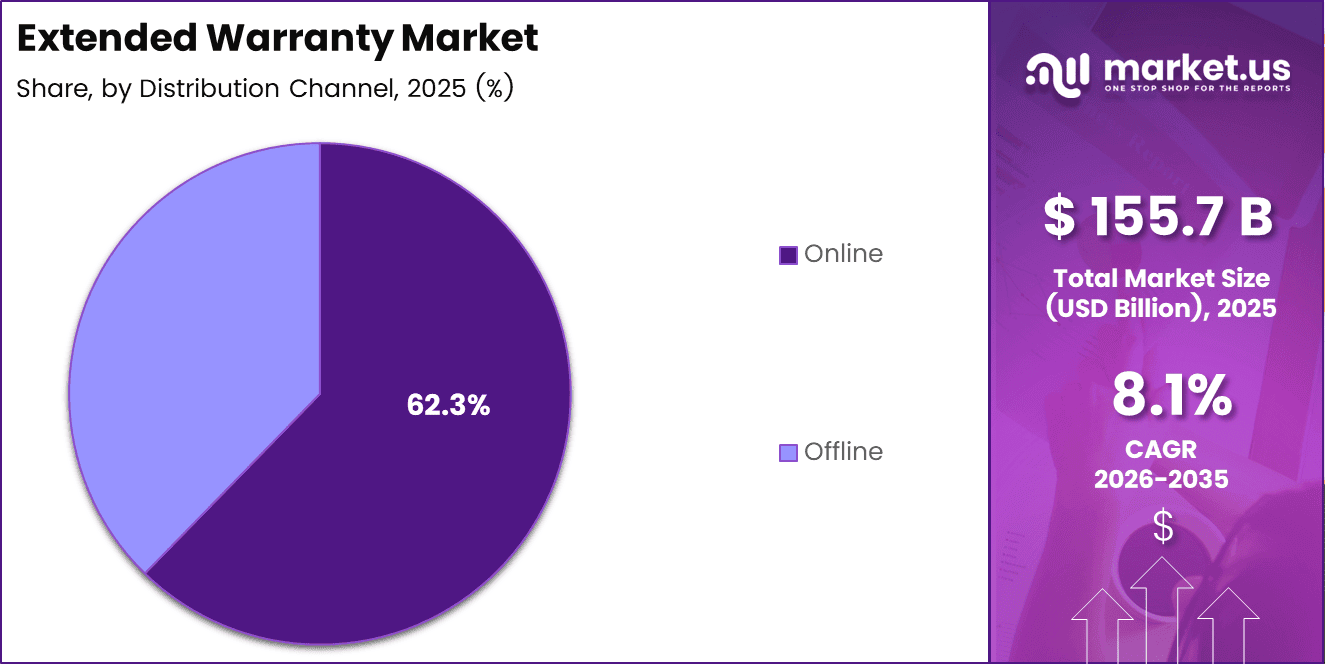
Consumer Electronics dominates with 45.2% due to rising device penetration and higher repair cost sensitivity. In 2025, Consumer Electronics held a dominant market position in the By Product Type Analysis segment of Extended Warranty Market, with a 45.2% share. Demand is driven by smartphones, laptops, and smart devices with shorter innovation cycles. As device prices rise, consumers increasingly prefer extended protection plans to manage post warranty repair expenses and ensure long term usability. Home Appliances represent a stable sub segment, supported by washing machines, refrigerators, and air conditioners. Consequently, extended warranties help reduce long term maintenance uncertainty for households. Moreover, higher appliance complexity and replacement costs continue to encourage adoption of multi year service coverage, especially in urban residential settings. Automotive extended warranties focus on mechanical and electronic component protection beyond standard coverage. As vehicles integrate advanced electronics, warranty extensions become relevant for long ownership cycles. Therefore, consumers view these plans as risk mitigation tools against unpredictable repair costs. Industrial Equipment warranties address downtime risks for machinery and tools. Although adoption remains selective, extended coverage supports operational continuity. Others include niche products where warranty uptake is limited but gradually improving with awareness. OEM dominates with 39.9% due to integrated offerings and strong brand trust. In 2025, OEM held a dominant market position in the By Service Provider Analysis segment of Extended Warranty Market, with a 39.9% share. OEM provided warranties are perceived as reliable since they ensure original parts and authorized servicing. As a result, consumers often prefer manufacturer backed coverage at the point of purchase. Retailers offer extended warranties as value added services to increase customer retention. These plans are bundled during checkout, making adoption convenient. Consequently, retailers leverage warranties to enhance margins and post sale engagement. Insurers and brokers provide flexible coverage models with broader risk pooling. Their offerings emphasize affordability and customization. Meanwhile, third party administrators manage claims and servicing, supporting scalability across multiple brands and product categories. Individual Consumers dominate with 79.3% due to high personal ownership of insured products. In 2025, Individual Consumers held a dominant market position in the By End-user Analysis segment of Extended Warranty Market, with a 79.3% share. High ownership of electronics and appliances drives personal demand. Additionally, consumers prioritize predictable repair costs and convenience. Commercial and fleet users adopt warranties selectively for cost control and asset protection. These users focus on operational efficiency and downtime reduction. However, adoption remains lower compared to individuals due to in house maintenance capabilities. Online dominates with 62.3% due to digital purchasing behavior and ease of comparison. In 2025, Online held a dominant market position in the By Distribution Channel Analysis segment of Extended Warranty Market, with a 62.3% share. Digital platforms enable instant purchase, transparent terms, and price comparison. As e commerce expands, online warranty attachment rates continue to increase. Offline channels include in store purchases and direct sales interactions. These channels rely on sales personnel recommendations and trust based selling. Although growth is slower, offline distribution remains relevant for high value products and less digitally engaged consumers. Assurant Inc. is anticipated to continue leveraging its global footprint and deep insurer relationships to expand its warranty offerings, particularly in consumer electronics and connected devices. Investment in predictive analytics and customer experience platforms is expected to differentiate its service delivery, supporting sustainable growth and reinforcing its position amidst increasing competition from technology-enabled warranty providers. Allianz Partners is projected to strengthen its market presence through a focus on integrated protection plans and cross-sell opportunities with travel, health, and lifestyle products. The company’s emphasis on customer service excellence and innovation in claims processing is expected to enhance policyholder satisfaction, while its global scale supports robust distribution channels that can adapt quickly to emerging extended warranty trends. Asurion, LLC is forecasted to benefit from its technology-centric approach and strong relationships with major retailers and device manufacturers. The company’s investments in AI-driven claim automation and seamless omnichannel support are anticipated to drive operational performance and customer loyalty. Asurion’s ability to offer tailored protection plans that align with evolving consumer preferences positions it well for continued leadership in the extended warranty space.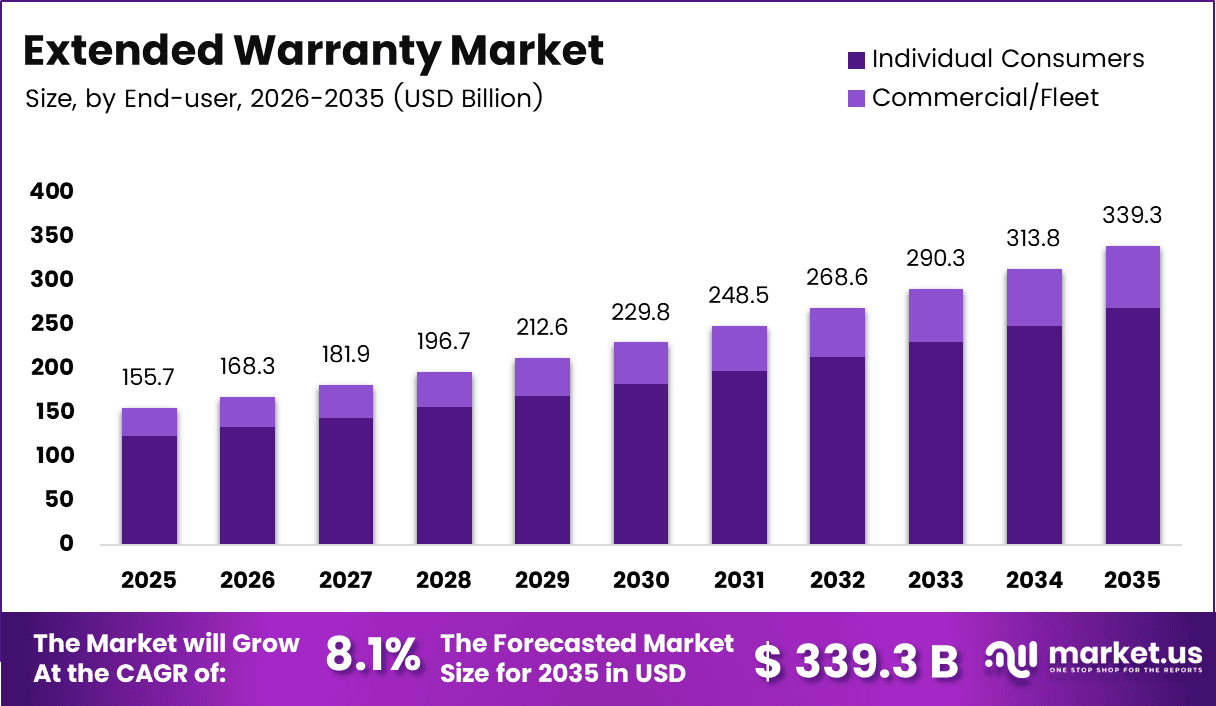
Key Takeaways
Product Type Analysis
Service Provider Analysis
End-user Analysis
Distribution Channel Analysis
Top Key Players in the Market
Recent Developments









