


Report Overview
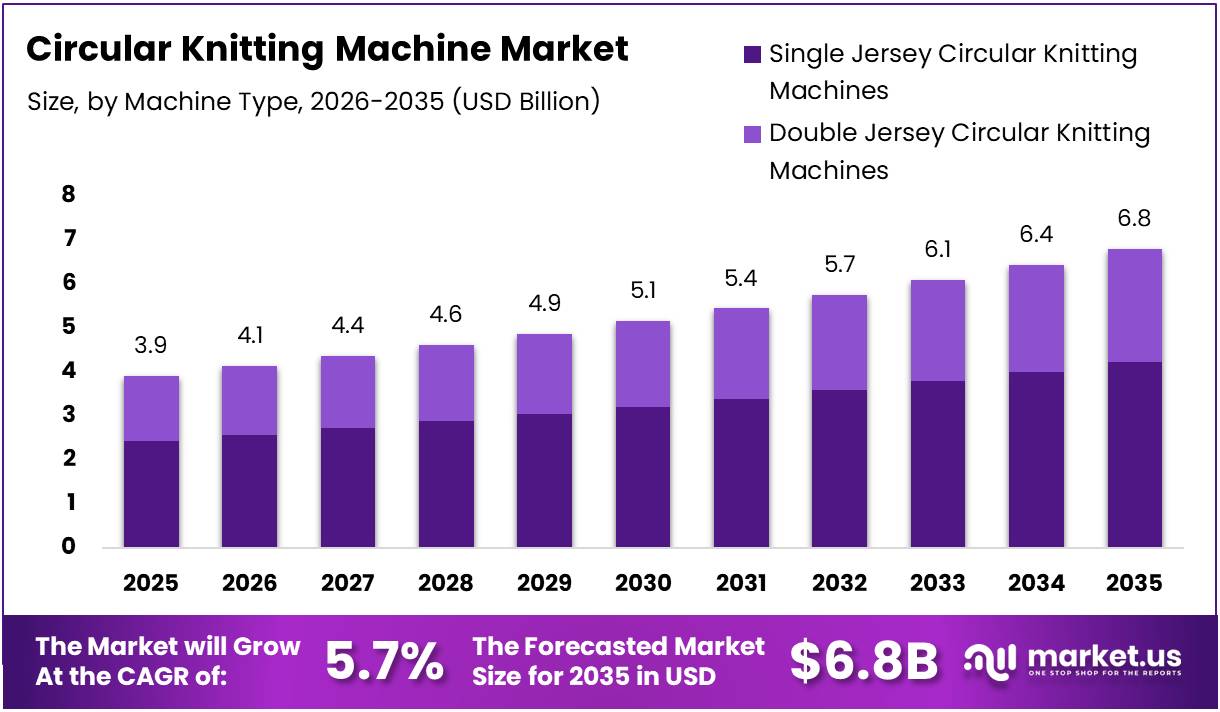
The Global Circular Knitting Machine Market size is expected to be worth around USD 6.8 Billion by 2035, from USD 3.9 Billion in 2025, growing at a CAGR of 5.7% during the forecast period from 2026 to 2035.
The Circular Knitting Machine Market encompasses specialized textile manufacturing equipment designed for continuous fabric production. These machines utilize circular needle configurations, creating tubular or flat fabrics efficiently across diverse applications. Consequently, they serve apparel, technical textiles, and home furnishing industries effectively.
Market growth accelerates through increasing automation adoption and sustainable manufacturing priorities. Emerging economies, particularly across Asia-Pacific, drive substantial demand expansion. Additionally, technological innovations enable faster production cycles, significantly reducing operational expenditures and enhancing competitiveness.
Investment opportunities arise through smart knitting technologies and digitally integrated systems. IoT-enabled machines offer predictive maintenance and real-time quality monitoring capabilities. Therefore, companies targeting innovation-driven segments capture premium market positions with differentiated solutions and customization features.
Government initiatives supporting textile modernization strengthen market prospects considerably. Nations implement subsidies for machinery upgrades, promoting energy-efficient equipment adoption. Export promotion schemes simultaneously encourage manufacturers to expand production capacities, creating favorable growth conditions.
Environmental regulations increasingly shape manufacturing processes, demanding eco-friendly technologies. Stringent compliance norms regarding water usage and chemical discharge necessitate cleaner production methods. Consequently, sustainable equipment solutions gain regulatory approval faster, transforming market dynamics significantly.
Modern machines demonstrate impressive productivity capabilities. Depending on specifications, contemporary equipment generates 20 to 40 meters of fabric hourly. Advanced models produce over 100 kg daily, while equipment longevity reaches 10-12 years under intensive operations, ensuring strong investment returns.
Key Takeaways
- Global Circular Knitting Machine Market grows from USD 3.9 Billion (2025) to USD 6.8 Billion (2035) at a 5.7% CAGR.
- Single Jersey Circular Knitting Machines lead the machine type segment with a 62.3% market share.
- Latch Needle dominates the needle type segment, accounting for 55.6% of total demand.
- Large Diameter machines hold the highest diameter size share at 36.7%, driven by high-volume fabric production.
- Medium Gauge machines represent the largest gauge segment with a 43.2% share.
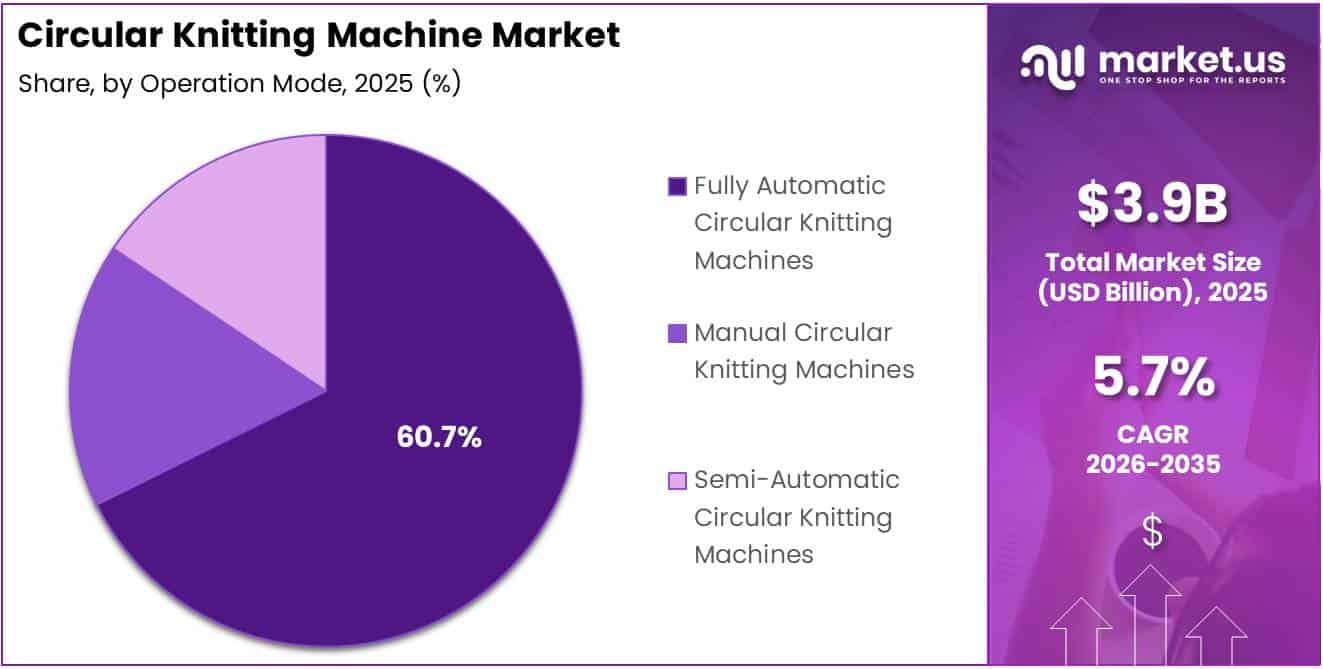
- Fully Automatic Circular Knitting Machines dominate operation mode with 60.7% adoption.
- Apparel remains the largest application segment, contributing 68.9% of overall demand.
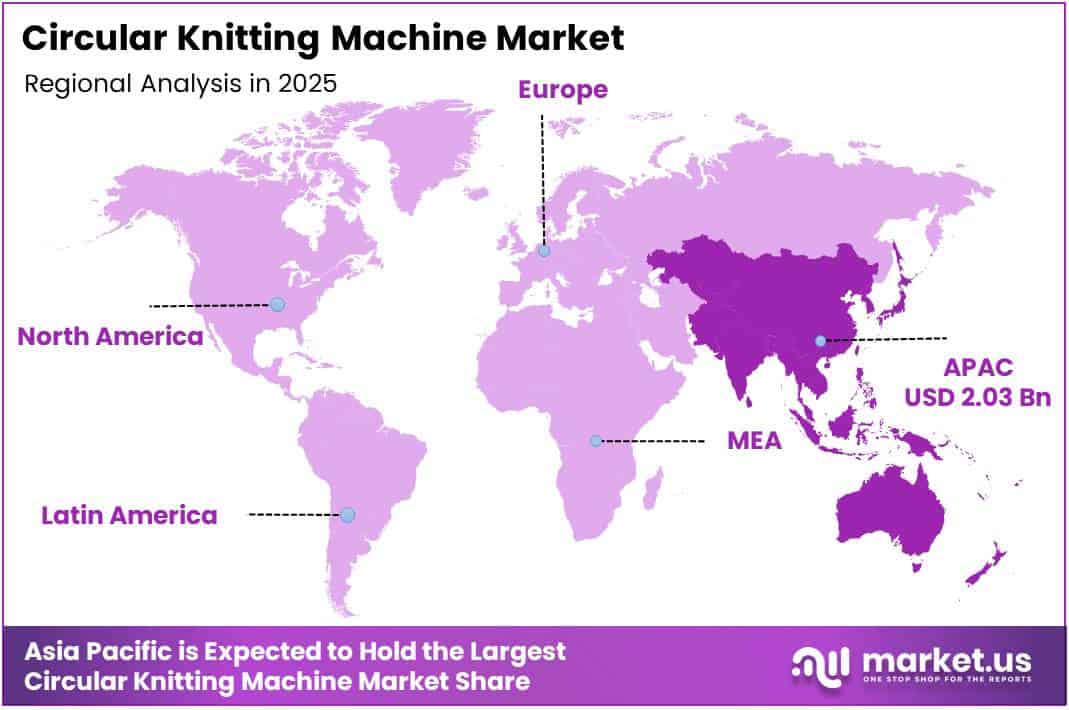
- Asia Pacific leads regionally with a 52.3% market share, valued at USD 2.03 Billion.
Machine Type Analysis
Single Jersey Circular Knitting Machines dominates with 62.3% due to its versatility and cost-effective operation in fabric production.
In 2025, Single Jersey Circular Knitting Machines held a dominant market position in the Machine Type segment of Circular Knitting Machine Market, with a 62.3% share. These machines excel in producing lightweight fabrics with consistent quality across various weights. Their versatility in manufacturing basic knit structures makes them indispensable for mass production, offering reliable performance and operational efficiency.
Double Jersey Circular Knitting Machines complement single jersey offerings by producing thicker, more stable fabrics with enhanced durability. Their dual-bed construction enables complex structures unattainable with single jersey technology. These machines serve markets requiring heavy-weight fabrics for outerwear and specialized industrial applications.
Needle Type Analysis
Latch Needle dominates with 55.6% due to its self-actuating mechanism and reliable high-speed performance.
In 2025, Latch Needle held a dominant market position in the Needle Type segment of Circular Knitting Machine Market, with a 55.6% share. This dominance reflects their self-actuating mechanism that simplifies machine design and reduces maintenance complexity. Latch needles operate reliably across various yarn types and gauges, making them the preferred choice for general-purpose knitting applications.
Compound Needle systems combine multiple functional elements to handle specialized yarns and delicate materials with precision. These needles excel in producing fine-gauge fabrics requiring gentle yarn handling. Their complex construction commands premium pricing but delivers superior fabric quality for luxury textiles and high-end fashion.
Bearded Needle technology represents traditional knitting mechanisms still valued for specific applications and niche market requirements. Though declining in market share, bearded needles remain essential for producing certain fabric structures. Their continued presence serves specialized markets where alternative needle types cannot adequately substitute their unique advantages.
Diameter Size Analysis
Large Diameter dominates with 36.7% due to high productivity and efficiency in wide-width fabric production.
In 2025, Large Diameter held a dominant market position in the Diameter Size segment of Circular Knitting Machine Market, with a 36.7% share. Large diameter machines dominate due to their high productivity in producing wide-width fabrics. These machines reduce seaming requirements in garment construction, lowering manufacturing costs and improving comfort. Their ability to create seamless tubular fabrics appeals to activewear and underwear producers.
Small Diameter machines specialize in producing narrow-width fabrics and seamless garments like socks, sleeves, and hosiery products. Their compact footprint allows flexible factory layouts while serving specialized product categories. Though smaller in market share, they maintain steady demand from hosiery manufacturers requiring dedicated production equipment.
Medium Diameter machines offer balanced capabilities between productivity and versatility for diverse manufacturing requirements. These machines accommodate various fabric widths suitable for multiple apparel applications. Their adaptability makes them attractive investments for manufacturers serving diverse market segments, ensuring consistent equipment utilization.
Gauge Analysis
Medium Gauge dominates with 43.2% due to optimal balance between fabric weight and production versatility.
In 2025, Medium Gauge held a dominant market position in the Gauge segment of Circular Knitting Machine Market, with a 43.2% share. Medium gauge machines strike an optimal balance between fabric weight and production versatility for mainstream apparel manufacturing. Their ability to handle various yarn counts while maintaining reasonable production speeds drives widespread adoption across everyday garment production.
Fine Gauge machines produce lightweight, delicate fabrics with tight knit structures suitable for premium apparel and intimate wear. These machines cater to fashion segments demanding refined aesthetics and superior hand feel. Fine gauge equipment enables manufacturers to work with finer yarns, creating elegant fabrics for high-end fashion.
Coarse Gauge machines manufacture heavy-weight fabrics ideal for outerwear, upholstery, and industrial textile applications. Their ability to process thicker yarns and create robust fabric structures serves specialized markets requiring durability. Coarse gauge machines operate at higher speeds when producing bulkier fabrics, optimizing productivity.
Operation Mode Analysis
Fully Automatic Circular Knitting Machines dominates with 60.7% due to enhanced productivity and reduced labor dependency.
In 2025, Fully Automatic Circular Knitting Machines held a dominant market position in the Operation Mode segment of Circular Knitting Machine Market, with a 60.7% share. Fully automatic machines deliver superior productivity through automated operations, minimizing human intervention and labor costs. These machines incorporate advanced control systems ensuring consistent quality, reduced waste, and optimized efficiency addressing labor shortages.
Manual Circular Knitting Machines continue serving small-scale manufacturers and developing regions where labor costs remain competitive. These machines require skilled operators but offer lower initial investment requirements. Manual machines provide flexibility for small-batch production and customized fabric development in artisanal textile operations.
Semi-Automatic Circular Knitting Machines bridge the gap between manual and fully automatic systems, offering balanced automation features. These machines automate critical functions while retaining manual control for specific operations requiring operator expertise. Semi-automatic equipment presents cost-effective upgrade paths for manufacturers transitioning to automated production systems.
Fabric Type Analysis
Synthetic Fibers dominates with 38.9% due to widespread use and performance advantages in modern textiles.
In 2025, Synthetic Fibers held a dominant market position in the Fabric Type segment of Circular Knitting Machine Market, with a 38.9% share. Synthetic fibers including polyester, nylon, and spandex dominate due to their durability, moisture-wicking properties, and easy-care characteristics. These materials align perfectly with growing activewear and athleisure trends, offering consistent quality and predictable processing behavior.
Cotton remains highly valued for its natural breathability, comfort, and skin-friendly properties in everyday apparel. This traditional fiber maintains strong demand across casualwear, innerwear, and home textile applications. Organic cotton trends drive renewed interest in natural fiber products among environmentally conscious consumers.
Wool serves specialized markets requiring natural insulation, moisture regulation, and premium aesthetic qualities in garments. Though representing a smaller segment, wool fabrics command premium pricing in luxury fashion and performance outerwear. Wool’s natural performance characteristics position it strategically in sustainable textile markets.
Blended Fabrics combine different fiber types to optimize fabric performance characteristics and cost-effectiveness simultaneously. These fabric blends deliver balanced properties including comfort, durability, and easy maintenance. Manufacturers increasingly develop innovative blends meeting specific performance requirements across various market segments.
Others category encompasses specialty fibers including bamboo, modal, and technical fibers for niche applications. These materials address specific performance requirements in specialized markets demanding unique fabric characteristics. Innovation in fiber technology continues expanding possibilities for incorporating novel materials into circular knitting.
Application Analysis
Apparel dominates with 68.9% due to massive garment production volumes and diverse clothing requirements globally.
In 2025, Apparel held a dominant market position in the Application segment of Circular Knitting Machine Market, with a 68.9% share. The apparel industry drives overwhelming demand for circular knitting machines across diverse garment categories worldwide. Fashion trends, population growth, and rising disposable incomes fuel continuous expansion, making circular knitting technology indispensable for modern manufacturing.
Home Textiles utilize circular knit fabrics for bedding, upholstery, and decorative applications requiring durability and aesthetic appeal. These products demand consistent quality and cost-effective manufacturing for competitive retail pricing. Home textile applications increasingly incorporate sustainable materials aligning with consumer environmental preferences.
Medical & Hygiene Textiles represent specialized applications requiring stringent quality standards and specific performance characteristics. Circular knit fabrics serve in bandages, compression garments, and hygiene products demanding comfort and functionality. Healthcare sector growth drives expanding opportunities for technical textile applications.
Industrial & Technical Textiles encompass specialized applications including filtration, reinforcement, and protective fabrics for industrial use. These technical applications demand specific performance properties achievable through specialized circular knitting processes. Innovation in technical textiles continues expanding circular knitting machine applications beyond traditional apparel markets.
Key Market Segments
By Machine Type
- Single Jersey Circular Knitting Machines
- Plain Single Jersey
- Two-Track Single Jersey
- Four-Track Single Jersey
- Terry & Fleece Machines
- Auto Striper Machines
- Jacquard Single Jersey Machines
- Double Jersey Circular Knitting Machines
- Rib Machines
- Interlock Machines
- Pique Machines
By Needle Type
- Latch Needle
- Compound Needle
- Bearded Needle
By Diameter Size
- Large Diameter
- Medium Diameter
- Small Diameter
By Gauge
- Fine Gauge
- Medium Gauge
- Coarse Gauge
By Operation Mode
- Fully Automatic Circular Knitting Machines
- Semi-Automatic Circular Knitting Machines
- Manual Circular Knitting Machines
By Fabric Type
- Synthetic Fibers
- Cotton
- Wool
- Blended Fabrics
- Others
By Application
- Apparel
- T-Shirts
- Sportswear & Activewear
- Innerwear & Hosiery
- Casualwear
- Home Textiles
- Medical & Hygiene Textiles
- Industrial & Technical Textiles
Drivers
Increasing Vehicle Fleet Size and Tire Consumption Globally Drives Market Growth
The global vehicle population continues to expand rapidly, leading to higher tire consumption and waste generation. As more cars and trucks hit the roads, the volume of end-of-life tires requiring disposal increases significantly. This growing waste stream creates opportunities for recycling businesses to process used tires into valuable materials.
Demand for rubber-based secondary products is rising across industries. Recycled tire materials are increasingly used in manufacturing, sports surfaces, and automotive parts. This growing market makes tire recycling economically viable. Recycled materials often cost less than virgin rubber, encouraging manufacturers to adopt sustainable alternatives.
Government policies worldwide actively promote tire recycling through incentives and regulations. Many countries have implemented extended producer responsibility programs, mandating manufacturers to manage tire disposal. Tax benefits, subsidies, and landfill restrictions encourage recycling infrastructure development, creating a favorable business environment for operations to expand.
Restraints
Limited Availability of Advanced Recycling Infrastructure Restrains Market Expansion
The tire recycling industry faces challenges due to inadequate infrastructure, particularly in developing regions. Advanced facilities require substantial capital investment in machinery and technology. Many emerging markets lack financial resources and technical expertise needed for modern recycling plants. This infrastructure gap limits capacity to handle growing tire waste volumes.
Transportation and collection networks for end-of-life tires remain underdeveloped in numerous regions. Without efficient systems, tires often end up in landfills rather than recycling facilities. The scattered nature of tire waste makes collection logistically complex and expensive, reducing profit margins.
Stringent regulatory compliance and environmental standards present operational challenges for recyclers. Companies must navigate complex regulations governing emissions, waste handling, and safety. Meeting these standards requires continuous investment in pollution control equipment. The regulatory burden increases costs and creates barriers for smaller businesses, potentially slowing industry growth.
Growth Factors
Adoption of Sustainable Tires and Circular Economy Initiatives Creates Market Opportunities
The growing emphasis on circular economy principles is transforming the tire industry. Manufacturers are increasingly designing products with recycling in mind, using materials easier to recover. This shift creates opportunities for recycling companies to develop closed-loop systems. The circular economy approach ensures materials remain productive, reducing waste.
Advanced pyrolysis and devulcanization technologies are revolutionizing tire recycling. These methods enable efficient recovery of carbon black, steel, and oil from scrap tires. Pyrolysis converts tires into fuel and carbon products with higher purity. Devulcanization restores rubber’s original properties for reuse in manufacturing. Investment in these technologies opens new revenue streams.
Construction and civil engineering sectors increasingly utilize tire-derived products. Recycled rubber is incorporated into road construction, providing better durability and noise reduction. Crumb rubber modifies asphalt, improving pavement performance. Shredded tires serve as lightweight fill material in infrastructure projects, offering cost-effective solutions.
Emerging Trends
Rising Collaborations Between Automotive Manufacturers and Recycling Companies Shape Market Trends
Strategic partnerships between vehicle manufacturers and tire recyclers are becoming increasingly common. These collaborations establish comprehensive tire lifecycle management systems. Automakers recognize their responsibility in managing end-of-life products and work with recyclers to develop sustainable solutions. Such partnerships create stable supply chains for recycled materials.
Integration of artificial intelligence and IoT technologies is modernizing tire waste management. Smart collection systems use sensors to optimize pickup routes and monitor waste accumulation. AI-powered sorting improves material recovery rates by accurately identifying tire components. These digital technologies enhance efficiency, reduce costs, and improve recycled output quality.
Consumer awareness about environmentally responsible tire disposal is growing substantially. People are becoming conscious of environmental impacts and actively seeking eco-friendly options. This heightened awareness drives demand for certified recycling services and sustainable products. Educational campaigns about tire pollution reinforce responsible disposal behaviors among vehicle owners.
Regional Analysis
Asia Pacific Dominates the Circular Knitting Machine Market with a Market Share of 52.3%, Valued at USD 2.03 Billion
Asia Pacific holds a commanding position in the circular knitting machine market, accounting for 52.3% of the global market share with a valuation of USD 2.03 billion. The region’s dominance is driven by major textile manufacturing hubs in China, India, Bangladesh, and Vietnam, coupled with rapidly expanding garment industries and increasing automation investments. Favorable government initiatives and cost-effective manufacturing capabilities continue to position Asia Pacific as the global leader in circular knitting machine adoption.
North America Circular Knitting Machine Market Trends
North America represents a mature market characterized by high adoption of automated knitting systems. The region’s growth is fueled by increasing demand for technical textiles, activewear, and performance fabrics. Growing emphasis on domestic manufacturing and sustainability initiatives continue to drive investments in advanced circular knitting machinery.
Europe Circular Knitting Machine Market Trends
Europe maintains a significant market presence driven by its strong textile manufacturing tradition and innovation focus. Key markets including Germany, Italy, and Turkey are investing in advanced knitting technologies and sustainable production practices. The region’s emphasis on eco-friendly machines and high-value-added textile products supports steady market demand.
Middle East and Africa Circular Knitting Machine Market Trends
The Middle East and Africa region exhibits emerging growth potential, driven by expanding textile industries in Turkey, Egypt, and South Africa. Increasing investments in textile infrastructure and government initiatives promoting industrialization are gradually driving circular knitting machine adoption in the region.
Latin America Circular Knitting Machine Market Trends
Latin America presents moderate growth prospects with Brazil, Mexico, and Colombia as key markets. The region’s established textile industry and growing demand for affordable knitted garments are gradually increasing circular knitting machine adoption despite economic challenges.
Key Regions and Countries
North America
- US
- Canada
Europe
- Germany
- France
- The UK
- Spain
- Italy
- Rest of Europe
Asia Pacific
- China
- Japan
- South Korea
- India
- Australia
- Rest of APAC
Latin America
- Brazil
- Mexico
- Rest of Latin America
Middle East & Africa
- GCC
- South Africa
- Rest of MEA
Key Circular Knitting Machine Company Insights
The global circular knitting machine market in 2025 continues to be shaped by several established manufacturers who have demonstrated consistent innovation and market presence.
Mayer & Cie, a German engineering powerhouse, maintains its leadership position through advanced technological solutions and comprehensive product portfolios. The company’s focus on digitalization and sustainable knitting solutions has reinforced its competitive edge globally.
Santoni S.p.a., the Italian precision machinery specialist, has carved a distinctive niche with its seamless knitting technology and luxury fabric production capabilities. Their innovation in circular knitting systems has made them a preferred partner for high-end fashion and technical textile manufacturers.
Terrot Textilmaschinen GmbH continues to strengthen its market position through robust engineering excellence and customized solutions for industrial knitting applications. The company’s emphasis on reliability and long-term performance has established strong customer loyalty across global markets.
Pailung Machinery Mill Co., Ltd., representing the growing Asian manufacturing influence, has expanded its footprint through competitive pricing strategies combined with improved technological capabilities. Their cost-effective solutions have attracted significant attention from price-sensitive markets.
The competitive landscape also includes other notable players such as Fujian Baiyuan Machinery, Fukuhara Industrial & Trading, Wellknit Textile Technology, and Orizio Srl, each contributing to market dynamics through specialized offerings and regional strengths.
Top Key Players in the Market
- Fujian Baiyuan Machinery Co., Ltd
- Mayer & Cie
- Terrot Textilmaschinen GmbH
- Santoni S.p.A.
- Fukuhara Industrial & Trading Co., Ltd
- Pailung Machinery Mill Co. Ltd.
- Wellknit Textile Technology Co., Ltd.
- Santec Precision Machinery
- Orizio Srl
- Monarch Knitting Machinery (UK) Ltd.
- Fujian Quanzhou Jinghe Yuanwei Machinery Co. Ltd.
- Kunyuan Knitting Machine
- United Texmac Pte Ltd
- XINDA Knitting Machinery Co., Ltd.
- Shishi Hongda Textile Machinery
- Other Key Players
Recent Developments
- In January 2026, Terrot introduced the new T-Frame universal machine frame platform to improve stability and flexibility in large-diameter circular knitting machines, enabling future modular upgrades and long-term production adaptability.
- In October 2025, RSWM Ltd. announced a strategic investment of ₹92 crore to modernize knitted fabric printing facilities, strengthening operational efficiency and expanding value-added capabilities across its textile manufacturing operations.
- In May 2025, Mayer & Cie. launched its new Control 5.0 system, making circular knitting machines IoT-ready and enabling enhanced digital connectivity, real-time monitoring, and smarter machine control.









