


Report Overview
The Global Molded Case Circuit Breaker Market size is expected to be worth around USD 28.2 billion by 2034, from USD 9.4 billion in 2024, growing at a CAGR of 11.6% during the forecast period from 2025 to 2034.
The molded case circuit breaker segment continues gaining traction as industries modernize power networks and adopt higher-capacity electrical systems. Demand rises steadily as companies prioritize safety, efficient load management, and compliance with tightening building regulations. Additionally, electrification trends and strong industrial expansion continue to stimulate long-term adoption across emerging economies.
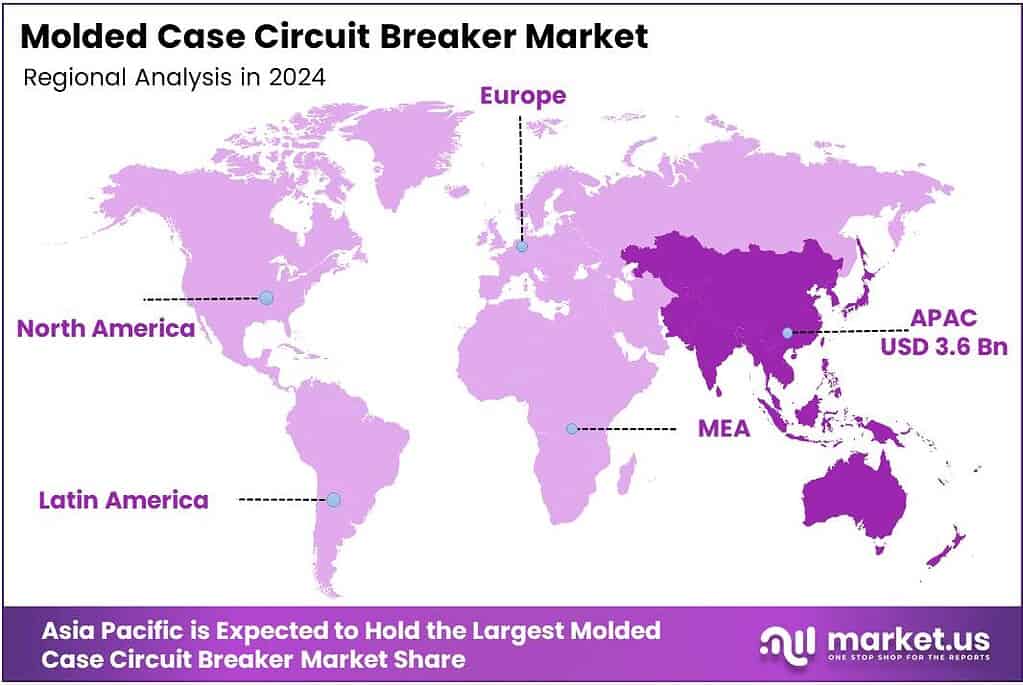
Miniaturization is another major trend, as businesses prefer compact electrical components that save space without compromising performance. This has encouraged innovation in lightweight, high-capacity MCCBs. Customized solutions are gaining traction, especially in data centers, renewable energy plants, and heavy industries. The molded case circuit breaker market is driven by the growing need to protect electrical systems against overloads and short circuits. As industries expand and power consumption rises, companies prefer MCCBs for their reliable protection and compact design. This growing shift toward safer electrical infrastructure boosts continuous product adoption. Rapid industrialization, especially in manufacturing, construction, and utilities, plays a key role in demand. Many facilities are upgrading old power systems, and MCCBs offer an efficient solution due to their long service life and easy installation. The movement toward energy-efficient equipment also encourages companies to choose MCCBs with advanced protective features. Urban development and commercial building projects are another major driver. High-rise buildings, data centers, and transportation networks require dependable circuit protection, making MCCBs a necessary component. Governments are also tightening safety regulations, pushing industries to invest more in certified electrical protection devices. A key restraint for the molded case circuit breaker market is the high initial cost of installation. Many small and medium businesses hesitate to upgrade their systems due to budget constraints, even though MCCBs offer long-term benefits. This cost pressure slows adoption in price-sensitive regions. Technical complexity is also a concern. MCCBs used in advanced industrial operations often require skilled professionals for installation and maintenance. In areas with a shortage of trained technicians, users may experience delays and added costs. This limits the market’s ability to expand smoothly. The shift toward smart grid development offers strong opportunities for molded case circuit breaker manufacturers. As utilities modernize power networks, MCCBs with digital monitoring and remote operation features are becoming highly valuable. These advanced models help improve system reliability and reduce downtime. Electric vehicle (EV) infrastructure is another promising area. Charging stations require robust circuit protection due to high power loads, making MCCBs essential for safe operation. The global expansion of EV adoption creates a long-term opportunity for MCCB suppliers. Growth in renewable energy installations, such as solar and wind power, also supports the market. These setups need dependable circuit protection for both grid-connected and off-grid systems. MCCBs help manage power fluctuations and ensure stable distribution, driving higher product demand. Asia Pacific leads the global Molded Case Circuit Breaker (MCCB) market, driven by rapid industrial expansion, rising energy consumption, and large-scale infrastructure upgrades. The region’s strong construction pipeline, along with increasing electrification in emerging economies, continues to support market demand. With a dominant share of 38.5% worth USD 3.6 billion, the Asia Pacific benefits from ongoing urbanization, grid modernization, and government-led investments in building safety standards. North America shows steady growth due to the modernization of transmission networks, increased adoption of smart grid systems, and rising emphasis on electrical safety in industrial facilities. The U.S. contributes significantly as aging infrastructure is replaced with advanced protection systems. The region also benefits from stringent regulatory frameworks that mandate reliable circuit protection solutions across commercial and residential sectors. Europe’s market is influenced by sustainability-driven infrastructure upgrades, renewable energy integration, and regulatory mandates for electrical safety compliance. Demand is further supported by industrial automation and the refurbishment of commercial buildings. Strong adoption of energy-efficient electrical components across Germany, France, and the U.K. reinforces steady growth in the region. The Middle East & Africa region experiences rising MCCB demand due to expanding construction projects, utility-scale power developments, and investment in oil & gas infrastructure. Countries in the Gulf region are increasingly deploying advanced protection systems to support large industrial hubs. Meanwhile, Africa’s growing electrification initiatives contribute to gradual market expansion. North America Europe Asia Pacific Latin America Middle East & Africa In 2025, the global Molded Case Circuit Breaker (MCCB) market shows steady expansion as electrification accelerates and industries strengthen safety standards. Market momentum is supported by leading players who continue to innovate, expand regional footprints, and improve product reliability to address rising power-system complexities. ABB maintains strong leadership through its wide MCCB portfolio focused on energy efficiency and digital compatibility. The company’s strategy of integrating smart monitoring features into protection devices positions it well in industrial automation and utility modernization programs. CNC Electric Group continues to gain traction in cost-competitive segments, supported by its expanding manufacturing capabilities and growing distribution networks across Asia and Africa. Its focus on compact, value-driven MCCBs helps address rising demand from small industries and commercial users. Denor Industries strengthens its position by offering MCCBs designed for reliable protection in harsh operating environments. The company’s investment in improving product durability and thermal performance helps it attract industrial and construction-sector buyers seeking robust solutions. Eaton remains one of the most influential players, leveraging its expertise in power management and safety technologies. With a strong presence in North America and Europe, Eaton benefits from infrastructure upgrades, renewable-energy integration, and rising adoption of intelligent circuit-protection systems. Together, these companies shape competitive dynamics by balancing innovation, affordability, and performance reliability. As global energy systems grow more complex, MCCB manufacturers that can integrate digital diagnostics, support higher load capacities, and meet evolving safety standards are likely to see stronger growth and wider market acceptance in 2025.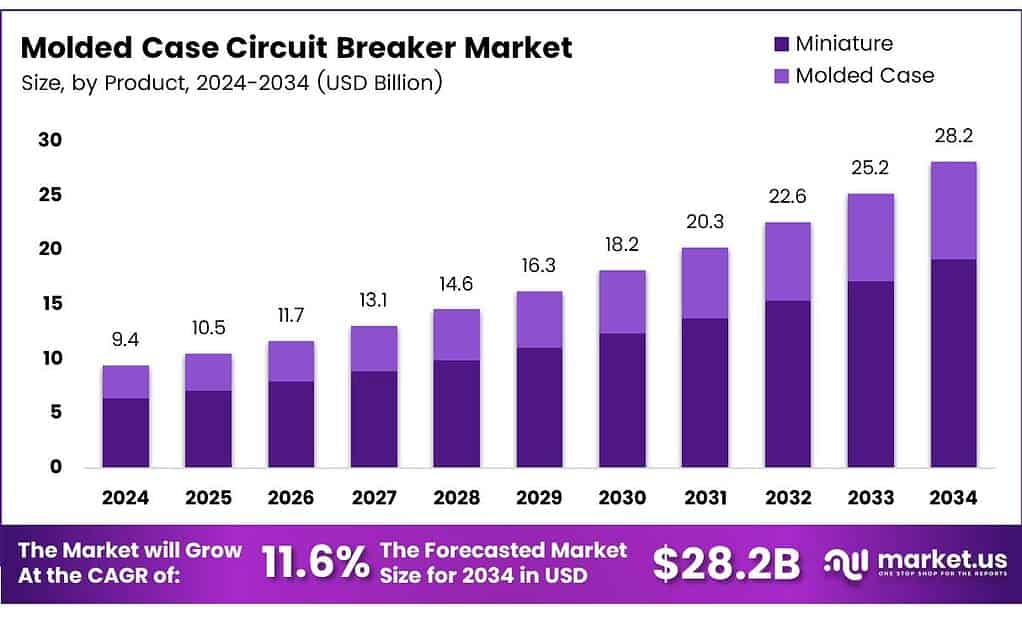 415 TWh in 2024 (about 1.5% of global electricity), and notes it has grown at about 12% per year over the last five years.
Drivers
Growing Focus on Electrical Safety Accelerates MCCB Market Demand
Restraints
High Installation and Maintenance Costs Limit Market Growth
Growth Factors
Rising Investments in Smart Grids Create New MCCB Opportunities
Regional Analysis
Asia Pacific Dominates the Molded Case Circuit Breaker Market with a Market Share of 38.5%, Valued at USD 3.6 Billion
Key Regions and Countries
Key Players Analysis
Top Key Players in the Market
Recent Developments









