


Report Overview
Global Smart Dishwasher Market size is expected to be worth around USD 12.7 Billion by 2035 from USD 5.3 Billion in 2025, growing at a CAGR of 9.1% during the forecast period 2026 to 2035.
Smart dishwashers represent intelligent kitchen appliances that integrate IoT connectivity, artificial intelligence, and automated controls. These devices enable remote monitoring, energy optimization, and personalized washing cycles through mobile applications. Moreover, they support voice commands and predictive maintenance capabilities for enhanced user convenience.
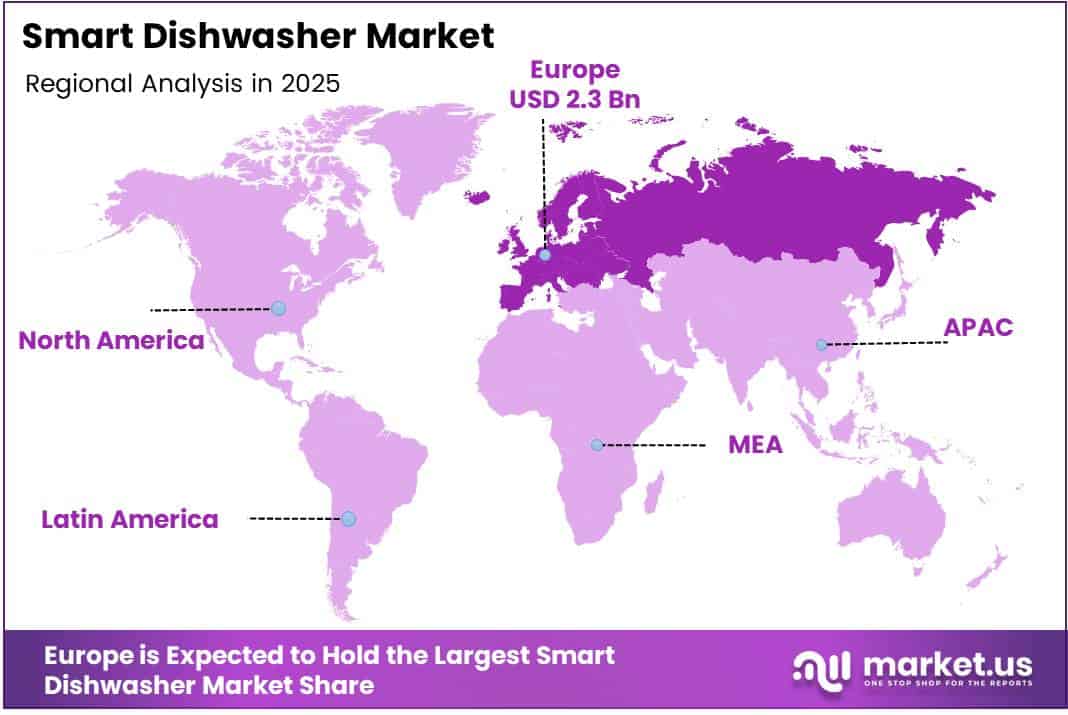
UV sterilization and hygiene-focused smart wash programs gain popularity following heightened health awareness globally. Manufacturers integrate ultraviolet light technology eliminating bacteria and viruses without chemical additives effectively. Consequently, households prioritize sanitation capabilities alongside traditional cleaning performance metrics. Moreover, medical-grade sterilization cycles appeal to families with young children and immunocompromised individuals. In January 2025, appliance manufacturers aligned new dishwasher models with the latest IEC 60436 standard revisions covering performance testing and efficiency measurement. This standardization promotes industry-wide quality benchmarks and consumer confidence enhancement. According to Chemistry World, automatic detergent dosing systems reduced detergent overuse by approximately 30% in smart dishwashers, improving wash consistency significantly. AI learning dishwashers adapt wash cycles based on user behavior patterns continuously. Europe maintains market leadership driven by stringent energy efficiency regulations and high smart home penetration rates. The region demonstrates strong consumer preference for premium kitchen appliances and sustainability-focused purchasing behaviors. Moreover, established appliance manufacturers headquartered in Germany and Italy drive continuous innovation. Therefore, European households adopt connected dishwashers at accelerated rates compared to global averages. The market’s 43.80% regional dominance reflects mature infrastructure and environmental consciousness, with valuation reaching USD 2.3 Billion currently. North American consumers prioritize convenience features and smart home ecosystem compatibility when selecting kitchen appliances. The region benefits from widespread high-speed internet access and technology adoption across residential segments. Additionally, ENERGY STAR certification programs influence purchasing decisions significantly in United States and Canada. Therefore, manufacturers tailor product offerings addressing North American preferences for voice control and app integration. Asia Pacific demonstrates rapid growth potential driven by urbanization and rising disposable incomes in developing economies. Countries including China, Japan, and South Korea lead regional adoption through government smart city initiatives. Moreover, compact appliance designs suit prevalent small apartment configurations across metropolitan areas. Consequently, international brands expand manufacturing facilities and distribution networks throughout the region. Middle East and Africa markets show emerging demand concentrated in affluent urban centers and hospitality infrastructure developments. Premium residential projects incorporate smart kitchen solutions as standard amenities attracting high-net-worth buyers. Additionally, water scarcity concerns drive interest in resource-efficient appliances across Gulf Cooperation Council nations. Therefore, manufacturers target luxury segments and commercial hospitality applications strategically. Latin American markets experience gradual adoption influenced by economic conditions and infrastructure development progress. Brazil and Mexico represent primary growth opportunities with expanding middle-class populations seeking modern conveniences. Moreover, e-commerce platforms facilitate market access in regions lacking extensive retail appliance networks. Consequently, affordable smart dishwasher models gain traction among aspirational urban consumers. North America Europe Asia Pacific Latin America Middle East & Africa Robert Bosch GmbH maintains industry leadership through continuous innovation in connected appliance technologies and energy-efficient solutions. The company’s Home Connect platform enables seamless integration with smart home ecosystems and remote appliance management. Moreover, Bosch prioritizes German engineering excellence and sustainability throughout product development cycles. Therefore, the brand commands premium market positioning across European and North American regions. Additionally, extensive service networks and reliability reputation strengthen customer loyalty significantly. LG Electronics leverages ThinQ artificial intelligence platform delivering advanced soil sensing and diagnostic capabilities industry-wide. The company integrates AI Direct Drive motor technology ensuring superior cleaning performance and operational quietness. Furthermore, LG expands smart appliance portfolios addressing diverse consumer segments from budget-conscious to luxury buyers. Consequently, the brand captures significant market share across Asia Pacific and emerging markets. Moreover, strategic partnerships with technology providers enhance voice assistant compatibility. SAMSUNG drives market transformation through Bespoke Kitchen lineup featuring customizable designs and SmartThings ecosystem integration. The company emphasizes aesthetic appeal combined with cutting-edge connectivity features attracting design-conscious consumers. Additionally, Samsung invests heavily in artificial intelligence research improving wash cycle optimization and energy management. Therefore, the brand appeals strongly to tech-savvy households prioritizing innovation and digital integration. Furthermore, global manufacturing capabilities enable competitive pricing strategies. Haier Group expands international presence through strategic acquisitions and localized product development addressing regional preferences. The company offers comprehensive smart appliance portfolios spanning multiple price segments and application categories. Moreover, Haier emphasizes affordability without compromising essential connectivity features in emerging markets. Consequently, the brand captures growing middle-class demand across Asia Pacific and Latin America effectively. Additionally, extensive distribution networks facilitate rapid market penetration.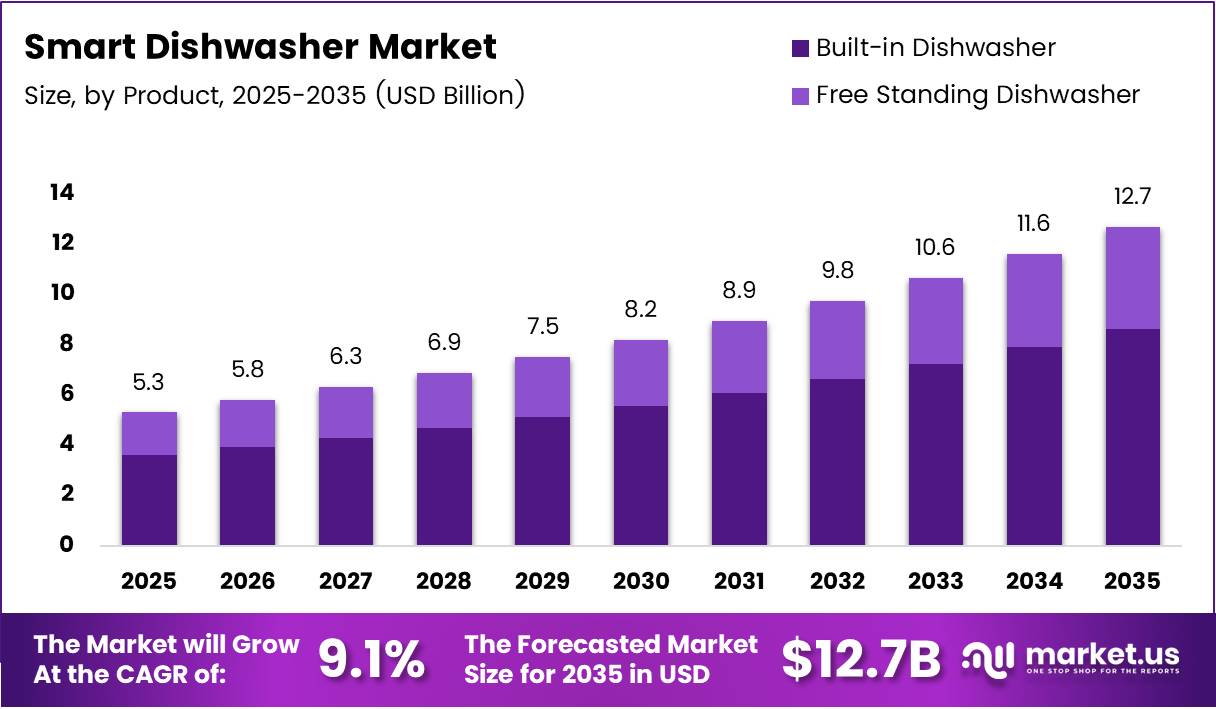
Regional Analysis
Europe Dominates the Smart Dishwasher Market with a Market Share of 43.80%, Valued at USD 2.3 Billion
North America Smart Dishwasher Market Trends
Asia Pacific Smart Dishwasher Market Trends
Middle East & Africa Smart Dishwasher Market Trends
Latin America Smart Dishwasher Market Trends
Key Regions and Countries
Key Company Insights
Key Players
Recent Developments









