


Report Overview
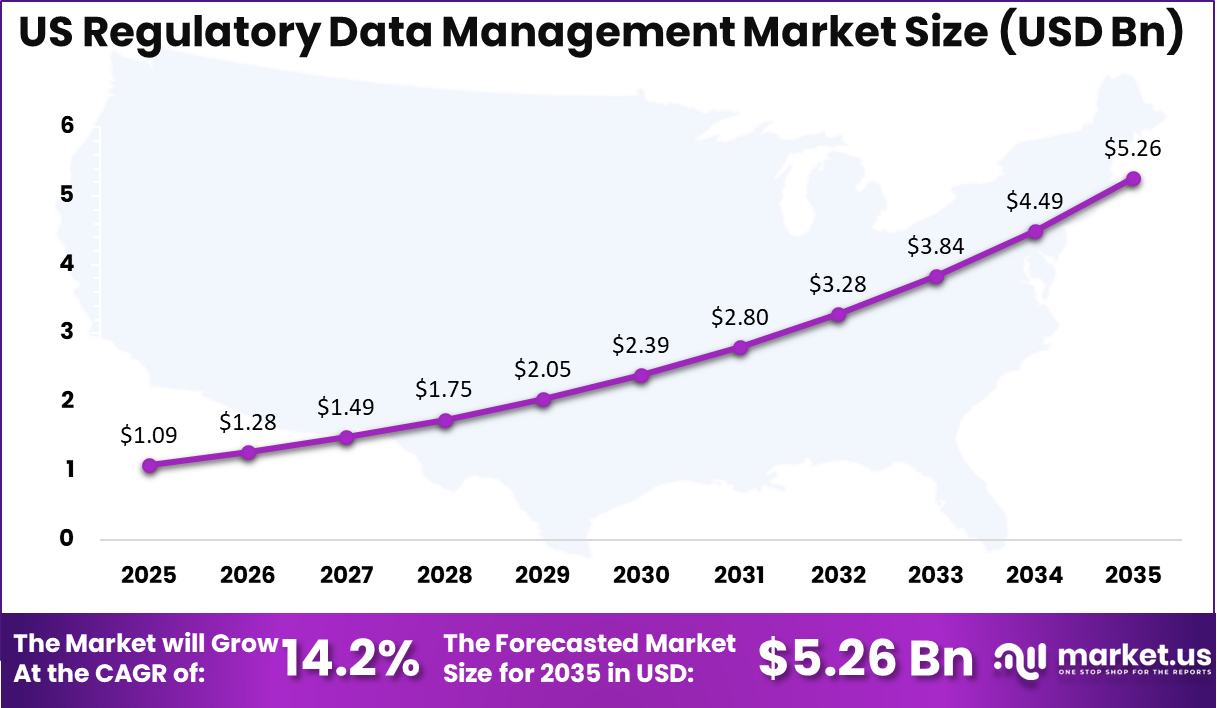
The Regulatory Data Management Market is valued at USD 3.15 billion in 2025 and is projected to reach USD 16.91 billion by 2035, expanding at an 18.30% CAGR over the period. North America accounts for 38.5% share in the provided dataset. Within the region, the US market is valued at USD 1.09 billion in 2025 and is projected to reach USD 5.26 billion by 2035 at a 17.04% CAGR.
Regulatory data management is becoming a core capability for organizations operating in highly regulated environments such as banking, insurance, healthcare, life sciences, energy, and large-scale digital platforms. As reporting obligations expand across data privacy, cybersecurity, financial controls, and industry-specific compliance, enterprises are prioritizing systems that standardize regulatory data, improve traceability, and reduce the operational burden of audits and recurring filings.
This demand is reinforced by increasing enforcement activity and the shift toward data-intensive supervision, where regulators expect faster, more consistent, and well-documented submissions. North America’s leadership reflects strong compliance maturity and continuous investments in data governance, while US adoption is being shaped by enterprise-wide efforts to reduce manual reporting, strengthen audit readiness, and improve the reliability of regulatory submissions across complex data environments.
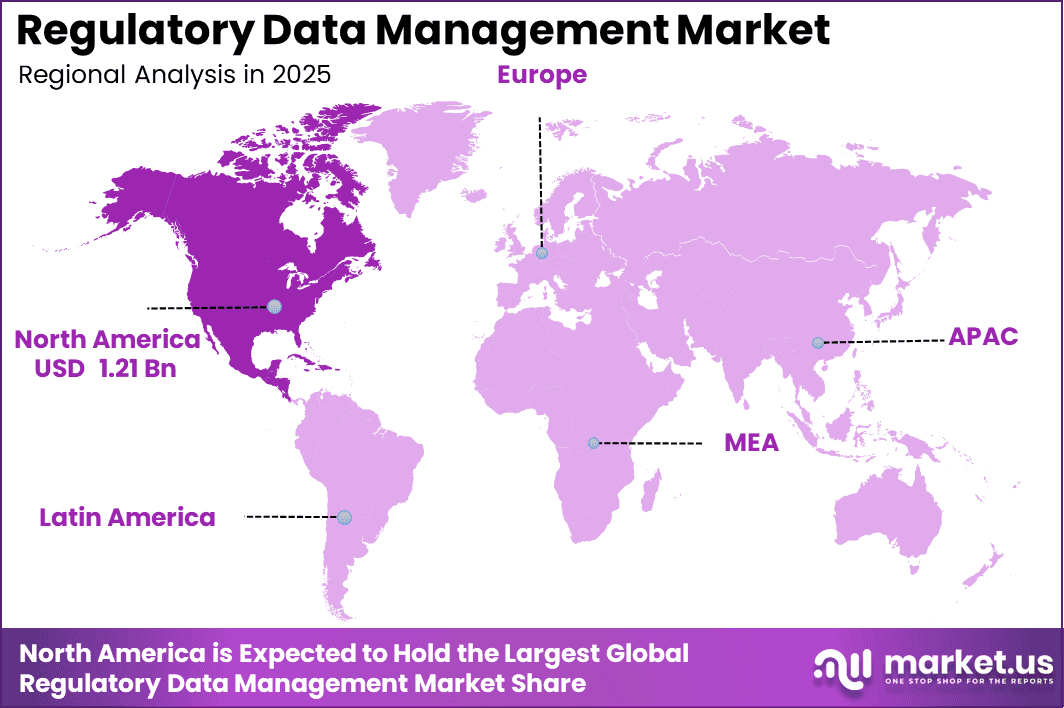
Banks and insurers manage high volumes of sensitive customer and transaction data across complex product portfolios, which increases the need for strong data lineage, standardized definitions, and auditable evidence trails. Regulatory data management platforms help BFSI organizations reduce reconciliation effort between risk, finance, and compliance functions, improve data quality controls, and respond faster to regulator requests with repeatable reporting workflows. The sector also tends to invest earlier in governance automation because the cost of non-compliance and remediation can be high, and audits often require detailed traceability from source systems to reported outcomes. Other industries are adopting rapidly as regulations expand beyond finance into privacy, cybersecurity, and sector-specific compliance. Healthcare and life sciences need controlled data for patient safety and regulated documentation, IT and telecom face privacy and infrastructure security obligations, and energy utilities increasingly manage critical infrastructure and resilience reporting. Even so, BFSI retains the largest share because of the breadth, frequency, and complexity of regulatory obligations tied directly to enterprise data. North America accounts for 38.5% share in the provided dataset, with a 2025 regulatory data management market size of USD 1.21 billion. Within the region, North America remains the most mature region for regulatory data management adoption because regulated industries operate at scale and face frequent, high scrutiny examinations. Large enterprises in banking, insurance, healthcare, and life sciences typically manage complex data estates spread across business units, products, and legacy platforms, which increases the need for standardized regulatory data definitions, lineage, and audit trails. The US market’s strong growth profile reflects ongoing pressure to reduce manual reporting, improve data quality controls, and support faster evidence generation during audits and supervisory reviews. Adoption is also shaped by the need to demonstrate consistent governance across cloud and on-premises environments, while enabling repeatable workflows for recurring filings. As compliance functions push for defensible, traceable submissions, buyers in North America tend to prioritize solutions that improve documentation, strengthen accountability, and shorten the time required to prepare regulator-ready datasets. Competition in regulatory data management is shaped by three clear capability clusters: regulatory reporting infrastructure, enterprise GRC and data governance platforms, and regulated content plus regulatory intelligence providers. In the regulatory data management market, infrastructure and trade reporting, LSEG’s Regulatory Reporting Solutions positions strongly around multi-regime reporting coverage, such as MiFID II and EMIR, through an Approved Reporting Mechanism and related services. Bloomberg competes with its Regulatory Reporting Hub (RHUB), emphasizing end-to-end workflows from eligibility through reconciliation for global trade and transaction reporting. On the enterprise platform side, IBM OpenPages targets regulatory compliance management through a centralized model for compliance risk visibility and structured obligation management. MetricStream competes in connected GRC by centralizing and automating compliance tasks, including control monitoring, audit tracking, and regulatory reporting workflows. Oracle’s financial services portfolio emphasizes accounting and regulatory compliance with a unified data approach designed to improve consistency across risk and finance reporting. In regulated industries, Veeva and IQVIA compete where document control and regulatory lifecycle management are critical, with Veeva QualityDocs focused on controlled GxP content management and IQVIA SmartSolve RIM focused on end-to-end regulatory lifecycle automation. CUBE differentiates through automated regulatory intelligence and regulatory change management. Accenture adds competitive pressure through implementation, integration, and operating model transformation around regulatory change and risk reporting. Regulatory data management is expected to shift from periodic reporting to always-on controls that run continuously across data pipelines. With 179 of 240 jurisdictions now having data protection frameworks in place and coverage extending to more than 6.6 billion people, organizations are anticipated to standardize common privacy, retention, and consent datasets that can be reused across multiple regimes instead of building one-off reporting packs. Security-driven governance is also expected to accelerate as cybersecurity budgets continue to expand, which typically increases investment in access controls, audit evidence, and data lineage needed for regulator-facing submissions. Research estimates information security spending is projected to increase 12.5% in 2026, reinforcing a stronger enterprise push toward defensible data controls and continuous monitoring.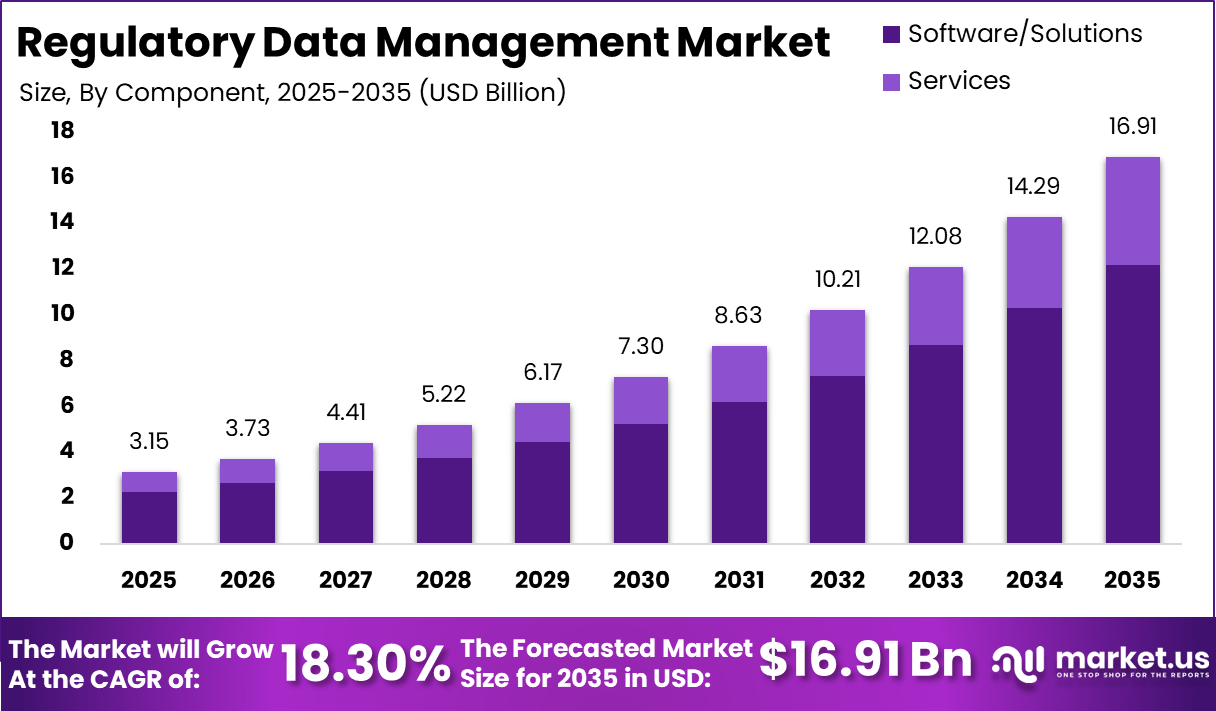
Key Market Segments
By Component
By Deployment Mode
By Organization Size
By Application
By End-User Industry
Regional Analysis
Competitive Analysis
Top Key Players in the Market
Future Predictions
Recent Developments









