


Report Overview
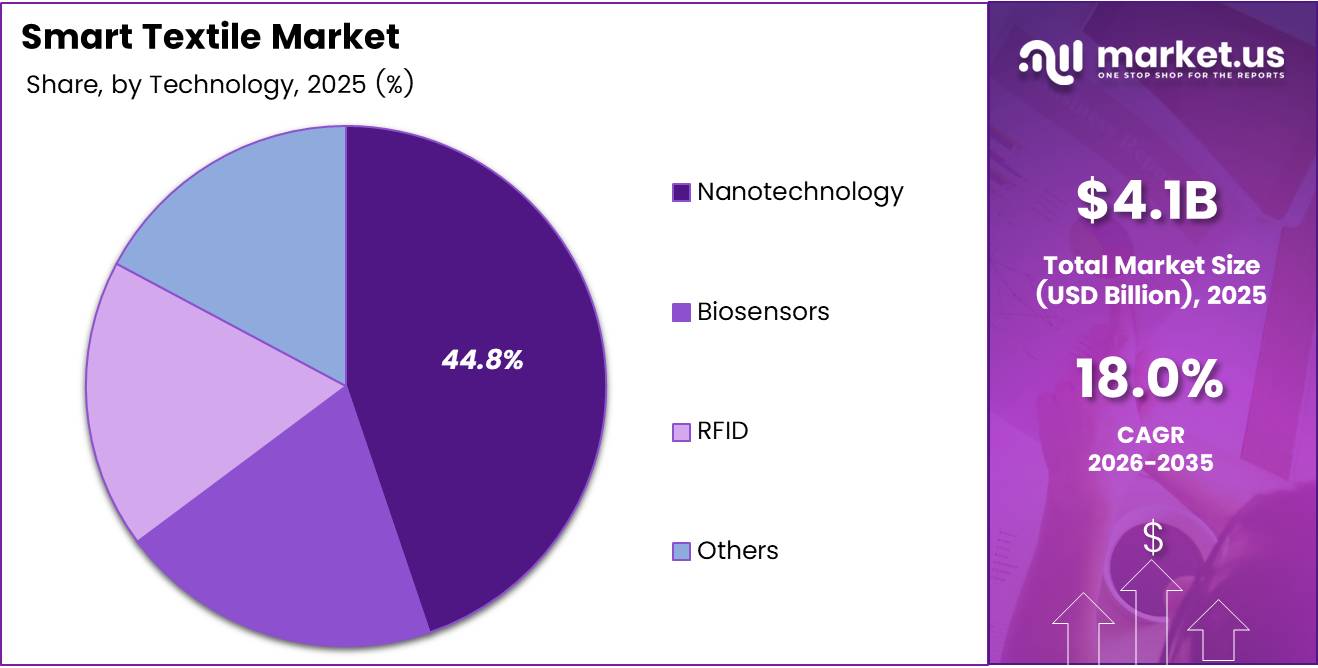
Global Smart Textile Market size is expected to be worth around USD 21.5 Billion by 2035 from USD 4.1 Billion in 2025, growing at a CAGR of 18.0% during the forecast period 2026 to 2035.
Smart textiles embed electronic and functional components directly into fabric structures. These advanced materials enable real-time sensing, thermoregulation, and data transmission. Unlike conventional fabrics, smart textile solutions respond to environmental and physiological stimuli, making them active participants in performance management rather than passive materials.
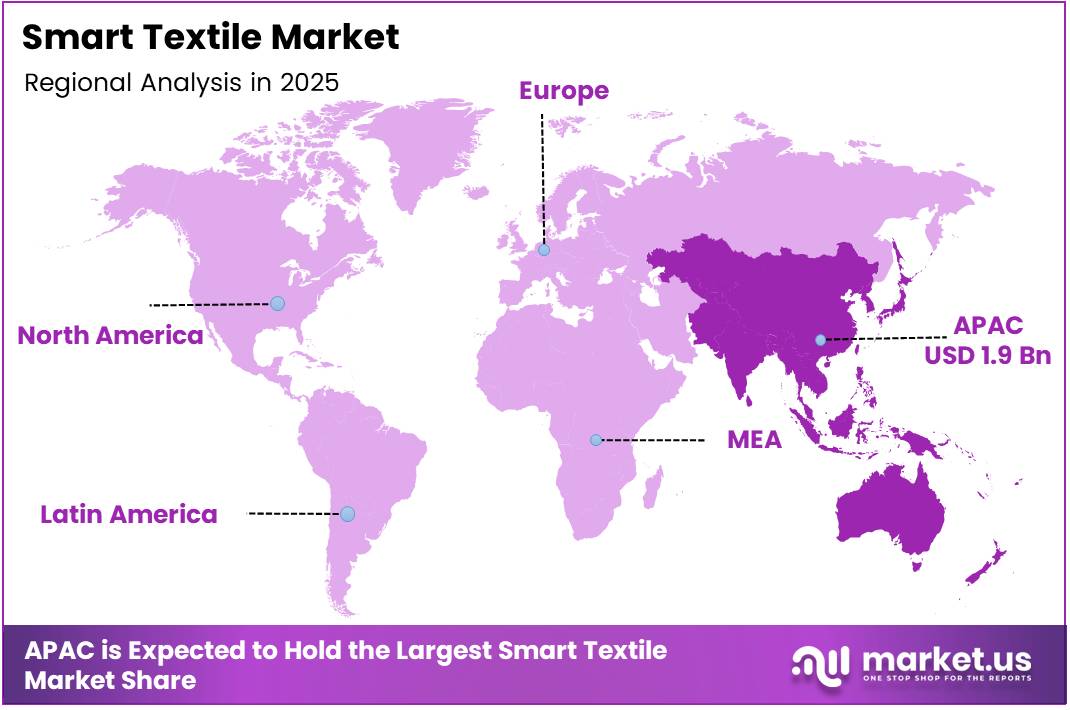
Automotive and Transportation integrates smart textiles into seat covers, steering wheel wraps, and cabin interior surfaces for occupant comfort monitoring and heating control. OEMs view embedded textile sensing as a cost-efficient alternative to discrete sensor hardware. As electric vehicle platforms expand, thermal management fabrics gain additional relevance for battery-adjacent interior temperature control. Fashion and Lifestyle applications translate smart textile technology into consumer wearables that prioritize aesthetic appeal alongside functional performance. Collaboration between technology firms and apparel brands accelerates product development timelines and broadens retail reach. However, fashion’s trend-driven purchasing cycle creates demand volatility that requires flexible manufacturing capacity. Industrial and Safety buyers use smart textiles for worker health monitoring, hazardous environment detection, and protective equipment enhancement. Regulatory pressure on occupational health and safety standards strengthens procurement mandates for sensor-embedded workwear in mining, construction, and chemical processing. This regulatory tailwind provides a structural floor for industrial smart textile revenue. Others in end-use include aerospace, agriculture, and smart home applications. These emerging verticals test smart textile capabilities in non-traditional environments, expanding the market’s total addressable use-case portfolio. While individually small today, their combined exploration creates the application breadth that attracts sustained R&D investment from material science firms. Healthcare providers and fitness platforms now require continuous, non-invasive biometric data that traditional wearables cannot deliver comfortably at scale. Smart textiles address this gap by embedding sensors directly into garments. According to arXiv, full-body NFC smart textiles support large-scale body coverage with an NFC-enabled area of approximately 70–80% of the body, confirming that fabric-integrated networks can replace device clusters in clinical monitoring environments. This coverage capability signals a structural shift in remote patient monitoring procurement. Hospitals replacing wired monitoring setups with smart garments reduce both equipment cost and patient discomfort simultaneously. Moreover, the clinical ROI from continuous data capture shortens the payback period for institutional buyers, making budget approval faster than for conventional medical device upgrades. Simultaneously, rising R&D expenditure in conductive and e-textile materials addresses the durability and functionality constraints that historically limited commercial rollout. Manufacturers fund nanotechnology integration to enable sensing and thermoregulation in a single fabric layer. Automotive and aerospace sectors also channel dedicated R&D budgets toward smart textile integration, expanding the supplier base beyond traditional apparel and textile manufacturers. Advanced smart textile materials — particularly those embedding conductive polymers, biosensors, and nano-coatings — carry significantly higher per-unit production costs than conventional fabrics. This cost gap prevents mainstream retail brands from adopting smart textile lines at competitive price points. Consequently, market penetration remains concentrated in premium and institutional segments rather than achieving the volume distribution that sustains long-term market scale. Electronic components embedded in fabrics degrade under repeated washing, heat exposure, and mechanical flexing. Standard consumer wash cycles damage conductive threads and sensor connections, raising product replacement frequency and reducing buyer confidence. This durability gap forces manufacturers to choose between compromising wash resistance or using encapsulation methods that add bulk and reduce the fabric’s inherent wearing comfort. Together, these two constraints create a commercialization ceiling. Even when technical performance meets clinical or athletic specifications, cost and durability barriers prevent the retail-scale distribution needed to recover R&D investment. Vendors that solve both constraints simultaneously — rather than optimizing one at the expense of the other — will define the commercial viability threshold for the next generation of smart garments. IoT-connected clothing platforms allow smart textiles to transmit real-time biometric data to cloud analytics systems without discrete hardware modules. This connectivity transforms garments from passive data collectors into active nodes in broader health and performance management ecosystems. According to arXiv, textile capacitive motion capture systems achieved real-time inference at 42 frames per second on an embedded edge platform, confirming that edge computing in fabric is commercially viable today. Biometric-sensing fabrics unlock a personalized healthcare segment that hospital-grade devices cannot reach cost-effectively. Garments that continuously monitor glucose, hydration, or cardiac rhythm enable preventive care models that reduce acute intervention costs. In January 2025, researchers from the University of Southampton and UWE Bristol developed biodegradable electronic textiles called “SWEET” that reliably monitor health signals while biodegrading effectively — demonstrating that sustainable performance monitoring is technically achievable, not just aspirational. Military and defense procurement provides a high-margin, stable growth channel for advanced smart textile developers. Defense agencies invest in soldier performance monitoring, thermal regulation, and communication fabrics as force multipliers. Additionally, rising interest in eco-friendly and sustainable smart textile innovations opens consumer and regulatory channels that traditional performance textiles cannot access, creating a parallel commercial pathway for environmentally certified fabric systems. Fashion brands now co-develop smart clothing lines directly with semiconductor and software firms, compressing the product development cycle from years to months. This collaboration model transfers technology risk to the tech partner while giving apparel brands differentiated product lines. According to ScienceDirect, a multi-functional textile strain and shielding sensor showed fast electrical response time of approximately 40 ms and recovery time of approximately 54 ms, demonstrating sensor responsiveness that meets real-time fashion and performance applications simultaneously. Flexible, lightweight energy-harvesting fabrics eliminate the battery dependency that restricts smart sportswear to short usage cycles. Garments that harvest kinetic energy during athletic movement can power embedded sensors indefinitely, removing the recharging friction that limits mainstream adoption. This capability shifts the consumer value proposition from “smart garment” to “always-on performance coach,” fundamentally changing how brands market and price smart textile products. AI-enabled fabrics analyze biometric data patterns to predict health events and performance plateaus before they manifest clinically. This predictive capability appeals to elite sports programs and corporate wellness platforms where early intervention has measurable ROI. Smart textiles also enter VR and AR applications as haptic feedback layers, opening an entirely new hardware category where fabric serves as the human-machine interface rather than rigid controllers. Asia Pacific commands 47.8% of the global Smart Textile Market, valued at USD 1.9 Billion in 2025. The region’s dominance reflects its integrated textile manufacturing base, strong electronics supply chains, and government-backed smart manufacturing programs in China, South Korea, and Japan. These structural advantages give APAC producers a cost-to-market lead that other regions cannot replicate through technology investment alone. North America maintains a strong position driven by early adoption of wearable health monitoring across its mature healthcare system and active defense procurement programs. The U.S. military’s investment in soldier performance textiles sustains above-average demand for advanced fabric systems. Moreover, a dense startup ecosystem in Boston and Silicon Valley continuously introduces new biosensor and IoT-connected garment products to clinical and consumer channels. Europe advances through a combination of regulatory pressure on occupational safety standards and strong academic-industry collaboration in e-textile research. Germany and the UK lead institutional smart textile deployment, particularly in automotive interiors and industrial workwear. The EU’s sustainability mandates additionally steer investment toward eco-certified smart fabric production, accelerating the development of biodegradable and recyclable e-textile platforms. Latin America represents an early-stage adoption market where healthcare infrastructure gaps create demand for remote patient monitoring solutions, including smart garments. Brazil leads regional development through its expanding medical device sector and university-led research programs. However, import dependency on advanced conductive materials and electronics slows local production scale-up and keeps end-product costs above mass-market thresholds. The Middle East and Africa market develops through government investment in smart city infrastructure and military modernization programs, particularly across Gulf Cooperation Council states. Extreme climate conditions in the region create functional demand for advanced thermoregulation fabrics in both consumer and industrial applications. Africa’s market remains nascent, primarily accessing smart textile products through imported goods rather than local manufacturing. North America Europe Asia Pacific Latin America Middle East & Africa DuPont De Nemours, Inc. anchors its smart textile strategy on advanced materials science, supplying conductive fibers and protective fabric systems to industrial, defense, and healthcare buyers. Its materials reach end-product manufacturers rather than consumers directly, giving DuPont a platform position in the value chain. This upstream positioning insulates the company from retail demand volatility while capturing margin across multiple end-use verticals simultaneously. Jabil Inc. applies its electronics manufacturing services expertise to smart textile component integration, bridging the gap between semiconductor fabrication and garment assembly. Its advantage lies in scale — Jabil can produce sensor-embedded textile modules at volumes that pure-play smart textile startups cannot match. This manufacturing depth makes Jabil the preferred partner for brands that require consistent quality at consumer retail quantities. AIQ Smart Clothing Inc. specializes in conductive yarn and smart garment design, targeting medical monitoring and sports performance with washable, integrated electronic systems. Its focus on washability as a primary design constraint directly addresses the durability barrier that slows institutional adoption. Consequently, AIQ’s product architecture positions it well for healthcare procurement cycles where long-term garment reliability is a non-negotiable specification. Adidas leverages its global retail distribution and brand equity to commercialize smart textile products at consumer scale, a capability that pure-play technology firms cannot replicate independently. Its collaboration model — partnering with sensor and materials firms rather than developing all components in-house — reduces R&D risk while accelerating time-to-market. This approach gives Adidas a structural speed advantage in the high-volume sports and lifestyle smart garment segment.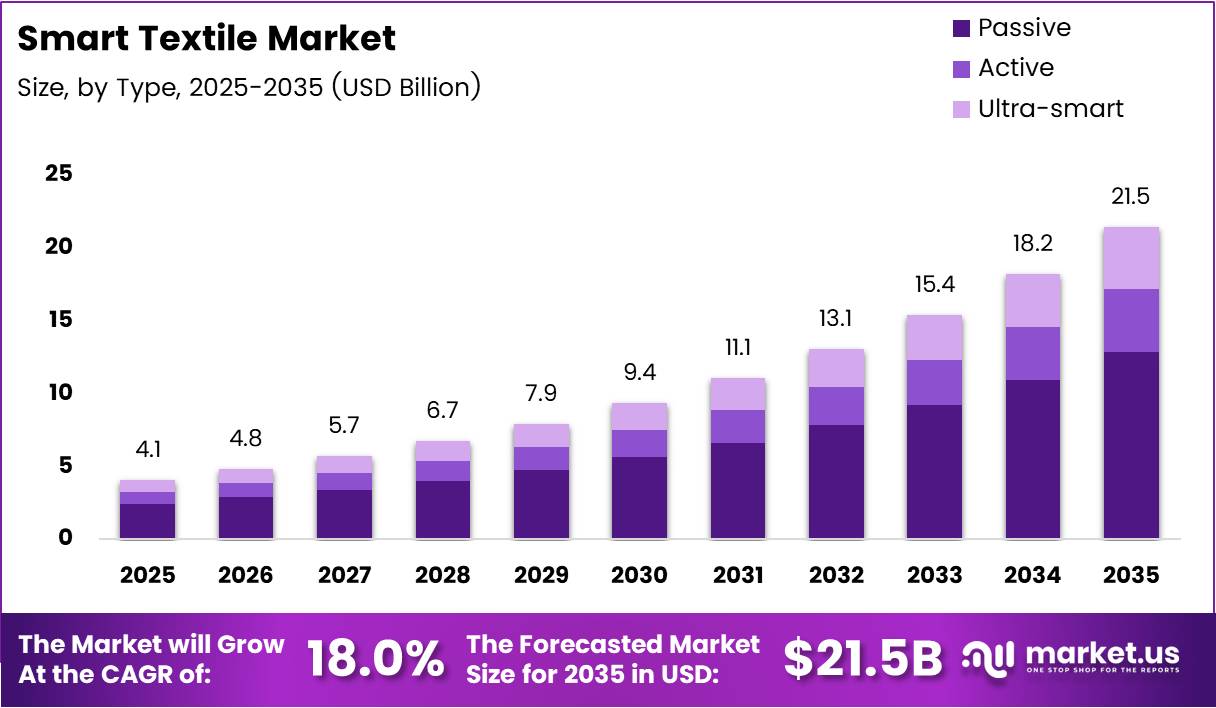
Key Market Segments
By Type
By Form
By Functionality
By Technology
By Fabric Type
By End-Use
Drivers
Wearable Health Monitoring and R&D Investment Drive Smart Textile Adoption Across High-Value Sectors
Restraints
High Production Costs and Washability Limitations Constrain Mass-Market Smart Textile Commercialization
Growth Factors
IoT Connectivity, Biometric Fabrics, and Sustainable Innovation Open New Smart Textile Revenue Channels
Emerging Trends
AI-Enabled Fabrics and Cross-Industry Collaboration Redefine Smart Textile Product Development
Regional Analysis
Asia Pacific Dominates the Smart Textile Market with a Market Share of 47.8%, Valued at USD 1.9 Billion
North America Smart Textile Market Trends
Europe Smart Textile Market Trends
Latin America Smart Textile Market Trends
Middle East and Africa Smart Textile Market Trends
Key Regions and Countries
Key Company Insights
Key Players
Recent Developments









