


Report Overview
The sentiment analytics market size is projected to reach USD 5.26 billion by 2025, growing at a compound annual growth rate (CAGR) of 15.30%. This rapid growth is indicative of how crucial sentiment analytics is becoming for organizations across various industries. This region’s prominence is attributed to its early adoption of sentiment analysis technologies, particularly within the consumer goods, retail, and financial services sectors. By 2035, the sentiment analytics market is forecasted to surge to USD 21.84 billion.
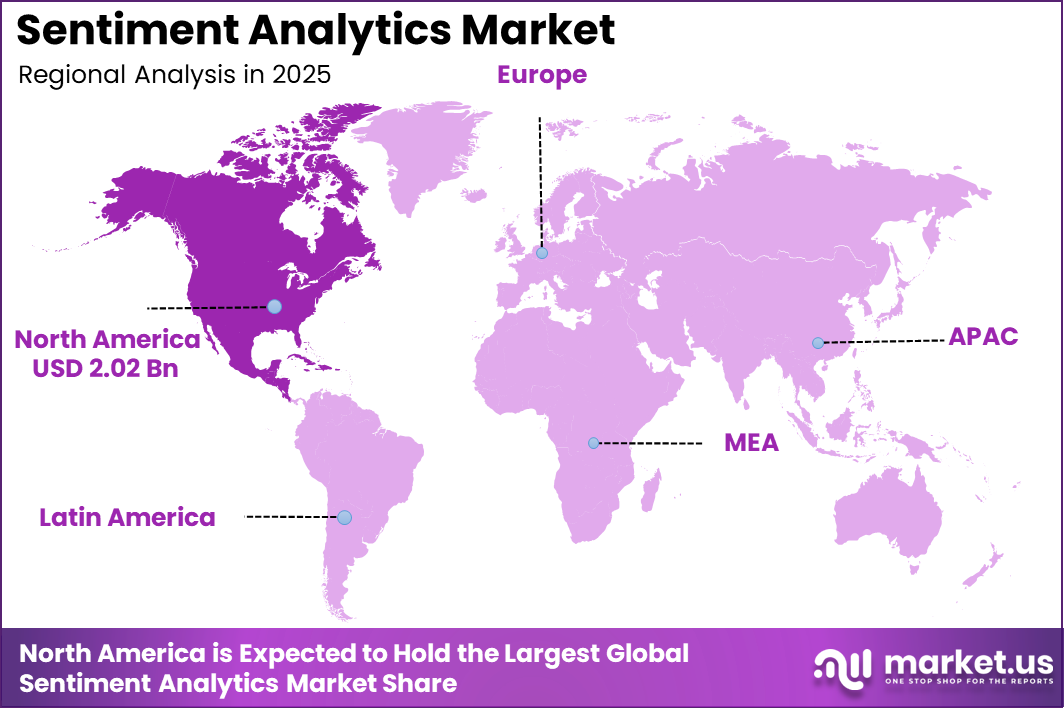
North America continues to lead the market with a strong contribution. As businesses increasingly rely on data-driven insights, the demand for sentiment analytics will only continue to expand. North America, particularly the United States, holds a dominant share of the market, with an estimated value of USD 2.02 billion in 2025.
The sentiment analytics market is witnessing significant growth, driven by advancements in technology and the increasing importance of understanding consumer emotions in today’s digital age. Sentiment analytics involves using data science and artificial intelligence to interpret and analyze emotions expressed in customer feedback, social media interactions, reviews, and other text-based data. This technology allows businesses to gain a deeper understanding of public opinion, enabling them to enhance customer experience, make informed decisions, and improve brand loyalty.
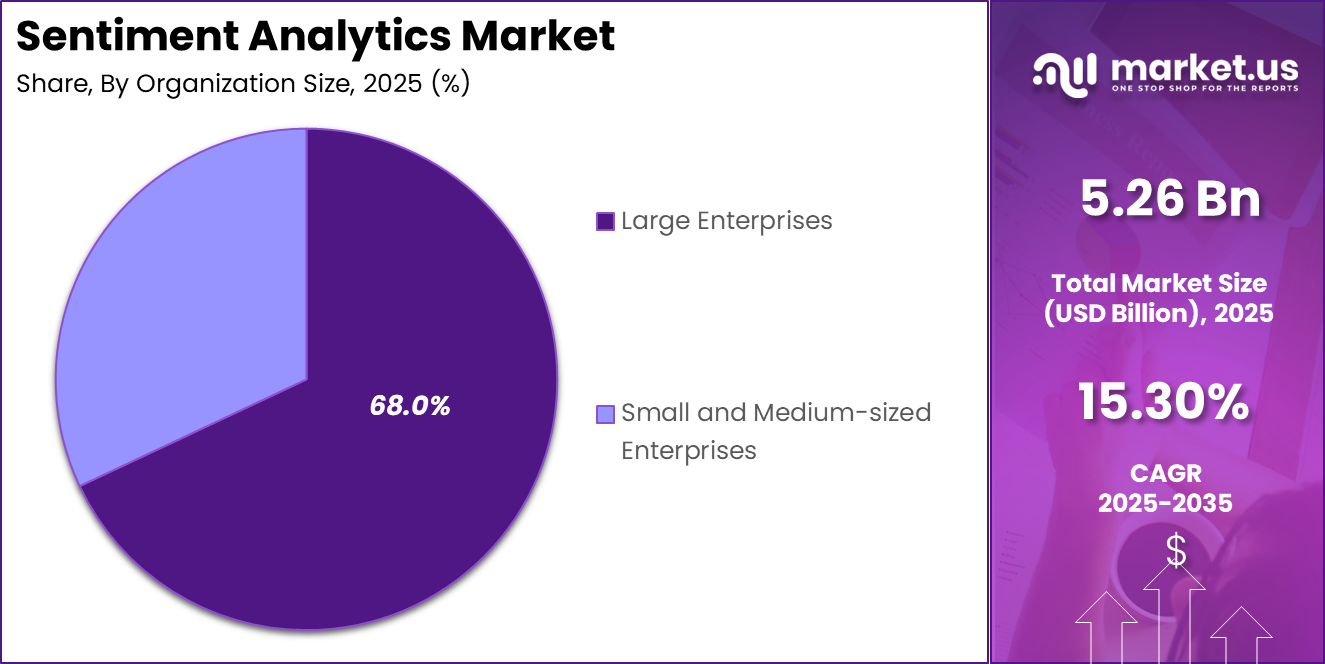
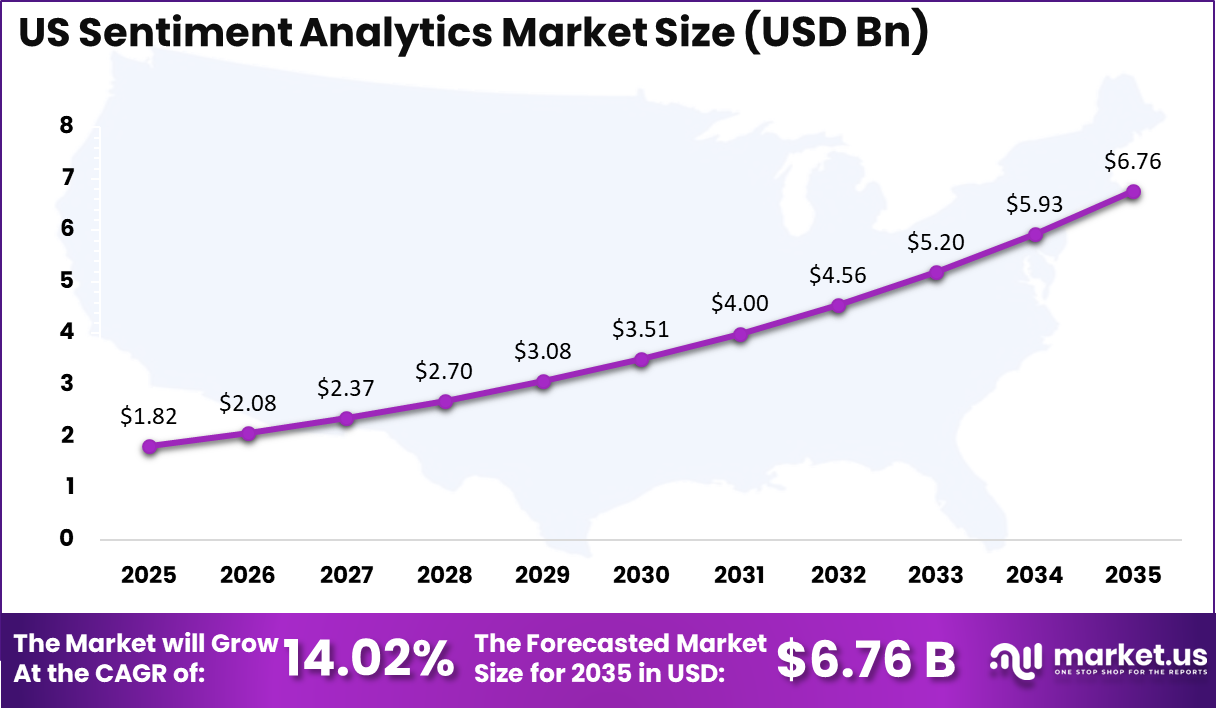
North America is the leading regional market for sentiment analytics, accounting for 38.5% of the global share, with a market size of USD 2.02 billion in 2025. The region’s dominance is driven by the early adoption of advanced analytics technologies, widespread digital infrastructure, and high penetration of social media and e-commerce platforms. Organizations across sectors such as retail, BFSI, healthcare, and media increasingly leverage sentiment analytics to gain insights into customer behavior, enhance brand reputation, and optimize marketing strategies. The presence of major technology vendors and continuous investments in AI, machine learning, and cloud-based platforms further strengthen North America’s position as a key hub for sentiment analytics innovation and deployment. The US represents the largest market within North America due to its strong technological ecosystem, high corporate adoption rates, and increasing demand for real-time consumer insights. Businesses in the region are focusing on integrating sentiment analytics into broader customer experience management and decision-making frameworks, which drives consistent growth. Additionally, advancements in multimodal analytics – combining facial, speech, and text data – are enabling organizations to extract richer insights from customer interactions. Overall, North America is expected to maintain its leadership in sentiment analytics, supported by technological sophistication, early adoption trends, and the growing strategic importance of data-driven customer insights. Large enterprises lead adoption in the US due to their ability to invest in advanced software solutions and professional services. Cloud-based deployments are particularly popular, offering scalability, real-time analytics, and seamless integration with existing enterprise systems. Key applications include retail and e-commerce, where understanding consumer behavior and personalizing customer experiences drive revenue growth, as well as BFSI, healthcare, and media sectors. The integration of facial, speech, and text analytics is further enhancing the depth and accuracy of insights. Overall, the US market is expected to remain at the forefront of sentiment analytics innovation, supported by technological infrastructure, early adoption trends, and the increasing strategic importance of understanding customer sentiment for competitive advantage. The sentiment analytics market’s growth is underpinned by the exploding volume of unstructured data and the increasing need for tools that can extract meaningful insights from it. Research shows that over 80 % of enterprise data globally is unstructured, encompassing customer reviews, social media posts, emails, and chat logs, creating an urgent need for analytics platforms that can process this information. Only a small fraction of this data is actively used for insights, leaving a vast opportunity for sentiment analytics to unlock value from untapped datasets. Adoption of AI and machine learning technologies is another major driver. Around 68 % of enterprises use AI for unstructured data analysis, with natural language processing (NLP) and transformer‑based models significantly improving the accuracy and depth of sentiment detection. These AI‑enabled capabilities allow sentiment analytics tools to interpret subtle emotional cues and context in text and speech, which enhances customer understanding and supports proactive business actions. Sentiment analytics is increasingly integrated into real‑time monitoring and social media listening, with statistics showing that a majority of brands analyze sentiment across social platforms to guide customer‑centric strategies and strengthen online reputation management. Cloud deployment and seamless integration with CRM and business intelligence systems further accelerate adoption by making insights more accessible and scalable across organizations of all sizes. The sentiment analytics market faces several significant restraints that could slow broader adoption and limit its effectiveness despite strong demand. A primary challenge stems from data privacy and regulatory compliance. Analyzing large volumes of personal or user‑generated content raises serious privacy concerns, and stringent data protection laws such as the GDPR in Europe and CCPA in the United States restrict how companies collect, process, and use consumer data, adding operational complexity and compliance costs. Technical limitations also restrain market growth. Sentiment analytics systems often struggle to accurately interpret nuanced language, sarcasm, irony, and context‑dependent expressions, leading to misclassification and unreliable insights. Language diversity, cultural differences, and multilingual content further complicate analysis, requiring sophisticated models and ongoing adaptation. These limitations can undermine user confidence and reduce the perceived value of sentiment insights. High implementation costs and resource requirements pose another barrier, particularly for small and medium‑sized enterprises. Deploying advanced sentiment analytics solutions often involves substantial investments in technology, skilled personnel, and infrastructure. Integration challenges with existing IT systems and legacy platforms can also hinder deployment and scalability. Finally, data quality issues, including noise, bias, and inconsistent input data, can degrade the accuracy of sentiment analysis results, making organizations cautious about fully relying on these tools for critical decision‑making. The sentiment analytics market presents several growth opportunities driven by technological innovation and expanding enterprise use cases across industries. One major opportunity lies in integration with advanced AI and machine learning technologies, which significantly enhance the accuracy and depth of sentiment interpretation, enabling businesses to process unstructured data more effectively and uncover deeper insights into customer behavior and preferences. These AI‑driven tools are increasingly being embedded into CRM and business intelligence platforms, expanding their utility beyond basic text analysis into predictive and contextual intelligence. Another key opportunity exists in the expansion of applications across new industry verticals. Beyond traditional sectors like retail and BFSI, industries such as healthcare, education, government, travel, and hospitality are beginning to adopt sentiment analytics to improve service delivery, optimize operations, and enhance stakeholder engagement. This widened scope offers vendors a chance to tailor solutions for specific operational needs and regulatory environments, accelerating adoption. Emerging markets and SMEs also represent significant growth potential as cloud‑based solutions lower entry barriers and increase accessibility. As digital transformation accelerates globally, smaller organizations are recognizing the value of sentiment data to compete more effectively by personalizing customer experiences and monitoring brand reputation. Increasing availability of scalable SaaS offerings and partnerships with platform providers can further drive penetration in these segments. The market is rapidly shifting toward AI‑driven, real‑time sentiment analytics platforms that integrate advanced natural language processing (NLP), deep learning, and machine learning to deliver more accurate and nuanced insights across text, voice, and social media data sources. This trend enhances contextual understanding and supports instantaneous decision‑making. Integration with cloud‑native and scalable architectures is becoming standard, enabling enterprises to process large volumes of unstructured data efficiently and deploy sentiment analytics across global operations with lower upfront infrastructure costs. There is growing adoption of multimodal sentiment fusion, which combines text, speech, and facial cues to improve overall emotional interpretation. This trend is particularly strong in contact centers, customer experience platforms, and CRM integrations, driving broader enterprise adoption. Embedding sentiment signals into generative AI assistants and copilots is gaining traction. Enterprises are using sentiment indicators to improve contextual responses and personalize user interactions, which boosts analytical precision and reduces manual analysis. As social media and digital interactions continue to grow, real‑time monitoring of customer feedback and brand reputation is a key trend, prompting companies to invest in sentiment analytics for proactive crisis response and continuous engagement management. The sentiment analytics landscape is shaped by a mix of global technology giants, specialized analytics providers, and social listening platforms competing on features, deployment flexibility, and integration capabilities. According to market data, some established players in the sentiment analytics space command meaningful shares of the overall software segment. For example, IBM holds about 14.8 % of the sentiment analysis software market and has deployed its solutions across more than 185 enterprise clients, processing billions of text records in 2024. SAS Institute follows closely with roughly 12.5 % market share and deployments in over 23 countries, reflecting its strength in analytics and business intelligence integration. These figures illustrate that traditional analytics vendors remain significant competitors in enterprise sentiment workloads. Among focused sentiment tools, Brandwatch is a leading social media analytics provider with around 15 % market share, bolstered by strategic product enhancements and real‑time sentiment insights across digital channels. Tools like Lexalytics, General Sentiment, and Clarabridge serve niche use cases such as contextual NLP, industry‑specific analytics, and customer experience sentiment scoring, each with smaller but technically strong footprints. Angoss Software Corporation and Bitext are examples of niche players with more limited penetration but specialized offerings in predictive analytics and multilingual processing. On the tool features front, widely used services such as Google Cloud Natural Language API, Microsoft Azure Text Analytics, Amazon Comprehend, and IBM Watson NLU are often benchmarked together for enterprise sentiment scoring due to their cloud scalability and integration with broader AI services. Comparative reviews highlight differences in customization, language support, and ease of use, with platforms like MonkeyLearn and NetBase Quid often noted for lower‑barrier entry and strong social listening capabilities.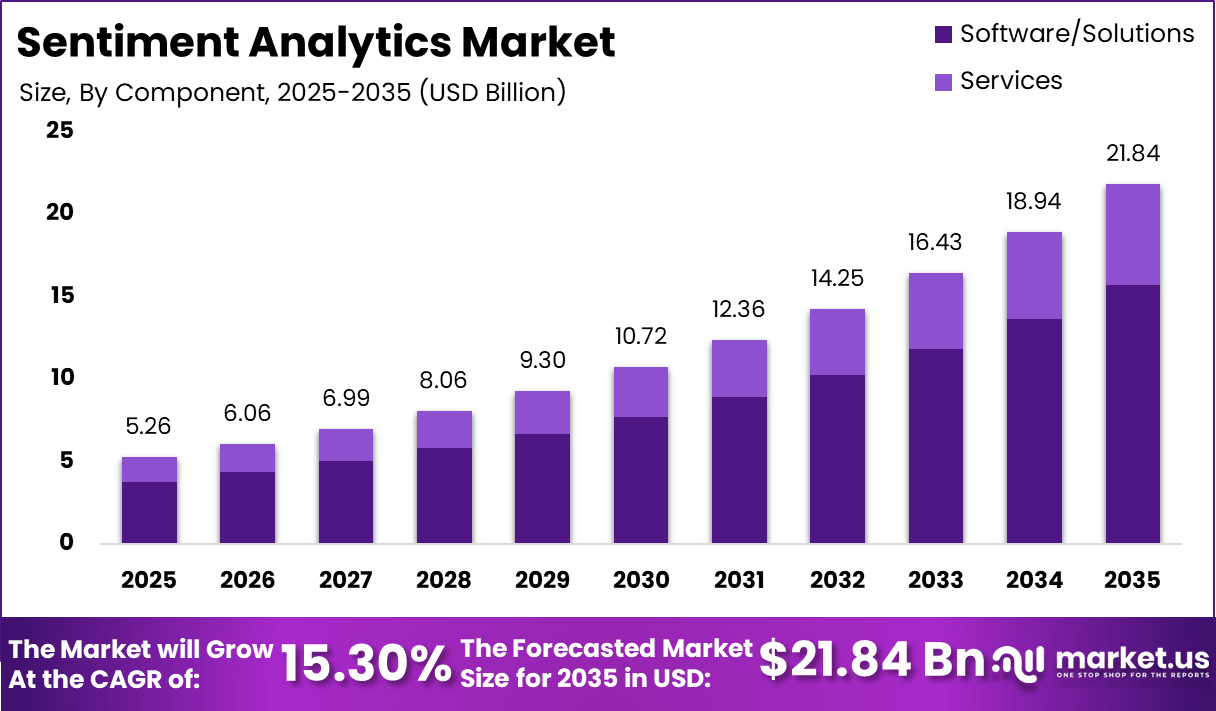
Key Market Segments
By Component
By Deployment Mode
By Organization Size
By Type
By Application
Regional Analysis
Regional Analysis and Coverage
Driving Factors
Restraint factors
Growth Opportunities
Trending factors
Competitive Analysis
Top Key Players in the Market
Recent Developments









