


Report Overview
The Global Sensitive Skin Care Products Market size is expected to be worth around USD 92.6 Billion by 2035 from USD 46.2 Billion in 2025, growing at a CAGR of 7.2% during the forecast period 2026 to 2035.
The sensitive skin care products market includes formulations specifically developed for individuals with reactive, easily irritated, or allergy-prone skin. These products cover a wide range, from face creams and cleansers to body wash and lip balms. Moreover, they are designed to minimize irritation and support the skin’s natural barrier function.
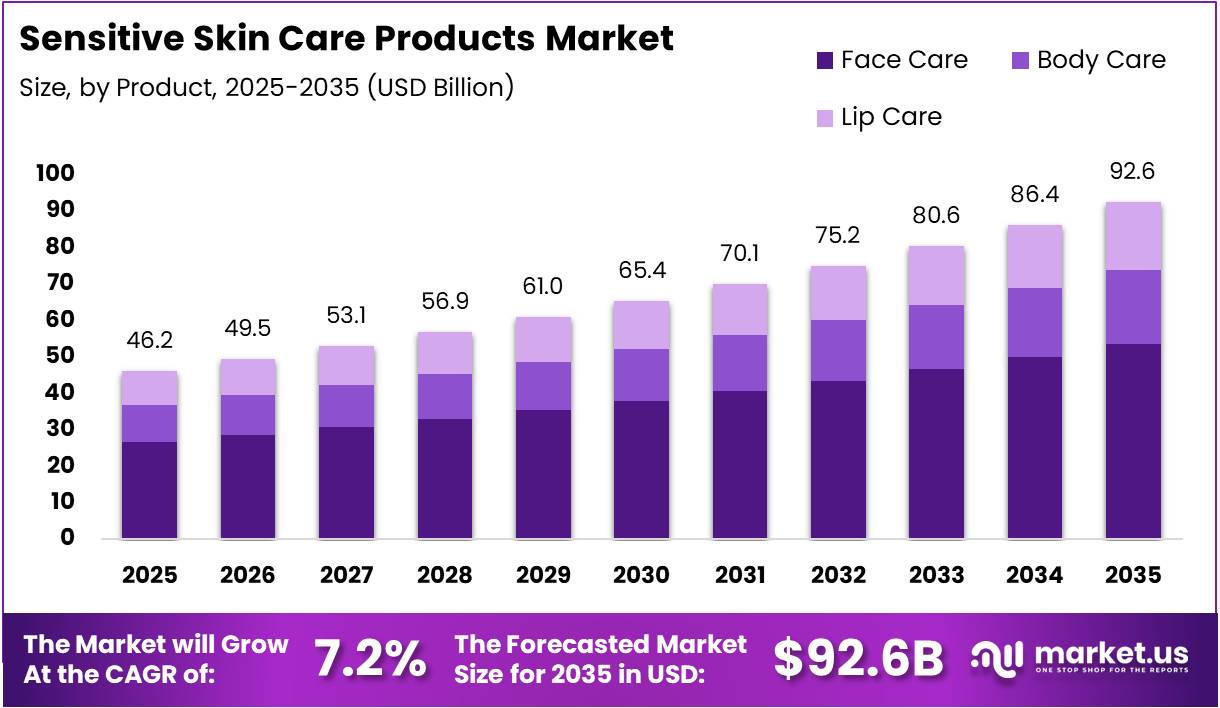
Consumer demand for hypoallergenic, dermatologist-tested, and clean-label skincare is rising steadily. Additionally, increased awareness of ingredient transparency is pushing brands to reformulate with gentler, plant-based actives. This shift is creating significant growth potential across both developed and emerging economies worldwide.
The market presents strong opportunities in multifunctional product development, combining moisturizing, SPF, and anti-aging benefits in a single formulation. Furthermore, collaborations between brands, dermatologists, and digital influencers are proving effective in building consumer trust and expanding reach into new demographics.
Regulatory bodies across North America, Europe, and Asia Pacific are tightening standards on cosmetic ingredients, particularly those linked to skin reactions. Consequently, manufacturers are investing in allergen-free and clinically tested formulations to comply with evolving safety guidelines and meet growing consumer expectations for transparency.
According to PubMed, approximately 60–70% of women and 50–60% of men report having some degree of sensitive skin, highlighting the vast addressable population. Moreover, according to Shell.com, more than 65% of consumers surveyed want beauty products with clean ingredients to help with allergies or be more sustainable.
According to a study published in PMC, a facial cream for sensitive skin reduced subjective symptom scores by 66% after 2 weeks and by 76% after 4 weeks of use. Additionally, according to The Industry Beauty, 81% of parents claim to be aware of ingredients in their child’s skincare products.
Key Takeaways
- The global Sensitive Skin Care Products Market was valued at USD 46.2 Billion in 2025 and is projected to reach USD 92.6 Billion by 2035.
- The market is expected to grow at a CAGR of 7.2% during the forecast period 2026 to 2035.
- By Product, Face Care dominates with a 57.8% share in 2025.
- By Gender, Female holds the leading segment position with a 67.9% share.
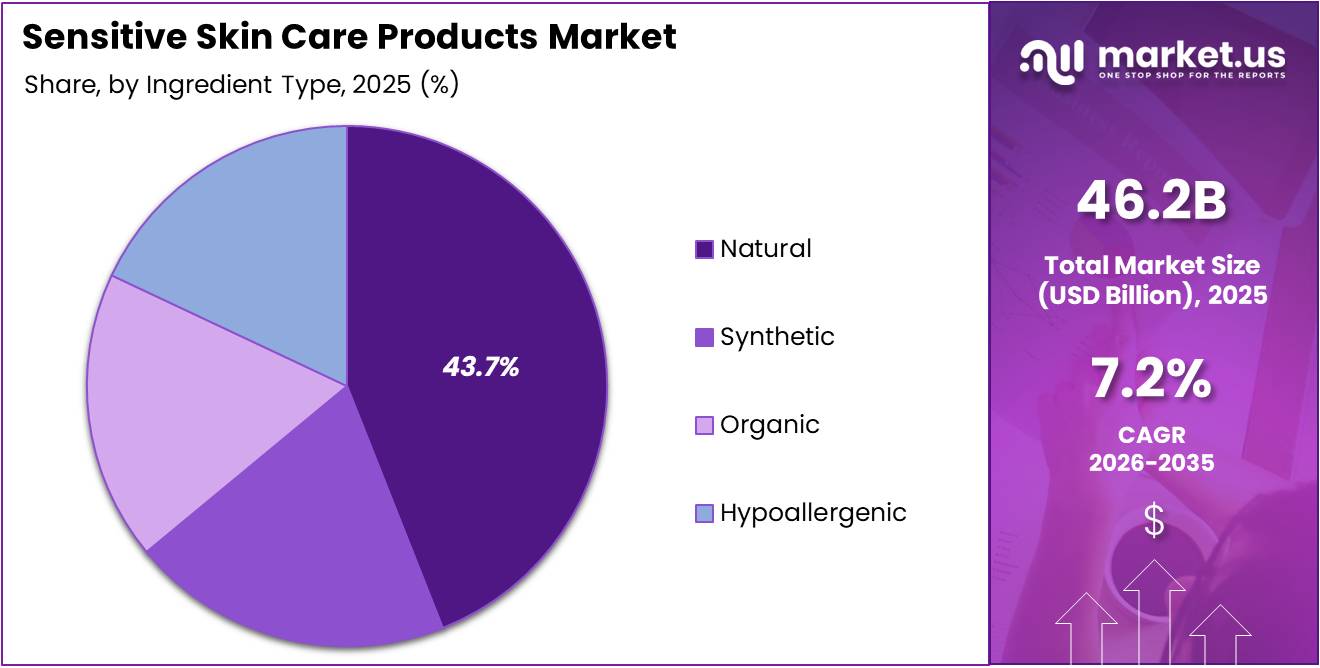
- By Ingredient Type, Natural ingredients lead with a 43.7% share.
- By Distribution Channel, Supermarkets & Hypermarkets hold the dominant position with a 38.4% share.
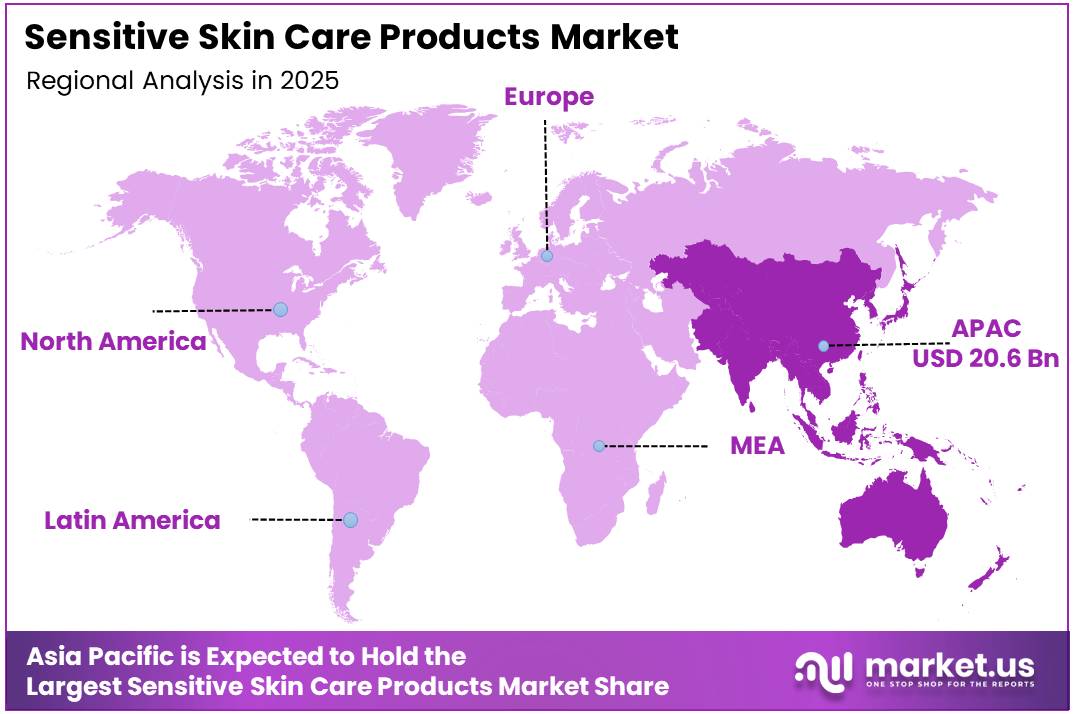
- Asia Pacific dominates the global market with a 44.80% share, valued at USD 20.6 Billion in 2025.
By Product Analysis
Face Care dominates with 57.8% due to high consumer focus on facial skincare routines and daily sensitivity management.
In 2025, Face Care held a dominant market position in the By Product segment of the Sensitive Skin Care Products Market, with a 57.8% share. Face creams, moisturizers, facial cleansers, serums, and sunscreens designed for sensitive skin are widely used in daily routines. Consequently, this sub-segment continues to attract strong investment from brands and dermatologists alike.
Body Care represents a growing sub-segment, covering body creams, moisturizers, body wash, and sunscreen products tailored for sensitive skin. Additionally, rising concerns about skin dryness and irritation across the body are fueling demand. Consumers are increasingly seeking fragrance-free and gentle body care solutions for everyday use.
Lip Care is an emerging area within the sensitive skin care market, encompassing lip balms, lip scrubs, and related formulations. Moreover, growing awareness about the delicate nature of lip skin and its vulnerability to irritants is driving demand for hypoallergenic and chemical-free lip care products globally.
By Gender Analysis
Female dominates with 67.9% due to higher skincare engagement and greater reported prevalence of skin sensitivity.
In 2025, Female held a dominant market position in the By Gender segment of the Sensitive Skin Care Products Market, with a 67.9% share. Women show significantly higher engagement with skincare routines and are more likely to seek specialized products for sensitive skin. Moreover, targeted brand marketing has consistently reinforced this segment’s strong growth trajectory.
The Male segment is witnessing steady growth as awareness around men’s skincare and skin sensitivity rises globally. Additionally, brands are actively launching gender-specific sensitive skin formulations to capture this expanding consumer base. Furthermore, increased grooming culture among younger males is contributing meaningfully to demand in this segment.
By Ingredient Type Analysis
Natural ingredients dominate with 43.7% due to growing consumer preference for plant-based and chemical-free skincare formulations.
In 2025, Natural held a dominant market position in the By Ingredient Type segment of the Sensitive Skin Care Products Market, with a 43.7% share. Consumers increasingly prefer botanical and plant-derived actives that are gentle on sensitive skin. Moreover, clean beauty trends are reinforcing demand for natural ingredient-based formulations across global markets.
Synthetic ingredients continue to hold a steady position, particularly in clinically tested and dermatologist-recommended products. Additionally, advances in cosmetic chemistry have produced gentler synthetic compounds that perform effectively without causing irritation. Consequently, they remain an important and trusted part of the sensitive skin care formulation landscape.
Organic formulations are gaining traction as consumers become more conscious of ingredient sourcing and environmental impact. Furthermore, certified organic skincare products appeal strongly to eco-conscious buyers who prioritize both personal health and sustainability. This sub-segment is expected to grow at an accelerated pace over the forecast period.
Hypoallergenic products are specifically formulated to minimize allergic reactions and are widely recommended by dermatologists for high-reactivity individuals. Consequently, rising prevalence of skin conditions such as eczema and rosacea is driving steady demand for this sub-segment. Clinical validation and dermatologist endorsement remain key purchase drivers in this category.
By Distribution Channel Analysis
Supermarkets & Hypermarkets dominate with 38.4% due to wide product availability, convenience, and high consumer foot traffic.
In 2025, Supermarkets & Hypermarkets held a dominant market position in the By Distribution Channel segment of the Sensitive Skin Care Products Market, with a 38.4% share. Their wide geographic reach and ability to stock diverse product ranges make them the preferred retail destination for sensitive skin care shoppers. Moreover, competitive pricing further strengthens their market position.
Specialty Stores offer a curated selection of sensitive skin care products, often providing personalized consultations and expert guidance. Additionally, these stores attract consumers seeking premium or niche formulations not available in mass retail. Consequently, they play an important role in building brand loyalty and driving trial of new product launches.
Pharmacy & Drugstores are a trusted channel for sensitive skin care, particularly for dermatologist-recommended and medicated formulations. Furthermore, the association with healthcare professionals adds significant credibility to products sold through this channel. Rising consumer preference for clinically validated skincare is supporting steady growth across pharmacy-based retail distribution.
Online distribution is growing rapidly, driven by e-commerce expansion and the convenience of home delivery. Moreover, digital platforms enable brands to reach global audiences, offer detailed ingredient transparency, and gather valuable consumer reviews. This channel is especially popular among younger, digitally savvy sensitive skin care consumers seeking informed purchase decisions.
Others, including direct sales, beauty subscription boxes, and direct-to-consumer models, represent a smaller but evolving distribution segment. Additionally, emerging models are enabling niche sensitive skin care brands to build direct consumer relationships and personalized experiences. Therefore, this segment is expected to grow steadily as personalization and convenience gain further importance.
Key Market Segments
By Product
- Face Care
- Face Creams & Moisturizers
- Cleansers & Face Wash
- Serums and Essence
- Sunscreen
- Others
- Body Care
- Body Creams & Moisturizers
- Body Wash
- Sunscreen
- Others
- Lip Care
- Lip Balms
- Lip Scrub
- Others
By Gender
- Female
- Male
By Ingredient Type
- Natural
- Synthetic
- Organic
- Hypoallergenic
By Distribution Channel
- Supermarkets & Hypermarkets
- Specialty Stores
- Pharmacy & Drugstores
- Online
- Others
Drivers
Rising Consumer Awareness and Demand for Safe Formulations Drive Sensitive Skin Care Market Growth
Rising consumer awareness about skin sensitivity and irritation prevention is a primary driver for the sensitive skin care products market. More individuals are identifying specific ingredient-related skin reactions in their daily routines. Consequently, they are actively seeking products that minimize irritant exposure and support long-term skin health and comfort.
Increasing demand for hypoallergenic and dermatologist-tested formulations is reshaping product development strategies across the industry. Additionally, consumers with conditions such as eczema, rosacea, and contact dermatitis are moving toward clinically validated products. Brands that demonstrate safety and efficacy through strong clinical evidence are gaining a competitive advantage in this growing market.
The growth of the natural and organic personal care products segment is further accelerating sensitive skin care market expansion. Moreover, consumers are shifting away from synthetic preservatives and artificial fragrances in favor of plant-based alternatives. Therefore, product innovation centered on gentle, clean-label ingredients is becoming a key strategic priority for brands in this category.
Restraints
Limited Efficacy Perception and Regional Awareness Gaps Restrain Sensitive Skin Care Market Growth
Limited product efficacy perception among first-time users remains a significant restraint in the sensitive skin care market. Many consumers are uncertain whether specialized sensitive skin formulations deliver noticeably better results than standard products. Consequently, trial conversion rates can be lower, slowing overall market penetration and reducing brand-switching behavior among new buyers.
Slow adoption due to lack of awareness is a persistent challenge in several developing and rural regions. Additionally, consumers in these markets may not yet identify with the concept of sensitive skin or may rely on traditional remedies instead. Therefore, limited consumer education creates meaningful barriers to first-time purchase and sustained product uptake.
Both restraints are compounded by the relatively higher price points of sensitive skin care products compared to mass-market alternatives. Moreover, without strong clinical communication and targeted consumer education campaigns, these barriers are difficult to overcome effectively. Addressing awareness gaps through dedicated outreach will be essential for sustained long-term market growth.
Growth Factors
Multifunctional Products and Strategic Collaborations Unlock New Growth Potential in Sensitive Skin Care
The development of multifunctional sensitive skin care products combining moisturizing, SPF protection, and anti-aging benefits in a single formulation presents a major growth opportunity. Additionally, consumers increasingly prefer streamlined skincare routines without compromising effectiveness. Consequently, brands offering well-rounded multi-benefit solutions are well-positioned to capture a broader and more engaged market share.
Formulation innovations using plant-based and allergen-free ingredients are opening new avenues for product differentiation in the sensitive skin care market. Moreover, advances in green chemistry and biotechnology are enabling more effective and stable natural formulations. Therefore, ongoing research and development investment in this space is expected to drive sustained long-term market expansion.
Collaborations with dermatologists and digital influencers are proving to be a powerful strategy for boosting product credibility and consumer trust. Furthermore, dermatologist endorsements provide the clinical validation that resonates strongly with sensitive skin consumers. Additionally, influencer partnerships help brands reach highly engaged audiences actively seeking authentic recommendations for their specific skin concerns.
Emerging Trends
Clean Beauty, Personalization, and Sustainability Redefine the Sensitive Skin Care Market Landscape
The popularity of clean beauty and chemical-free skincare lines is one of the most significant trends shaping the sensitive skin care market today. Moreover, consumers are actively scrutinizing ingredient labels and avoiding known irritants such as parabens, sulfates, and artificial fragrances. Consequently, clean-label formulations are quickly becoming the new standard for sensitive skin product development.
The rise of personalized skincare solutions for sensitive skin is gaining strong momentum across both premium and mass-market segments. Additionally, advances in skin diagnostics, AI-driven tools, and at-home testing kits are empowering consumers to make more informed product selections. Therefore, personalization is emerging as a key differentiator for competitive brands in this growing market.
Growing consumer interest in cruelty-free and sustainable packaging is reshaping product and brand strategy across the sensitive skin care industry. Furthermore, environmentally conscious shoppers are increasingly choosing brands that align with their values on animal welfare and environmental responsibility. Consequently, sustainability commitments are becoming an essential component of brand positioning and long-term consumer engagement.
Regional Analysis
Asia Pacific Dominates the Sensitive Skin Care Products Market with a Market Share of 44.80%, Valued at USD 20.6 Billion
Asia Pacific leads the global Sensitive Skin Care Products Market with a 44.80% share, valued at USD 20.6 Billion in 2025. The region’s dominance is driven by a large and highly beauty-conscious consumer base across China, Japan, South Korea, and India. Moreover, strong K-beauty influence and rising disposable incomes continue to fuel robust and sustained demand across the region.
North America Sensitive Skin Care Products Market Trends
North America holds a significant share in the global market, supported by high consumer awareness of skin health and a well-established retail and digital commerce infrastructure. Additionally, the region benefits from a strong presence of dermatology-focused brands and growing demand for clinically tested formulations. Consequently, premium and clean-label sensitive skin care products perform particularly well in this mature market.
Europe Sensitive Skin Care Products Market Trends
Europe is a mature yet steadily growing market for sensitive skin care, driven by strict cosmetic ingredient regulations and high consumer standards for safety. Furthermore, the region has a strong tradition of dermatological skincare, particularly in Germany and France. Therefore, scientifically validated and hypoallergenic formulations continue to find strong and consistent consumer acceptance across key European markets.
Middle East and Africa Sensitive Skin Care Products Market Trends
The Middle East and Africa region is an emerging market for sensitive skin care, with growth driven by rising urbanization and expanding consumer purchasing power. Additionally, awareness of skin sensitivity issues is growing in GCC countries. However, limited distribution infrastructure in certain areas remains a challenge for broader market penetration and sustained product availability across the region.
Latin America Sensitive Skin Care Products Market Trends
Latin America presents promising growth opportunities, particularly in Brazil and Mexico where consumer beauty spending is rising steadily. Moreover, growing middle-class populations and increased exposure to global skincare trends are driving demand for specialized sensitive skin care products. Additionally, local brands are investing in natural and organic formulations suited to regional skin types and consumer preferences.
Key Regions and Countries
North America
- US
- Canada
Europe
- Germany
- France
- The UK
- Spain
- Italy
- Rest of Europe
Asia Pacific
- China
- Japan
- South Korea
- India
- Australia
- Rest of APAC
Latin America
- Brazil
- Mexico
- Rest of Latin America
Middle East & Africa
- GCC
- South Africa
- Rest of MEA
Key Company Insights
L’Oréal S.A. is a global leader in the sensitive skin care products market, offering a comprehensive portfolio of dermatological and clinically tested formulations. The company’s investment in research and development, combined with strategic acquisitions in the skincare space, positions it at the forefront of product innovation. Moreover, L’Oréal’s broad distribution network ensures wide accessibility across both premium and mass-market segments worldwide.
Unilever PLC holds a strong position in the sensitive skin care market through its diverse portfolio of personal care brands targeting gentle and hypoallergenic formulations. The company continues to invest in sustainable ingredient sourcing and clean-label product development to meet evolving consumer preferences. Additionally, Unilever’s extensive global reach and retail partnerships enable effective penetration across both developed and emerging markets.
The Estée Lauder Companies Inc. focuses on premium sensitive skin care solutions, combining scientific research with luxury branding to attract discerning consumers. The company’s brands are well-known for clinically validated formulations and dermatologist-recommended products. Furthermore, its investments in digital commerce and personalized skincare technology are helping capture a growing segment of sensitive skin consumers globally.
Procter & Gamble Company addresses the sensitive skin care segment through a range of hypoallergenic and fragrance-free personal care products suited for everyday use. The company leverages its extensive consumer research capabilities and manufacturing scale to deliver accessible, effective solutions. Moreover, its strong brand equity and widespread retail distribution make it a consistent and reliable performer in this market.
Key Players
- L’Oréal S.A.
- Unilever PLC
- The Estée Lauder Companies Inc.
- Procter & Gamble Company
- Beiersdorf AG
- Amorepacific Corporation
- Pevonia International Inc
- Johnson & Johnson Services Inc.
- Kao Corporation
- Sebapharma GmbH & Co. KG
Recent Developments
- December 2025 – L’Oréal upped its strategic investment in Galderma Group AG to 20%, acquiring an additional 10% stake in the dermatology brands and services company. This move reinforces L’Oréal’s commitment to expanding its dermatological skincare portfolio and deepening its expertise in sensitive and medical-grade skin care solutions.
- October 2025 – All Free Clear partnered with Danielle Jonas to spotlight Eczema Awareness Month, focusing on educating the eczema and sensitive skin communities about effective skincare routines. The partnership aimed to raise meaningful awareness about managing highly reactive and sensitive skin conditions through informed product use.
- August 2025 – Doré and Evolved By Nature announced a partnership to bring American biotech innovation to French skin care formulation. This collaboration highlights the growing intersection of biotechnology and sensitive skin care, targeting consumers seeking scientifically advanced yet gentle skincare solutions.
- January 2025 – L’Oréal announced its acquisition of Gowoonsesang Cosmetics, the parent company of Korean skincare brand Dr.G. This strategic move strengthens L’Oréal’s position in the premium sensitive skin care segment while expanding its footprint in the high-growth Korean beauty market.









