


Report Overview
The Global Aliphatic Hydrocarbon Market is expected to be worth around USD 6.9 billion by 2035, up from USD 4.5 billion in 2025, and is projected to grow at a CAGR of 4.3% from 2026 to 2035. Asia Pacific continues driving demand, sustaining its 45.8% share and USD 2.0 Bn value.
The Aliphatic Hydrocarbon Market consists of chemical compounds made from straight-chain, branched, or non-aromatic structures that serve as essential ingredients in coatings, adhesives, rubber processing, surfactants, and dyes. These hydrocarbons are valued for their stability, clean-burning nature, and compatibility with a wide range of industrial formulations. The market is commonly divided by product type into saturated and unsaturated hydrocarbons, and by application into paints and coatings, adhesives and sealants, polymer and rubber, surfactants, dyes, and other industrial uses.
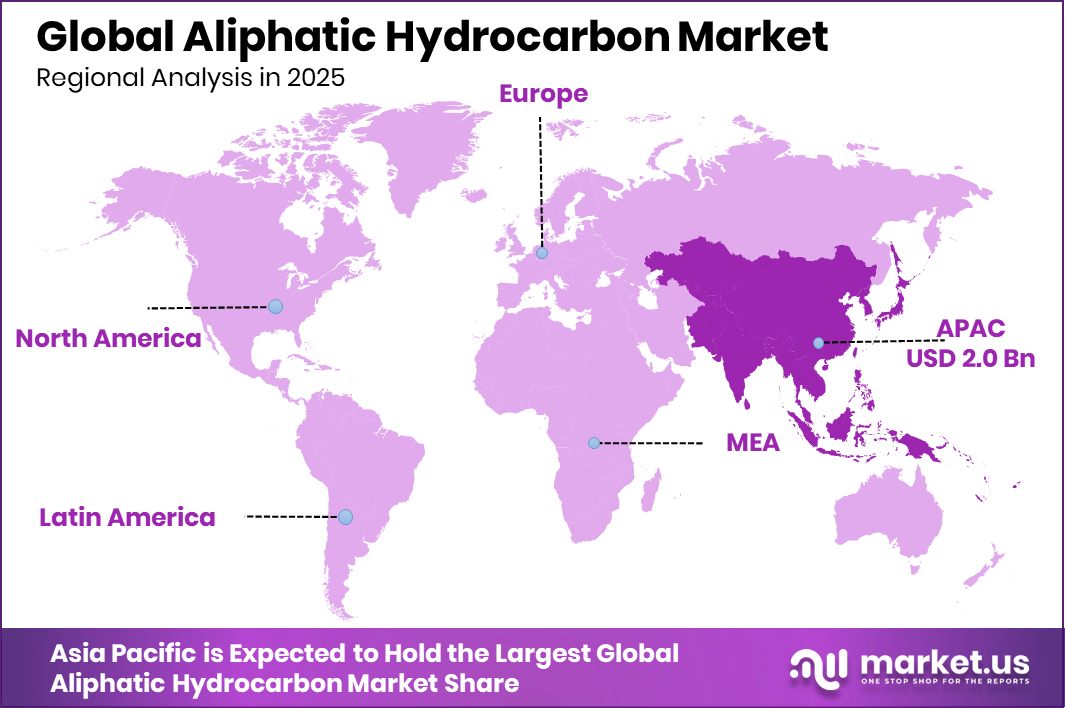
In 2025, the Asia Pacific holds a 45.8% share in the aliphatic hydrocarbon market. In 2025, the Aliphatic Hydrocarbon Market shows steady regional expansion across North America, Europe, Asia Pacific, the Middle East & Africa, and Latin America, each driven by distinct industrial needs and consumption patterns. Asia Pacific remains the dominating region, holding 45.8% share and reaching USD 2.0 Bn, supported by strong manufacturing activity and growing demand from coatings, adhesives, and industrial applications. North America continues to benefit from stable chemical production and well-established end-use industries, contributing to consistent market uptake. Europe reflects steady growth due to its focus on performance materials, along with demand from automotive refinishing and construction-related coatings. The Middle East & Africa region shows moderate progress, supported by industrial expansion and gradual adoption of chemical formulations. Latin America maintains stable consumption, driven by manufacturing recovery and increased use across paints, cleaning agents, and processing applications. In 2025, ExxonMobil Corporation continues to strengthen its position in the global Aliphatic Hydrocarbon Market by leveraging its wide refining capabilities and consistent product quality. The company’s large-scale production infrastructure supports uninterrupted supply across multiple industries, including coatings, adhesives, cleaning agents, and industrial processing. ExxonMobil’s strong distribution network further enhances its ability to meet regional demand shifts, particularly in fast-growing Asian markets. Its integrated operations help maintain efficiency and product consistency, allowing the company to retain a competitive advantage in both high-volume and specialty hydrocarbon grades. BASF SE demonstrates steady progress in the aliphatic hydrocarbon market through its focus on diversified chemical solutions and robust portfolio management. In 2025, the company’s expertise in formulation chemistry enables it to serve customers requiring dependable, high-purity aliphatic hydrocarbons for coatings, solvents, and industrial processing. BASF’s established manufacturing presence across major regions strengthens its ability to respond to changing consumption trends while ensuring product availability. Its continuous emphasis on performance, reliability, and application-focused offerings positions BASF as a critical supplier within the global value chain. Shell Global maintains a strong competitive stance in the 2025 Aliphatic Hydrocarbon Market by capitalizing on its extensive refining assets and long-standing expertise in hydrocarbon production. The company’s consistent output supports large-scale industrial users that rely on stable, high-quality aliphatic hydrocarbons. Shell’s broad regional presence, particularly in Asia and Europe, allows it to efficiently serve diverse end-use sectors. With a solid operational base and wide product reach, Shell continues to play an essential role in maintaining supply stability and supporting ongoing demand across global industries.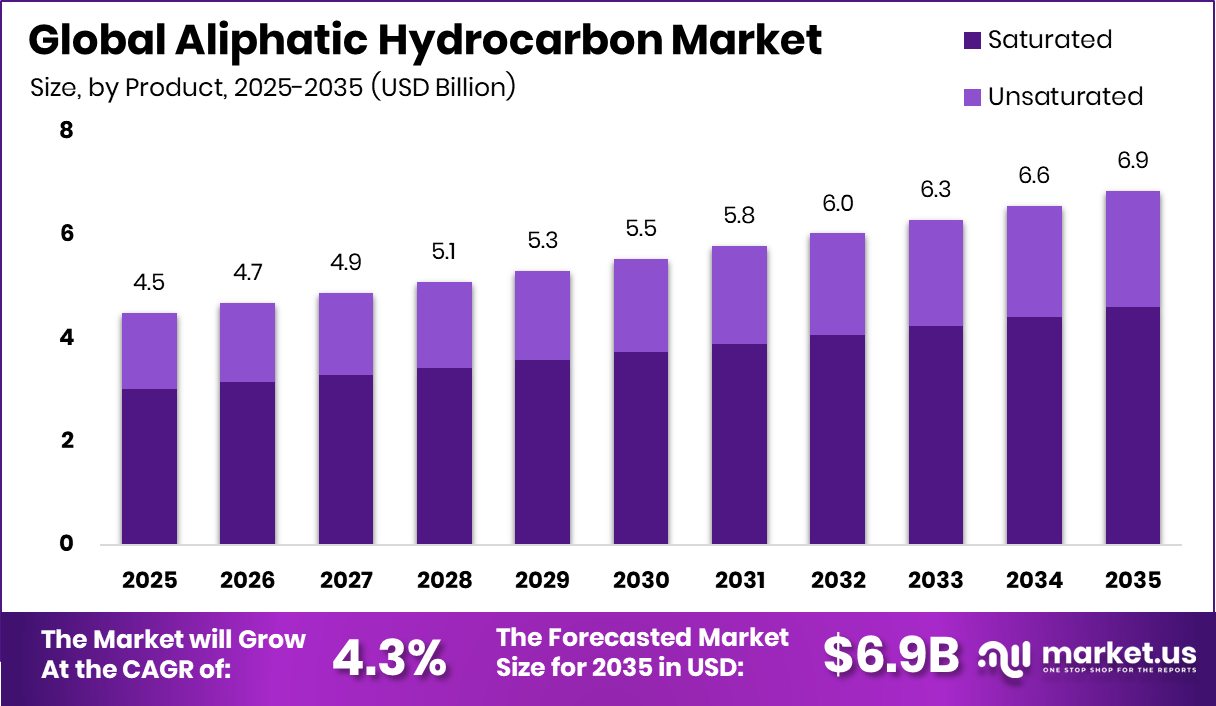
Regional Analysis
Key Regions and Countries
Key Players Analysis
Top Key Players in the Market
Recent Developments









