


Report Overview
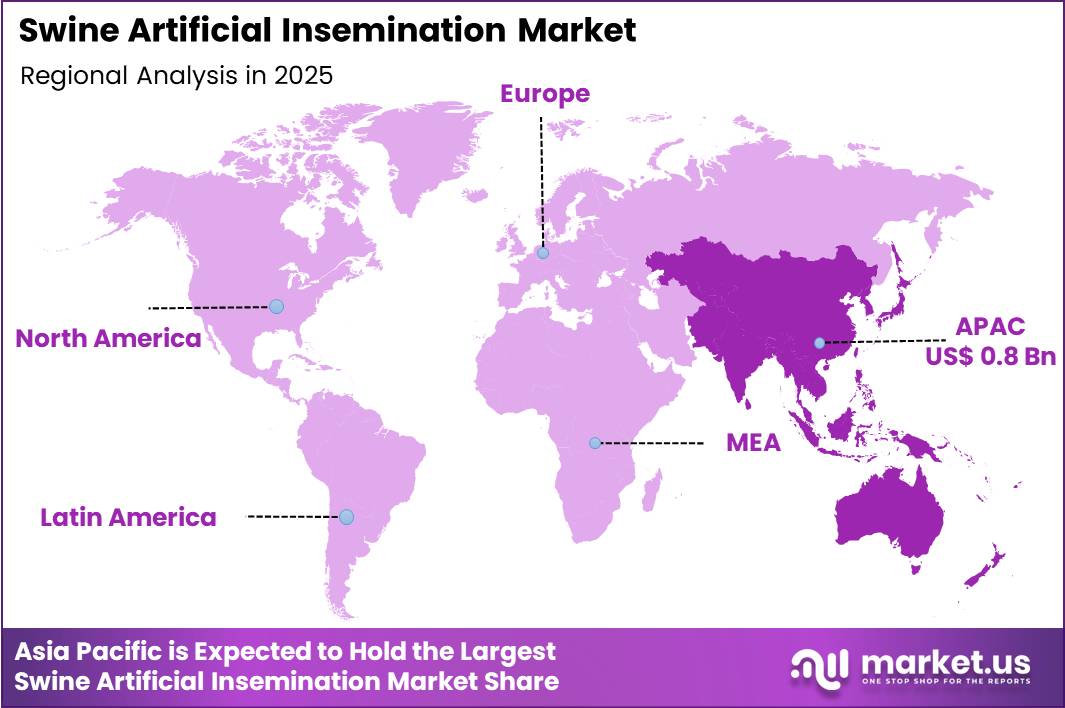
The Global Swine Artificial Insemination Market size is expected to be worth around US$ 6.3 Billion by 2035 from US$ 2.6 Billion in 2025, growing at a CAGR of 9.2% during the forecast period 2026-2035. In 2025, Asia Pacific led the market, achieving over 32.2% share with a revenue of US$ 0.8 Billion.
Increasing global demand for pork and the push for genetic improvement accelerate the swine artificial insemination market as producers adopt this technology to enhance herd performance, biosecurity, and reproductive efficiency.
Large-scale swine operations increasingly implement boar semen collection and distribution programs, enabling the use of superior genetics from elite sires to improve lean growth rate, feed conversion, and carcass quality across commercial sow herds.
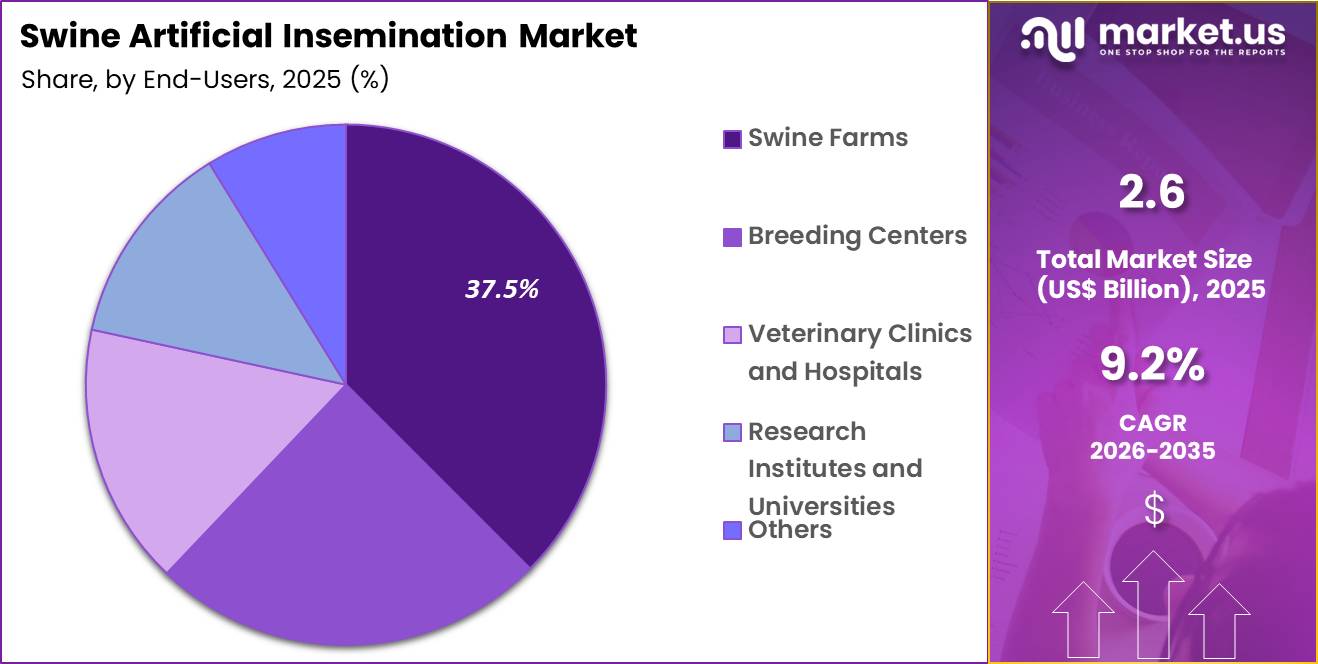
Services accounted for 56.2% of growth within components and dominate the swine artificial insemination market due to the increasing reliance on professional reproductive management programs across commercial pig farms. Farm operators increasingly seek expert semen collection, storage, processing, and insemination support to improve conception success rates. Service providers offer specialized genetic selection and timing optimization that enhances breeding efficiency and litter size outcomes. Segment growth is expected to accelerate as large-scale swine producers adopt advanced breeding services to improve herd productivity and profitability. Growing awareness regarding disease-free breeding practices supports service adoption across intensive farming operations. Reproductive management services assist in reducing breeding errors and improving pregnancy outcomes. Integration of technical expertise with precision breeding tools strengthens farm-level productivity. Demand is anticipated to increase as farmers prioritize genetic improvement and efficient reproductive cycles. Commercial swine farms increasingly depend on outsourced insemination services to enhance operational consistency. Service-based models support faster adoption of standardized breeding protocols across global pork production systems. Swine farms accounted for 37.5% of growth within end-users and dominate the swine artificial insemination market due to their direct involvement in large-scale pork production and herd expansion programs. Farmers increasingly adopt artificial insemination practices to improve genetic quality and reproductive efficiency within breeding populations. Modern farms implement structured breeding schedules that enhance fertility outcomes and reduce dependency on natural mating. Segment growth is projected to strengthen as producers aim to improve litter uniformity and reduce breeding-related disease transmission risks. Artificial insemination supports controlled genetic selection that improves meat yield and growth performance. Increasing global demand for pork products drives investment in advanced reproductive technologies at farm level. Swine farms adopt insemination programs to enhance productivity and optimize herd replacement rates. Adoption is likely to increase as farms focus on improving breeding consistency and long-term production sustainability. Technological advancements in semen storage and handling further support on-site insemination practices across commercial swine operations. Regulatory support for digital tools in livestock reproduction has accelerated adoption. Industry efforts optimize algorithms for diverse housing systems. These innovations aim to enhance reproductive efficiency while supporting sustainable pork production. North America is leading the Swine Artificial Insemination Market North America accounted for 32.2% of the Swine Artificial Insemination market in 2025, while Asia Pacific demonstrated strong expansion driven by industrial pork production and genetic improvement programs. Regional pork integrators have increased investments in reproductive technologies to enhance litter size and improve herd health outcomes. China and Vietnam continue to modernize commercial pig farms with controlled breeding protocols following African Swine Fever recovery strategies. The Ministry of Agriculture and Rural Affairs of China reported in 2023 that the country’s pig inventory reached over 452 million heads, encouraging producers to adopt structured breeding methods for efficient herd management. Large scale producers now utilize AI to maintain biosecurity while improving reproductive consistency. Rising feed costs have also pushed farmers to focus on productivity gains per sow. Expanding veterinary infrastructure across Southeast Asia supports improved semen handling and insemination practices. These developments continue to accelerate the adoption of controlled breeding solutions in commercial pork operations. The Asia Pacific region is expected to experience the highest CAGR during the forecast period Producers across North America will expand the use of advanced breeding technologies during the forecast period to improve genetic performance and maintain disease free herds. Commercial farms in the US and Canada are integrating data based estrus detection tools with reproductive planning systems to increase conception rates. The US Department of Agriculture reported in 2024 that the country maintained over 74 million hogs and pigs in inventory, creating consistent demand for structured breeding programs. Farm operators now train staff to implement precision insemination schedules that reduce mating variability. Technology suppliers also offer semen preservation systems that extend storage life and improve fertility outcomes. Integrated pork companies continue to invest in nucleus breeding centers to support herd uniformity. Growing demand for high quality pork products strengthens the focus on controlled reproductive practices. These ongoing improvements are expected to reinforce technology adoption across commercial swine farms. North America Europe Asia Pacific Latin America Middle East & Africa Leading companies in the swine artificial insemination market drive growth by enhancing semen processing technologies, expanding genetic selection programs, and strengthening technical support services for commercial pig farms. They collaborate with large scale pork producers to improve reproductive efficiency and invest in disease resistant breeding lines that support consistent herd performance. Firms also integrate digital fertility tracking tools with advisory solutions to help producers optimize conception rates and litter outcomes. For instance, Pig Improvement Company (PIC), founded in 1962 in Oxfordshire, England, operates as the pig genetics division of Genus plc and delivers advanced breeding stock and semen solutions across more than 30 countries. The company builds its global presence through science led genetic improvement programs that support higher productivity in pork production systems. Through continued investment in genomic research and producer engagement platforms, PIC enables customers to improve breeding outcomes and long term farm profitability.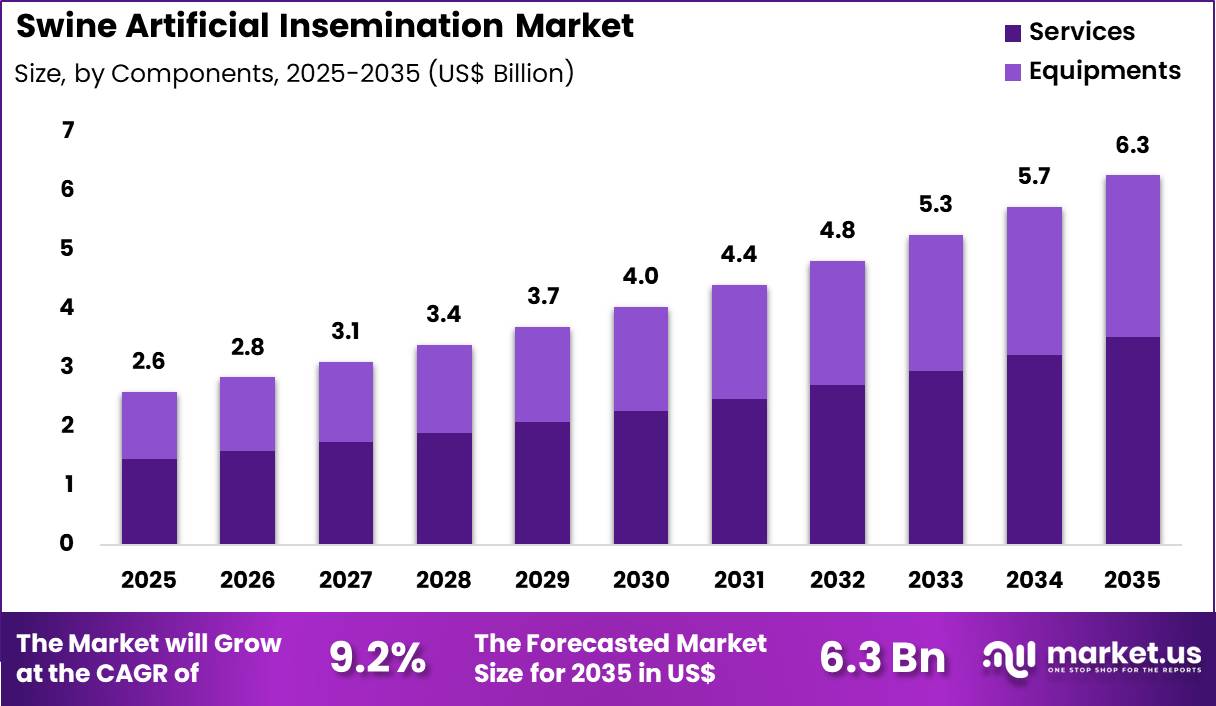
Key Takeaways
Components Analysis
End-User Analysis
Regional Analysis
Key Regions and Countries
Key Players Analysis
Top Key Players
Recent Developments









