


Report Overview
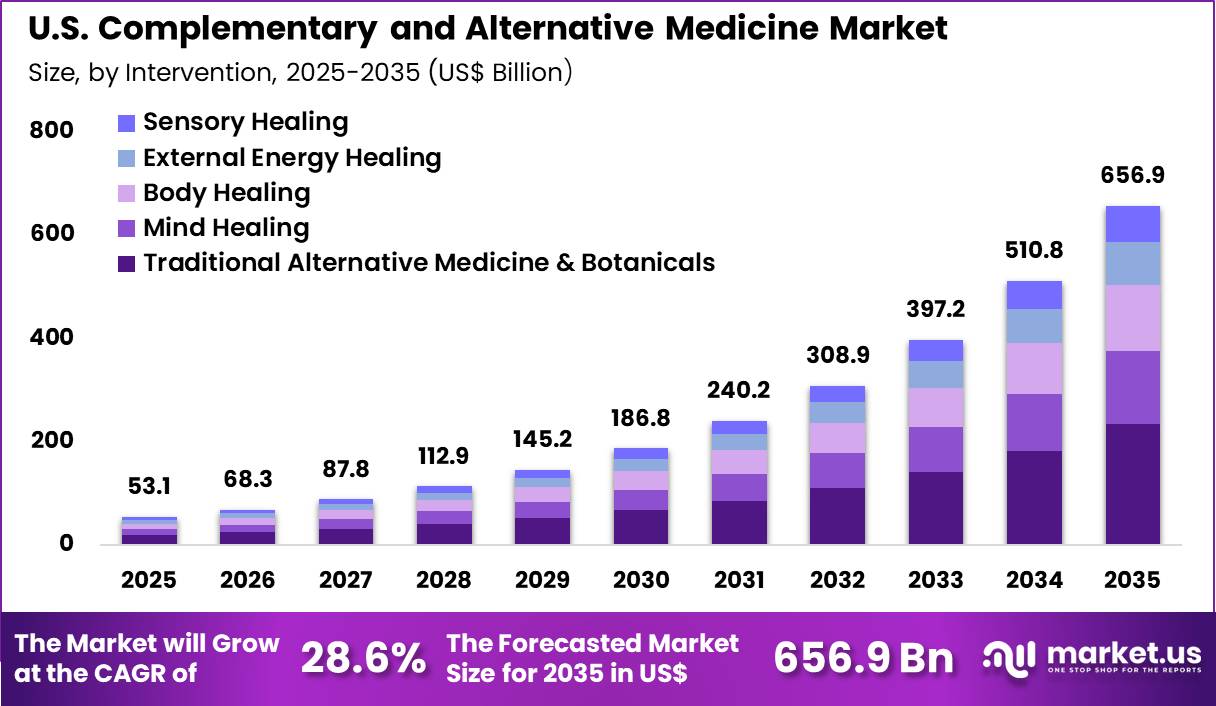
The U.S. Complementary and Alternative Medicine Market size is expected to be worth around US$ 656.9 Billion by 2035 from US$ 53.1 Billion in 2025, growing at a CAGR of 28.6% during the forecast period 2026-2035.
Increasing consumer awareness of holistic health and wellness accelerates the U.S. Complementary and Alternative Medicine market as patients seek non-pharmaceutical approaches that address root causes of illness and promote overall well-being. Individuals increasingly incorporate acupuncture to manage chronic pain conditions such as migraines and osteoarthritis, stimulating specific points to reduce inflammation and improve energy flow.
These practices support herbal medicine applications in digestive disorders, where practitioners prescribe customized botanical formulations to restore gut balance and alleviate symptoms of irritable bowel syndrome or acid reflux. Chiropractic adjustments gain traction for musculoskeletal complaints, correcting spinal misalignments to relieve back pain and enhance mobility in patients with repetitive strain injuries.
Mind-body interventions like yoga and meditation assist in stress reduction and anxiety management, fostering emotional resilience and better sleep quality through guided breathing and mindfulness exercises. Naturopathic approaches emphasize nutritional counseling and lifestyle modifications to support metabolic health, helping patients reverse insulin resistance and manage weight in prediabetes and obesity cases.
Providers pursue opportunities to integrate advanced technologies with traditional practices, expanding applications in mental health where transcranial magnetic stimulation complements acupuncture and herbal therapies for treatment-resistant depression. In March 2025, Magstim obtained FDA clearance for its Horizon Inspire and Horizon 3.0 Transcranial Magnetic Stimulation systems for treating Major Depressive Disorder in adolescents aged 15 to 21 in the US.
The approval broadens the clinical use of TMS therapy to younger patients, offering a non-invasive treatment alternative to conventional antidepressant medications. In February 2024, Soaak Technologies acquired Tulsa Natural Health Clinic as part of its strategy to combine advanced wellness technologies with naturopathic healthcare practices.
The move supports the company’s broader vision of expanding technology-driven holistic treatment solutions in the wellness sector. These developments facilitate hybrid models that blend evidence-based modalities with digital tools for personalized care.
Recent trends emphasize preventive wellness programs and multidisciplinary clinics that combine conventional and alternative therapies, positioning the market for sustained growth in patient-centered healthcare focused on long-term vitality and reduced pharmaceutical dependency.
Key Takeaways
- In 2025, the market generated a revenue of US$ 53.1 Billion, with a CAGR of 28.6%, and is expected to reach US$ 656.9 Billion by the year 2035.
- The intervention segment is divided into traditional alternative medicine & botanicals, mind healing, body healing, external energy healing and sensory healing, with traditional alternative medicine & botanicals taking the lead with a market share of 35.7%.
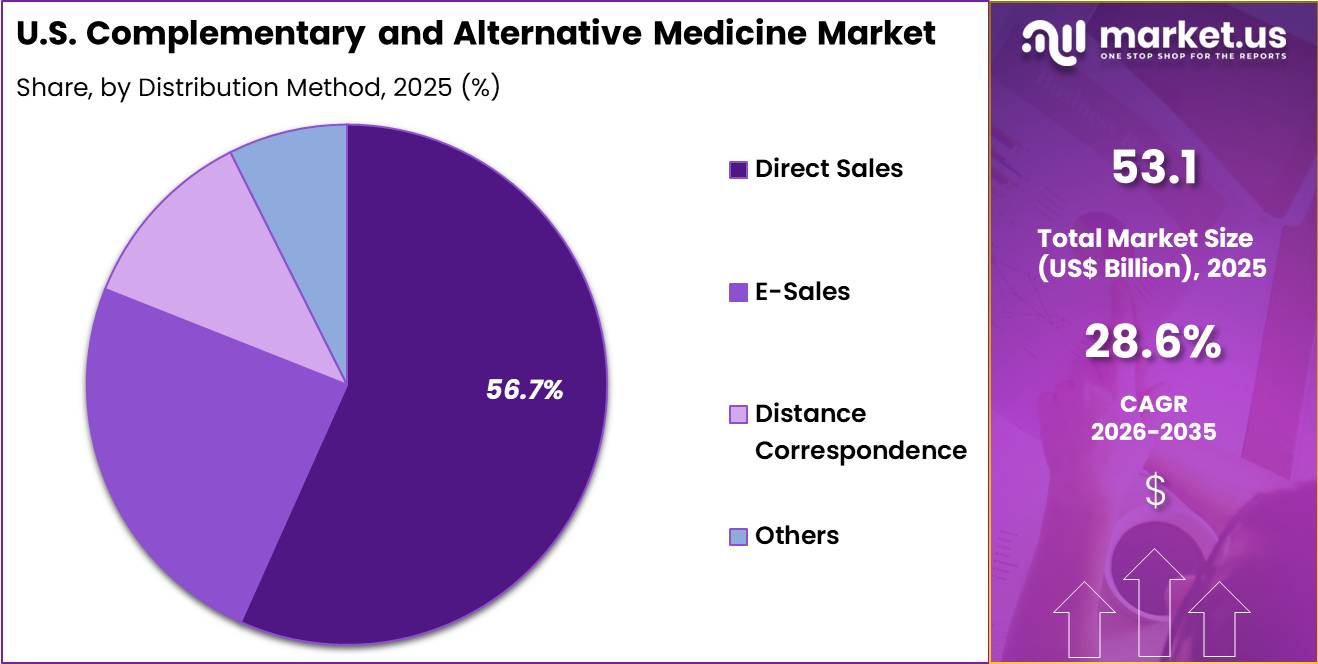
- Considering distribution method, the market is divided into direct sales, e-sales, distance correspondence and others. Among these, direct sales held a significant share of 56.7%.
Intervention Analysis
Traditional alternative medicine and botanicals accounted for 35.7% of growth within interventions and dominate the U.S. complementary and alternative medicine market due to strong consumer preference for herbal and plant-based therapies. Americans increasingly adopt botanical supplements to manage chronic conditions, improve immunity, and support general wellness.
Data from the National Center for Complementary and Integrative Health indicate that more than one third of U.S. adults report using some form of complementary health practice. Segment growth is expected to strengthen as consumers seek natural health products that complement conventional treatments. Rising interest in holistic wellness, preventive healthcare, and herbal nutrition contributes to growing adoption.
Manufacturers expand botanical product portfolios that include herbal capsules, tinctures, and functional teas. Physicians and integrative medicine practitioners increasingly discuss botanical supplements with patients to support symptom management. Demand is likely to increase as aging populations focus on lifestyle-driven health maintenance. Expanding clinical research on herbal compounds further reinforces credibility in medical communities.
Distribution Method Analysis
Direct sales accounted for 56.7% of growth within distribution methods and dominate due to strong consumer engagement and personalized product education through wellness consultants and health practitioners. Companies operating in the complementary medicine sector frequently rely on direct sales networks to promote herbal supplements, nutrition products, and holistic wellness solutions.
Segment growth is projected to strengthen as consumers seek trusted guidance when selecting alternative health products. Direct selling channels allow companies to build strong customer relationships through demonstrations, consultations, and wellness events.
The U.S. direct selling industry reported retail sales exceeding tens of billions of dollars annually according to industry associations, with health and wellness products representing a significant share. Demand is anticipated to increase as consumers value product transparency and individualized recommendations.
Social selling platforms and wellness communities further enhance engagement within direct sales networks. The approach supports strong brand loyalty and repeat purchases, reinforcing sustained growth in this segment.
Key Market Segments
By Intervention
- Traditional Alternative Medicine & Botanicals
- Ayurveda
- Apitherapy
- Bach Flower Therapy
- Naturopathic Medicine
- Traditional Chinese Medicine
- Traditional Korean Medicine
- Traditional Japanese Medicine
- Traditional Mongolian Medicine
- Traditional Tibetan Medicine
- Zang Fu Theory
- Mind Healing
- Autosuggestion
- Hypnotherapy
- Neuro-linguistic Programming
- Self-hypnosis
- Spiritual Mind Treatment
- Transcendental Meditation
- Body Healing
- Acupressure
- Acupuncture
- Alexander Technique
- Auriculotherapy
- Autogenic Training
- Chiropractic
- Cupping Therapy
- Kinesiology
- Osteomyology
- Osteopathy
- Pilates
- Qigong
- Reflexology
- Yoga
- External Energy Healing
- Magnetic Therapy
- Bio-magnetic Therapy
- Magnetic Resonance Therapy
- Radionics
- Reiki
- Therapeutic Touch
- Chakra Healing
- Sensory Healing
- Aromatherapy
- Music therapy
- Sonopuncture
- Sound Therapy
By Distribution Method
- Direct Sales
- E-sales
- Distance Correspondence
- Others
Drivers
Increasing use of complementary health approaches for pain management is driving the market.
The U.S. Complementary and Alternative Medicine market experiences significant momentum from the expanded adoption of non-conventional therapies to address pain-related conditions. Data from the National Health Interview Survey, as analyzed by the National Center for Complementary and Integrative Health, indicate that the proportion of U.S. adults using complementary health approaches specifically for pain management rose from 42.3% in 2002 to 49.2% in 2022.
This shift reflects growing recognition of these methods as viable adjuncts to conventional care. The increase occurs amid broader trends in chronic pain prevalence among the population. Yoga, meditation, and massage therapy show particularly notable rises in utilization over the two-decade period. Such patterns encourage healthcare providers to incorporate these approaches into treatment protocols.
Patients seek options that emphasize holistic well-being and reduced reliance on pharmaceuticals. The trend supports expanded service offerings in clinics and wellness centers. Overall utilization of at least one of seven complementary approaches advanced from 19.2% in 2002 to 36.7% in 2022. This driver fosters sustained demand and infrastructure deveopment within the sector during the relevant timeframe.
Restraints
Limited insurance coverage for many complementary therapies is restraining the market.
Access to complementary and alternative medicine remains constrained by inconsistent reimbursement policies from insurers and public programs. Many therapies, including acupuncture and massage, often require out-of-pocket payments due to partial or absent coverage. This financial barrier limits utilization among lower-income populations and those without supplemental benefits.
Providers face challenges in scaling practices when patient affordability becomes a primary concern. The restraint contributes to uneven geographic distribution of services. Regulatory frameworks have advanced slowly in mandating broader inclusion in health plans. Consumers frequently forgo recommended therapies due to cost considerations.
The factor moderates overall market penetration despite rising interest. Healthcare systems prioritize evidence-based conventional treatments for reimbursement prioritization. This limitation persists in influencing adoption rates across diverse demographic groups in recent years.
Opportunities
Enhanced integration into mainstream healthcare settings is creating growth opportunities.
The convergence of complementary approaches with conventional medical environments presents substantial prospects for expanded delivery models. Hospitals and clinics increasingly offer services such as acupuncture and mindfulness programs alongside standard care. This integration improves patient access and enhances perceived legitimacy among providers.
Opportunities arise for collaborative care teams that combine expertise from multiple disciplines. Research initiatives funded by institutions support validation of therapies in clinical contexts. The development enables targeted programs for specific conditions like chronic pain or stress management. Payers explore value-based models that incorporate these approaches for cost savings.
Educational efforts for physicians promote informed referrals. Such frameworks facilitate scalable implementation in outpatient and inpatient settings. This opportunity strengthens the ecosystem through diversified revenue streams and improved outcomes.
Impact of Macroeconomic / Geopolitical Factors
Macroeconomic shifts shape the U.S. complementary and alternative medicine market through household wellness budgets, clinic staffing costs, and payer coverage decisions. Elevated inflation lifts prices for botanicals, supplements, acupuncture supplies, and wellness equipment, which pushes providers to review pricing and sourcing.
Higher interest rates slow new clinic openings and expansion of integrative care centers. Geopolitical friction disrupts trade in herbs, essential oils, and specialty extracts, which introduces volatility in ingredient availability. Current US tariffs on certain imported botanicals, packaging inputs, and wellness devices increase procurement expenses and narrow margins for distributors and practitioners.
These headwinds can temper near term product launches and inventory builds. On the positive side, suppliers diversify sourcing, invest in domestic cultivation, and strengthen quality traceability. Growing consumer focus on preventive care and holistic health keeps demand firm and supports sustainable long term growth.
Latest Trends
Significant rise in overall use of complementary health approaches is driving the market.
The sector demonstrates robust advancement through documented increases in population-level engagement with complementary practices. The National Center for Complementary and Integrative Health reports that the percentage of U.S. adults using at least one of seven complementary health approaches grew from 19.2 percent in 2002 to 36.7 percent in 2022.
This substantial elevation underscores evolving consumer preferences toward integrative options. Meditation usage advanced notably from 7.5 percent in 2002 to 17.3 percent in 2022. Yoga participation increased from 5 percent to 15.8 percent over the same interval. Chiropractic care rose from 7.4 percent to 11.0 percent.
Acupuncture utilization expanded from 1 percent to 2.2 percent. The 2022 data, released in January 2024, highlight accelerated acceptance in recent years. These patterns reflect broader societal shifts toward preventive and holistic health strategies. The trend propels ongoing expansion and innovation across the complementary and alternative medicine landscape.
Key Players Analysis
Leading companies in the U.S. Complementary and Alternative Medicine market pursue expansion through diversified wellness offerings, research collaborations, and stronger practitioner networks that support integrative healthcare models.
They actively invest in herbal formulations, nutritional supplements, and therapeutic services while expanding e-commerce channels to reach a broader consumer base seeking natural health solutions. Growing demand for holistic treatments, including acupuncture, chiropractic care, and herbal therapies, encourages firms to broaden product portfolios and education programs for healthcare professionals.
Gaia Herbs represents a notable participant in the U.S. Complementary and Alternative Medicine market and operates as a long-standing herbal supplement manufacturer founded in 1987 in North Carolina. The company cultivates numerous medicinal crops on certified organic farmland and emphasizes transparency from cultivation to finished botanical products.
Industry competitors strengthen brand credibility through quality testing, sustainable sourcing, and partnerships with wellness clinics and pharmacies. These strategic initiatives expand consumer trust, encourage preventive healthcare adoption, and support steady commercial development across the U.S. Complementary and Alternative Medicine market.
Top Key Players
- Columbia Nutritional
- Nordic Nutraceuticals
- Ramamani Iyengar Memorial Yoga Institute
- Adam
- Pure Encapsulations, LLC
- Herb Pharm
- Mindset Health Pty Ltd
- American Apitherapy Society, Inc
Recent Developments
- In March 2025, HIF Health Insurance partnered with Mindset Health to provide its members access to clinically validated digital hypnotherapy programs. The initiative delivers evidence-based behavioral therapy for conditions such as irritable bowel syndrome, chronic pain, anxiety, depression, menopause symptoms, and smoking cessation, offering scalable non-drug treatment options through digital care platforms.
- In March 2025, Nordic Naturals introduced a nationwide campaign titled “The Power of Omega-3,” developed with its agency Laughlin Constable. The initiative focuses on expanding public awareness of omega-3 benefits beyond cardiovascular health by highlighting their role in cognitive, emotional, and overall physical wellbeing while encouraging routine supplementation.
- In September 2023, Nordic Naturals strengthened retail accessibility by partnering with Sam’s Club, a membership-based warehouse retailer in the US. Through this agreement, the company introduced its Ultimate Omega and Algae Omega supplements to Sam’s Club stores, expanding nationwide availability.









