


Report Overview
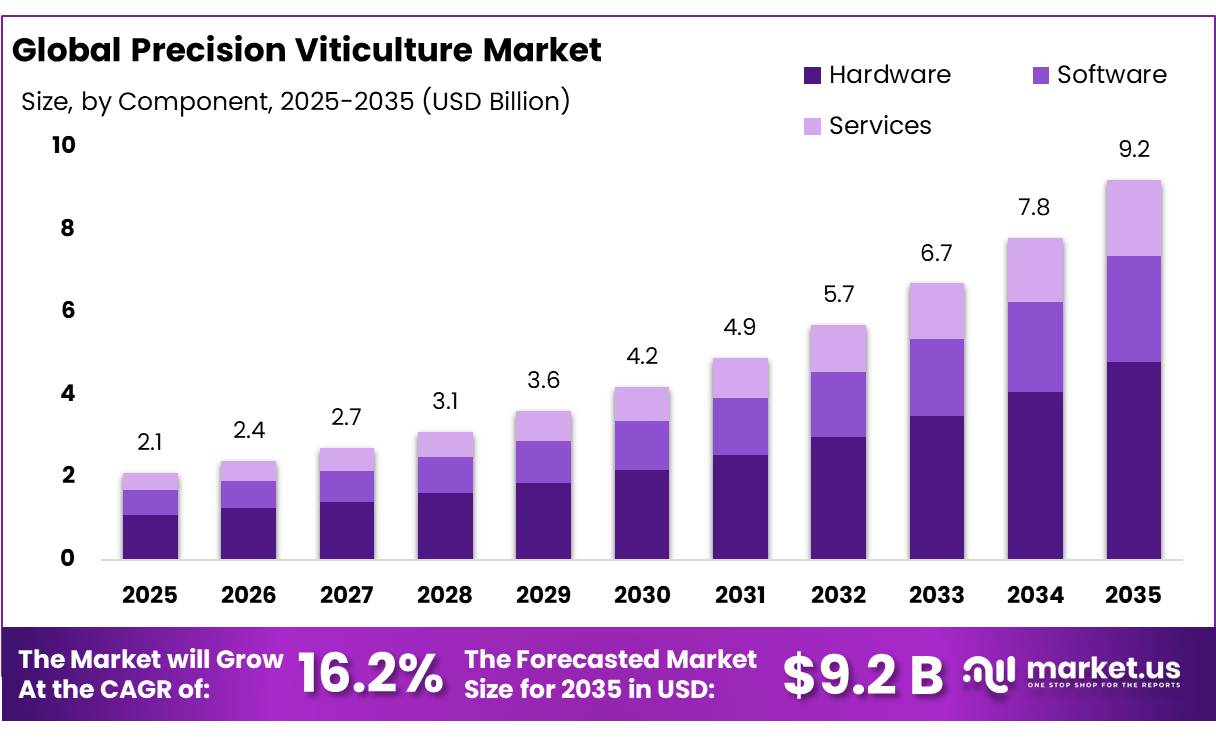
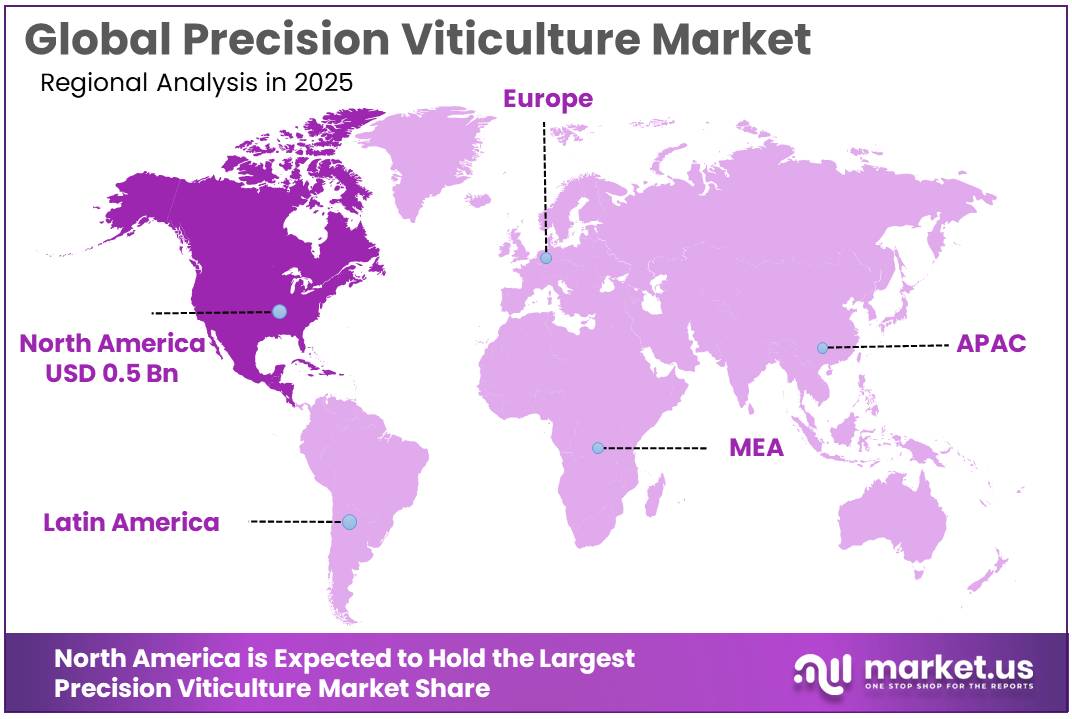
The Global Precision Viticulture Market size is expected to be worth around USD 9.2 Billion by 2035, from USD 2.1 Billion in 2025, growing at a CAGR of 16.2% during the forecast period from 2026 to 2035. In 2025, North America held a dominant market position, capturing more than a 42.8% share, holding USD 0.5 billion revenue.
Precision viticulture represents a technologically advanced approach to vineyard management that integrates geographic information systems (GIS), sensors, drones, satellite imagery, and data analytics to monitor and optimize grape production. This system allows vineyard managers to assess spatial variability within vineyards and apply site-specific management practices such as variable-rate irrigation, fertilization, and pest control. The increasing digitalization of agriculture and the growing demand for high-quality wine are accelerating the adoption of precision viticulture globally.
- According to the International Organisation of Vine and Wine (OIV), global wine production reached 232 million hectolitres in 2025, highlighting the large scale of the viticulture industry and the need for advanced technologies to maintain yield and quality amid climatic fluctuations.
 AUD 5 million “Wine to the World” export strategy, seek to expand export capacity and competitiveness through targeted support for wineries to enter priority global markets.
Key Takeaways
- Precision Viticulture Market size is expected to be worth around USD 9.2 Billion by 2035, from USD 2.1 Billion in 2025, growing at a CAGR of 16.2%.
- Hardware held a dominant market position, capturing more than a 52.7% share.
- Yield Monitoring held a dominant market position, capturing more than a 23.9% share.
- North American precision viticulture market emerged as a leading regional segment, holding roughly 39.1% of the global pie and generating an estimated USD 0.5 billion.
By Component Analysis
Hardware dominates with 52.7% share driven by strong demand for field-based vineyard technologies
In 2025, Hardware held a dominant market position, capturing more than a 52.7% share. The segment maintained its leadership as vineyard operators continued to invest heavily in physical technologies that directly support field-level decision-making and crop monitoring. Hardware components in precision viticulture mainly include GPS/GNSS systems, remote sensing devices, drones, soil sensors, weather stations, yield monitors, and variable rate application equipment. These tools form the foundation of vineyard data collection and are essential for implementing site-specific management practices.
By Application Analysis
Yield Monitoring leads with 23.9% share as growers focus on production accuracy
In 2025, Yield Monitoring held a dominant market position, capturing more than a 23.9% share. The segment gained strong attention as vineyard owners increasingly focused on measuring grape output with greater precision to improve profitability and planning. Yield monitoring systems allow growers to track production levels across different vineyard blocks, helping them understand variations in soil performance, vine health, and input efficiency. This ability to generate accurate yield data at a micro level played a key role in supporting better harvest decisions during the year.
The United States and Canada, in particular, have seen widespread adoption of remote sensing systems, soil and climate sensors, and machinery with GPS-enabled guidance, enabling growers to monitor spatial variability across vineyards and optimise inputs with remarkable precision. TeeJet Technologies is a US-based agricultural products company specialising in precision application hardware, nozzles, and spray control systems that improve efficiency in vineyards and broadacre farms alike. With estimated annual revenue around USD 35 million and about 500 employees, TeeJet’s equipment helps growers achieve accurate chemical application and improved coverage. Its product portfolio is often integrated with GPS and automation systems, making it a valued contributor to precision input delivery in viticulture operations. In 2025, Trimble Inc. continued to show strength in recurring revenue streams, with annualised recurring revenue reaching USD 2.39 billion and quarterly revenue near USD 970 million, reflecting ongoing demand for its connected services and precision tools. In fiscal 2025, John Deere recorded net sales of around USD 45.7 billion and net income of about USD 5.03 billion, showing resilience and continued demand for digital farming tools despite economic headwinds.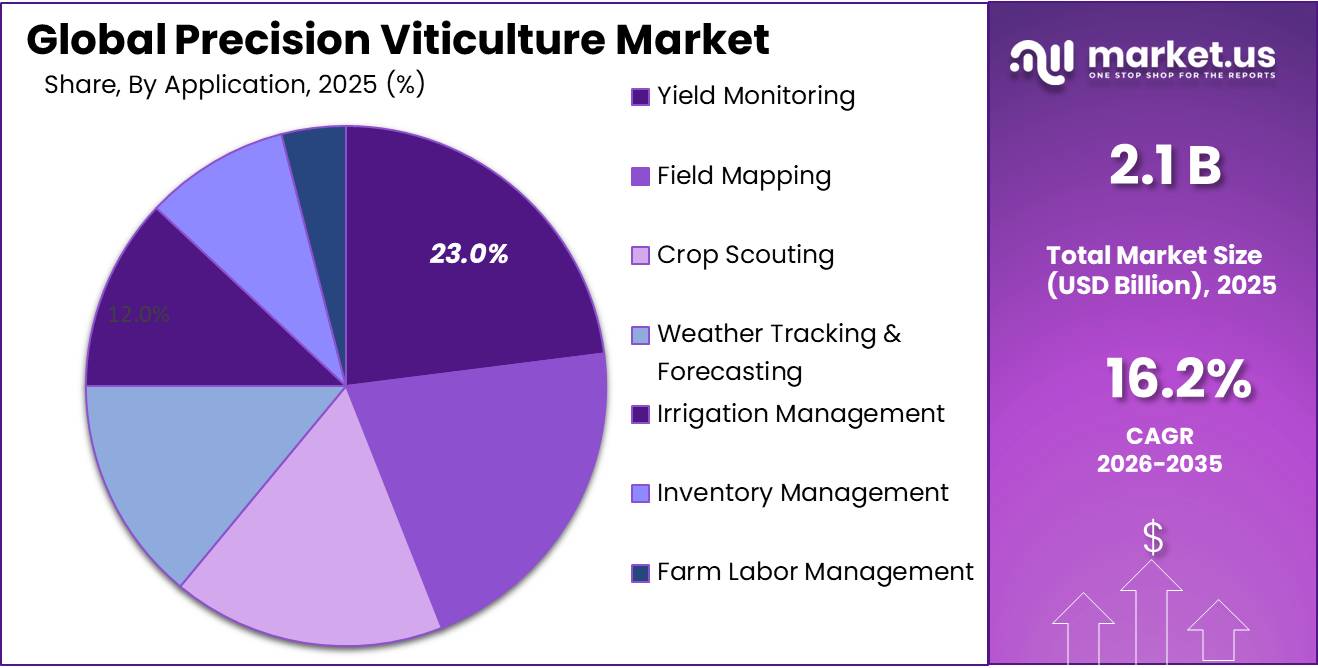
Top Key Players Outlook
Recent Industry Developments









