


Report Overview
The Global Equine Healthcare Market size is expected to be worth around US$ 10.3 Billion by 2035 from US$ 4.4 Billion in 2025, growing at a CAGR of 11.2% during the forecast period 2026-2035. In 2025, North America led the market, achieving over 44.6% share with a revenue of US$ 2.0 Billion.
Increasing demand for high-performance equine athletes and the growing emphasis on preventive care propel the equine healthcare market as owners, trainers, and veterinarians prioritize comprehensive solutions that optimize health, longevity, and competitive success.
Veterinarians increasingly administer vaccines and deworming protocols to protect performance horses from respiratory viruses and gastrointestinal parasites, maintaining peak condition during training and competition seasons. These services support lameness evaluations and joint therapies, where practitioners use intra-articular injections of hyaluronic acid or corticosteroids to manage osteoarthritis and reduce inflammation in sport horses.
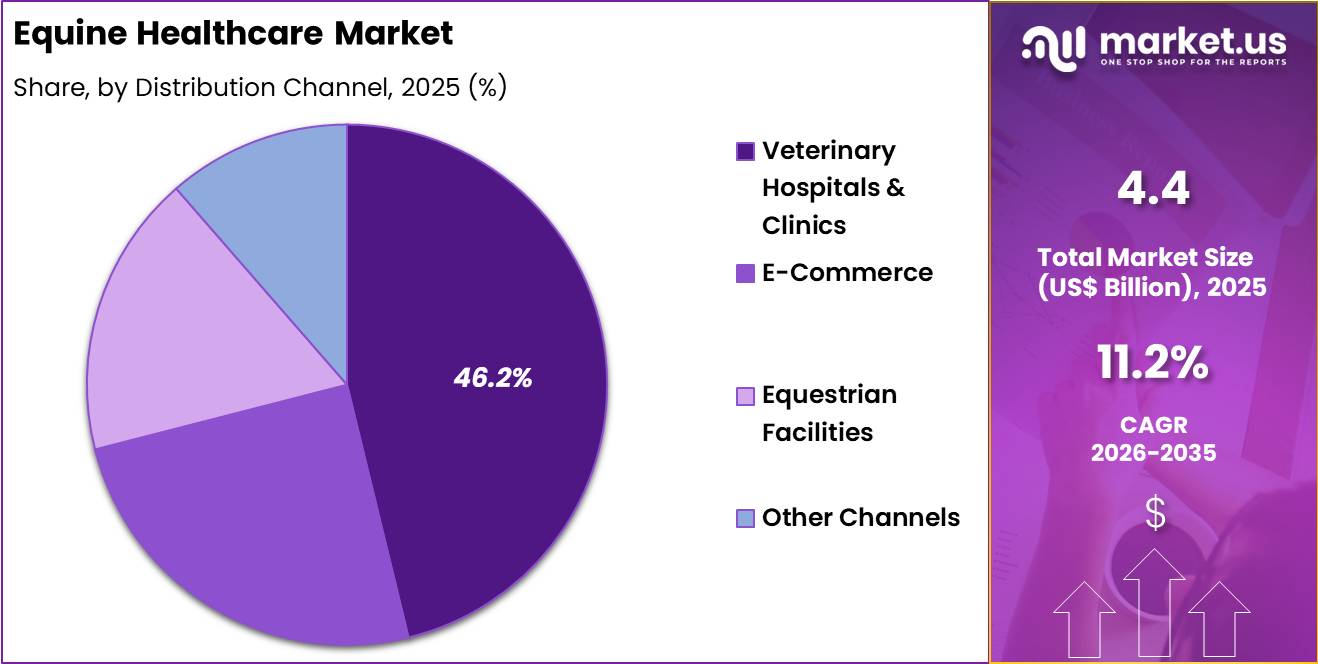
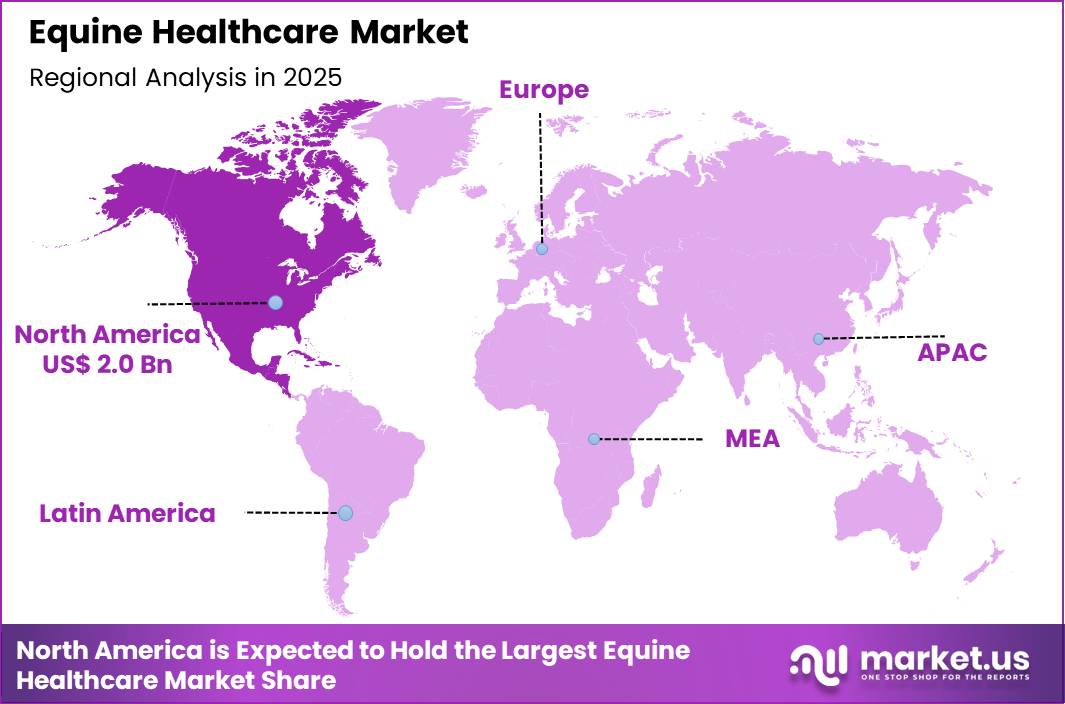
Pharmaceuticals accounted for 44.3% of growth within product and dominate the equine healthcare market due to their central role in infection control, pain management, inflammation reduction, and post-procedure recovery. Veterinarians rely on drug-based treatment protocols because horses in performance, breeding, and recreation settings often need rapid therapeutic intervention for musculoskeletal strain, gastrointestinal issues, and parasite-related illness. The American Association of Equine Practitioners notes that equine strongyles remain the most commonly encountered internal parasite group in horses worldwide, which directly supports recurring demand for antiparasitics and related medicines. Broader equine health spending also remains significant, and USDA equine industry studies have shown that veterinary care forms a meaningful part of horse-owner expenditures, reinforcing the recurring role of pharmaceuticals in routine care. This segment is expected to strengthen as owners prioritize preventive treatment, targeted therapeutics, and faster clinical recovery across both companion and performance horses. Parasitic infections accounted for 29.1% of growth within indication and dominate the equine healthcare market because parasite exposure remains a persistent management issue across stables, breeding operations, and pasture-based horse populations. The AAEP states that equine strongyles represent the most commonly encountered internal parasite group in horses worldwide, which makes parasite control a routine and non-discretionary part of equine health programs. This high disease burden supports steady demand for diagnostics, deworming therapies, monitoring protocols, and veterinary supervision. The segment is projected to maintain strong momentum as resistance management becomes more important and as veterinarians shift toward evidence-based deworming strategies rather than blanket treatment schedules. Horse owners and equine managers increasingly seek structured parasite control plans that protect performance, weight maintenance, and overall health. These trends are likely to keep parasitic infection management at the center of equine healthcare spending. Sports/racing accounted for 51.6% of growth within activity and dominate the equine healthcare market due to the high medical attention, conditioning requirements, and injury management needs associated with competitive horses. T he American Horse Council’s 2023 economic impact study showed that racing generated $36.4 billion in total impact, while competition generated $37.3 billion, which reflects the large economic base tied to performance-oriented equine activity. These horses need frequent veterinary examinations, lameness management, imaging, rehabilitation support, vaccination, and preventive care to maintain fitness and regulatory compliance. This segment is expected to expand as owners and trainers continue to invest in performance longevity, musculoskeletal support, and disease prevention. Competitive environments also create higher demand for pharmaceuticals, diagnostics, and specialized veterinary services than lower-intensity equine uses. Strong economic activity around racing and competition is likely to keep this segment at the forefront of equine healthcare demand. Veterinary hospitals and clinics accounted for 46.2% of growth within distribution channel and dominate the equine healthcare market because they remain the primary point of care for diagnosis, treatment, vaccination, imaging, and pharmaceutical dispensing. AAEP and AVMA economic reporting shows that equine practice represents a dedicated share of private clinical veterinary positions in the United States, confirming the continued importance of clinical infrastructure in horse care delivery. Hospitals and clinics also provide the professional oversight required for prescription medicines, reproductive care, lameness evaluation, and infectious disease management. This segment is anticipated to remain dominant as equine owners continue to prefer clinician-led treatment decisions, especially for high-value sport and breeding horses. Growing complexity in equine medicine further supports the role of organized veterinary channels over informal supply routes. As preventive care and specialized treatment needs increase, veterinary hospitals and clinics are likely to retain their lead in product distribution and service-linked healthcare spending. Rising demand for equine veterinary pharmaceuticals is driving the market. Zoetis Inc. reported U.S. equine revenue of $147 million in 2022. This figure increased to $158 million in 2023, reflecting a 7.5% growth. In 2024, U.S. equine revenue reached $172 million, marking an additional 8.9% increase. The progression demonstrates sustained demand for vaccines, parasiticides, and anti-inflammatories tailored to equine needs. Veterinary practitioners increasingly incorporate these pharmaceuticals into routine preventive care protocols. The growth aligns with expanded breeding operations and performance horse sectors requiring consistent health management. Owners invest more in evidence-based treatments to maintain competitive performance levels. Pharmaceutical portfolios benefit from ongoing clinical validations specific to equine physiology. The upward revenue trajectory supports dedicated R&D for equine-specific formulations. This driver reinforces market stability through reliable therapeutic advancements. Declining international equine revenue is restraining the market. Zoetis Inc. documented international equine revenue of $68 million in 2022. This declined to $62 million in 2023, a reduction of 8.8%. In 2024, international equine revenue further decreased to $59 million, representing a 4.8% contraction. Currency fluctuations and regional economic pressures contribute to moderated demand in key export markets. Distributors face challenges in maintaining pricing stability amid local purchasing constraints. The restraint limits immediate expansion of equine product lines in emerging territories. Manufacturers adjust promotional strategies to preserve market share under reduced volumes. The pattern highlights sensitivities to macroeconomic conditions affecting discretionary equine expenditures. Providers encounter slower adoption of premium pharmaceuticals in cost-sensitive regions. This factor tempers overall market momentum during the 2022-2024 period. FDA approval for novel equine parasiticides is creating growth opportunities. The U.S. Food and Drug Administration granted approval to Zoetis Inc. on October 15, 2025, for a new extended-release equine parasiticide formulation. This product targets broad-spectrum control of internal parasites with a single administration interval exceeding six months. Opportunities arise for reduced treatment frequency and improved owner compliance in parasite management programs. The approval enables differentiation through prolonged efficacy against resistant strains. Veterinary practices gain options for integrated herd health protocols in breeding and racing operations. The development supports value-based pricing models emphasizing long-term cost savings. Manufacturers can expand indications to include emerging parasite challenges. The clearance facilitates international registration submissions leveraging U.S. data. Such advancements promote adoption in performance equine segments requiring minimal intervention. This opportunity strengthens preventive care frameworks and portfolio diversification. Macroeconomic conditions influence the equine healthcare market through farm profitability, veterinary service spending, and investment in horse management infrastructure. Inflation increases costs for veterinary medicines, diagnostic services, feed supplements, and medical equipment, which raises treatment expenses for horse owners and breeding facilities. Higher interest rates reduce discretionary spending on premium healthcare services and limit expansion plans for specialized equine clinics. Geopolitical tensions affect the global supply of veterinary pharmaceuticals, vaccines, and diagnostic materials, creating procurement uncertainty for providers. Current US tariffs on imported veterinary drugs, medical supplies, and equipment increase operational costs for distributors and veterinary hospitals. These pressures can slow adoption of advanced diagnostic and therapeutic solutions among smaller stables. At the same time, stakeholders strengthen domestic sourcing strategies and invest in local veterinary supply networks to stabilize availability. Rising focus on equine performance, disease prevention, and breeding quality continues to support steady and confident market growth. Launch of advanced equine joint therapy products is driving the market. Zoetis Inc. introduced Librela for horses in select markets during the first quarter of 2025 following regulatory clearances. This monoclonal antibody targets nerve growth factor to provide sustained relief from osteoarthritis pain. The launch addresses unmet needs for non-steroidal pain management in aging performance horses. Clinicians benefit from monthly dosing that maintains consistent therapeutic levels. The product integrates seamlessly into existing multimodal osteoarthritis protocols. Early adoption demonstrates improved lameness scores and quality-of-life metrics. The 2025 introduction aligns with trends toward targeted biologic therapies in veterinary medicine. Owners report enhanced mobility and training consistency post-treatment. The development stimulates educational initiatives on biologic applications in equine practice. Overall, this advancement elevates standards for chronic pain management in the equine sector. North America is leading the Equine Healthcare Market North America accounted for 44.6% of the equine healthcare market in 2025 as veterinary services, pharmaceutical treatments, and preventive care programs expanded across the region’s large horse population. The United States maintains one of the world’s most developed equine industries, supporting extensive veterinary infrastructure for sport horses, racing animals, and recreational riding populations. According to the 2023 National Equine Economic Impact Study, the United States hosts about 6.65 million horses and supports a large network of owners, veterinarians, and equestrian businesses that depend on professional animal healthcare services. Increasing participation in equestrian sports, racing, and recreational riding has encouraged owners to invest in preventive veterinary care, vaccination programs, and advanced diagnostic services. Veterinary hospitals and specialized equine clinics across the United States and Canada are expanding services such as orthopedic treatment, reproductive care, and rehabilitation therapies. Technological advances in veterinary imaging, regenerative medicine, and equine surgery have improved treatment outcomes for musculoskeletal injuries common in sport horses. Rising awareness of animal welfare and performance management has also strengthened demand for nutritional supplements and preventive treatments. Universities and veterinary research institutions are expanding equine health programs that support disease surveillance and treatment innovation. These developments collectively contributed to steady growth of equine veterinary services across North America in 2025. The Asia Pacific region is expected to experience the highest CAGR during the forecast period Asia Pacific is expected to experience significant expansion during the forecast period as equestrian activities, livestock management, and working animal welfare programs expand across the region. The Food and Agriculture Organization reports that the global horse population exceeds about 60 million animals, with a substantial portion distributed across Asian countries where horses remain important for agriculture, sport, tourism, and transportation. Governments and veterinary organizations in countries such as China, Mongolia, India, and Australia are strengthening disease surveillance, vaccination campaigns, and veterinary training programs to support animal health management. Growing popularity of equestrian sports and horse racing across China, Japan, and Australia is also increasing demand for specialized veterinary services and performance care. Veterinary universities across the region are expanding training in equine medicine and surgery to address rising treatment requirements. Private veterinary hospitals and mobile veterinary clinics are improving healthcare access for horse owners in rural and semi-urban areas. International organizations are supporting welfare initiatives that focus on disease prevention and responsible horse management practices. Regional pharmaceutical companies are also expanding production of vaccines and therapeutic products designed specifically for equine health. These factors are expected to drive continued growth of veterinary healthcare services for horses throughout Asia Pacific in the coming years. North America Europe Asia Pacific Middle East & Africa Latin America Key companies in the Equine Healthcare Market expand their presence by advancing veterinary pharmaceuticals, diagnostic technologies, and preventive care solutions tailored for sport horses and companion equines. Firms collaborate with veterinary clinics, equine hospitals, and research institutions to strengthen treatment protocols for infectious diseases, musculoskeletal disorders, and parasitic infections. They also invest in vaccine development, nutritional supplements, and digital health monitoring tools that improve overall horse health management. Zoetis Inc. represents a major participant in the Equine Healthcare Market and operates as a global animal health company headquartered in the United States that develops medicines, vaccines, diagnostics, and genetic solutions for livestock and companion animals. The company maintains a strong portfolio of equine vaccines, anti-infectives, and parasiticides supported by extensive veterinary research. Competitors continue to pursue product innovation, veterinary partnerships, and expanded distribution networks to strengthen clinical adoption and drive long-term growth across the Equine Healthcare Market.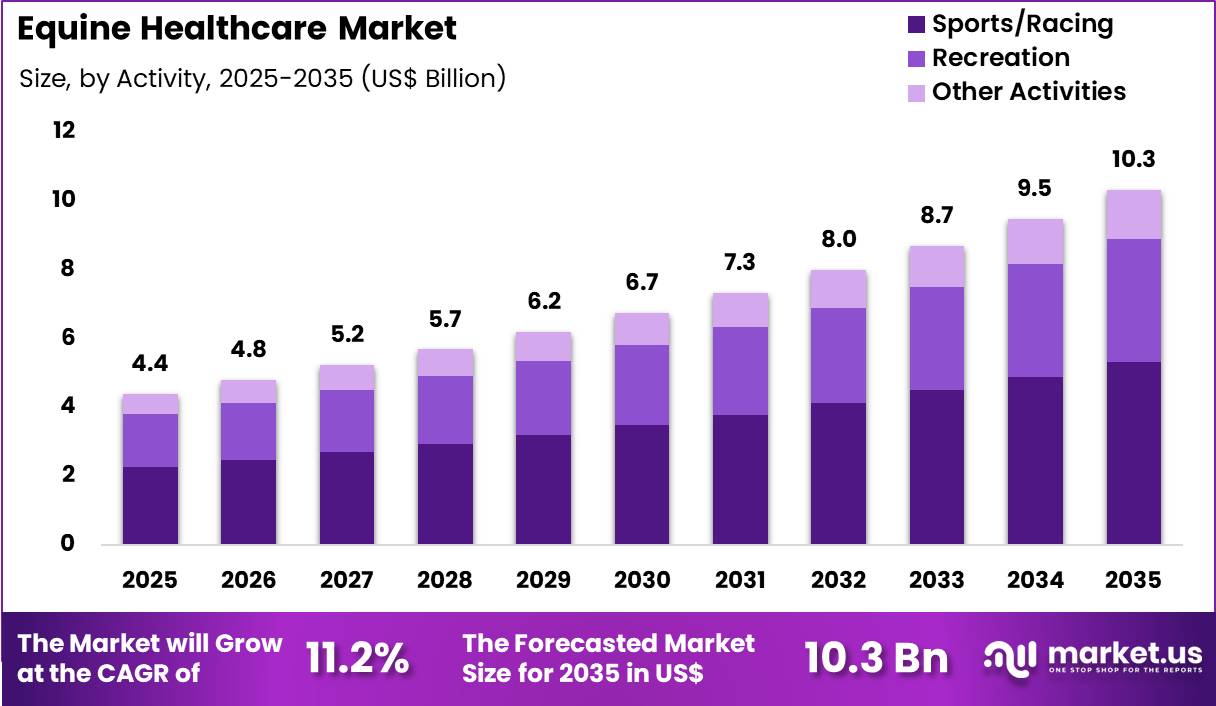
Key Takeaways
Product Analysis
Indication Analysis
Activity Analysis
Distribution Channel Analysis
Key Market Segments
By Product
By Indication
By Activity
By Distribution Channel
Drivers
Restraints
Opportunities
Impact of Macroeconomic / Geopolitical Factors
Latest Trends
Regional Analysis
Key Regions and Countries
Key Players Analysis
Top Key Players
Recent Developments









