


Report Overview
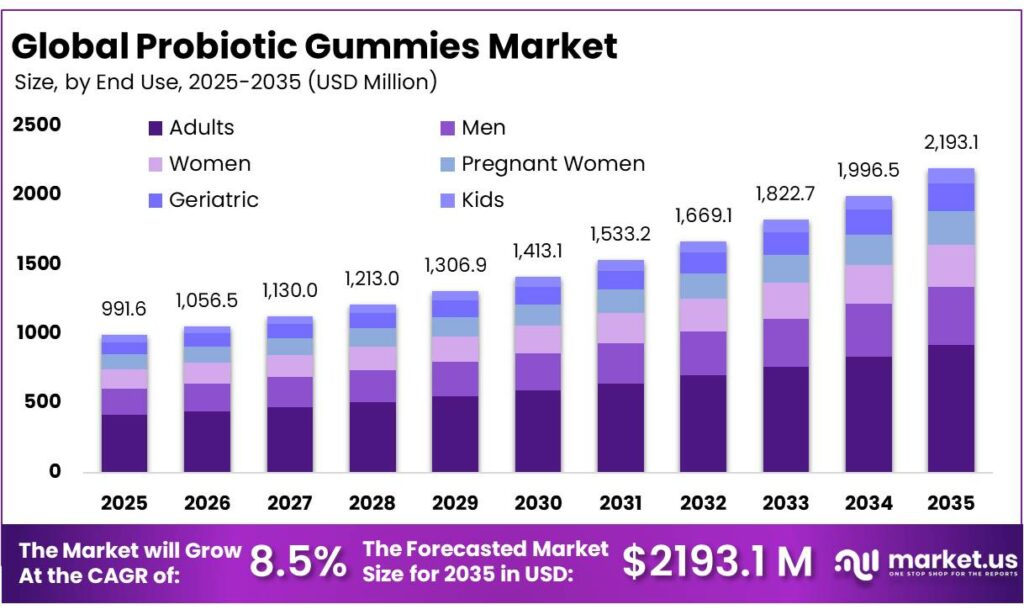
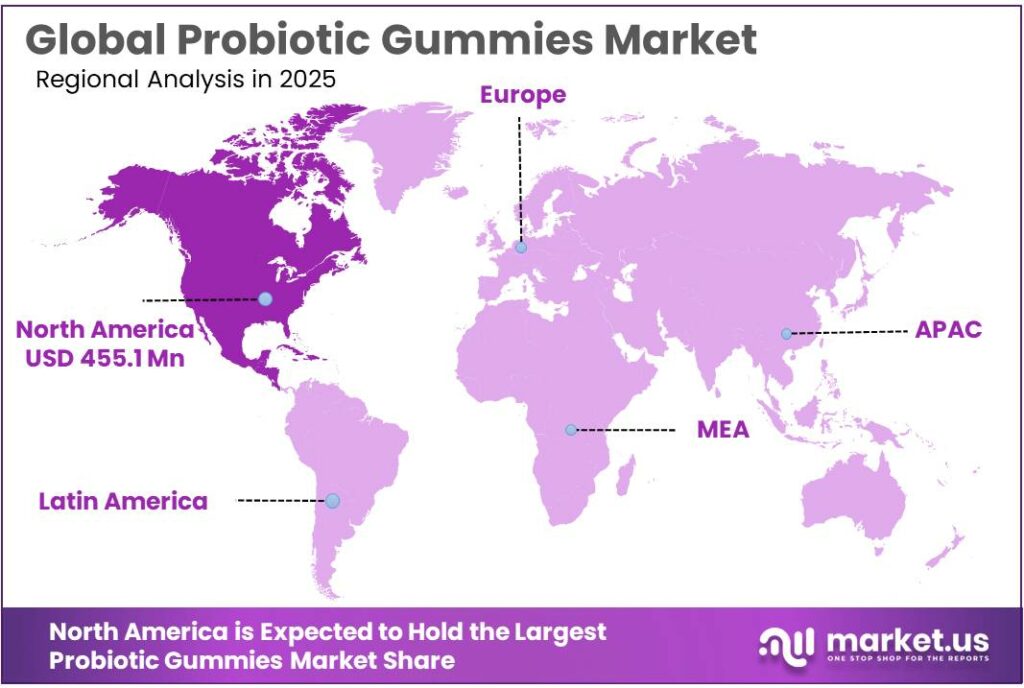
The Global Probiotic Gummies Market size is expected to be worth around USD 2,193.1 Million by 2035, from USD 991.6 Million in 2025, growing at a CAGR of 8.5% during the forecast period from 2026 to 2035. In 2025, North America held a dominant market position, capturing more than a 45.9% share, holding USD 455.1 Million revenue.
Probiotic gummies are emerging as a premium subsegment within digestive-wellness supplements because they combine live microorganisms with a consumer-friendly dosage form that improves compliance, portability, and repeat usage.
The scientific base remains important: the U.S. National Institutes of Health states that probiotics are live microorganisms that can confer health benefits when consumed in adequate amounts, while the World Health Organization continues to recommend at least 400 grams of fruit and vegetables per day as part of preventive nutrition, reinforcing the broader consumer shift toward everyday health management rather than episodic treatment.
From an industrial perspective, probiotic gummies sit at the intersection of functional foods, dietary supplements, and microbiome-oriented wellness. Demand is supported by the scale of supplement adoption: the U.S. CDC reported that 57.6% of adults aged 20 years and over used a dietary supplement in the prior 30 days in 2017–2018, while NIH’s NCCIH reported that about 4 million U.S. adults, or 1.6%, had used probiotics or prebiotics in the previous 30 days in the 2012 NHIS, with adult use having quadrupled between 2007 and 2012.
Brand positioning illustrates how the segment is evolving. Culturelle’s adult probiotic gummies are positioned with 2 billion CFUs per serving and less than 1 gram of sugar, reflecting the industry’s move toward better-for-you formulations that still deliver taste and convenience. Its women-focused gummy line further shows premiumization, combining 1 billion CFUs with 16 vitamins and minerals at a listed price of $25.99, supporting the trend toward multifunctional products that target digestive, immune, and beauty-adjacent wellness together.
On the regulatory side, future category credibility will increasingly depend on quality compliance and harmonized frameworks. In the United States, probiotic gummies sold as dietary supplements fall under 21 CFR Part 111 dietary supplement CGMP rules, while India’s FSSAI health-supplement framework covers 8 categories of functional foods, including foods containing probiotics and prebiotics.
Internationally, the 44th Codex Committee on Nutrition and Foods for Special Dietary Uses asked FAO and WHO in 2024 to review earlier probiotic guidance and develop a new work proposal, which is important because clearer definitions and evaluation standards can improve cross-border confidence, labeling discipline, and trade consistency.
Key Takeaways
- Probiotic Gummies Market size is expected to be worth around USD 2,193.1 Million by 2035, from USD 991.6 Million in 2025, growing at a CAGR of 8.5%.
- Digestive Support held a dominant market position, capturing more than a 69.4% share.
- Adults held a dominant market position, capturing more than a 42.8% share.
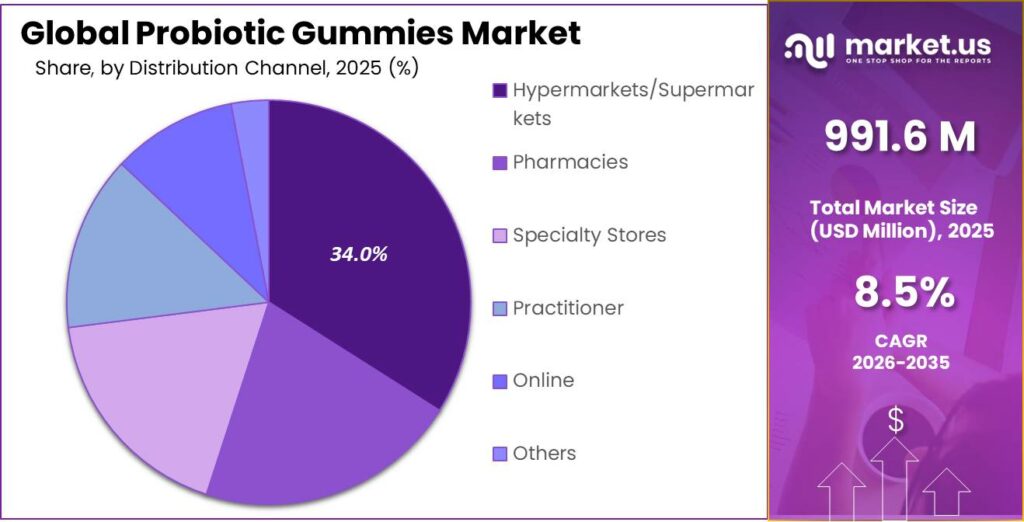
- Hypermarkets/Supermarkets held a dominant market position, capturing more than a 34.6% share.
- North America held a dominant position in the probiotic gummies market, accounting for 45.9% share, valued at USD 455.1 million.
By Application Analysis
Digestive Support dominates with 69.4% driven by rising gut health awareness and daily wellness habits
In 2025, Digestive Support held a dominant market position, capturing more than a 69.4% share. This strong lead came mainly from growing awareness around gut health and its link to overall well-being. Consumers increasingly preferred probiotic gummies as an easy and tasty way to manage common digestive issues like bloating, irregular bowel movements, and acidity. The convenience of gummies compared to traditional capsules or powders also played a big role in this segment’s growth, especially among younger users and working professionals who look for simple daily health solutions.
By End Use Analysis
Adults lead with 42.8% as daily wellness habits and convenience drive steady demand
In 2025, Adults held a dominant market position, capturing more than a 42.8% share. This was mainly because adults are more focused on maintaining overall health, especially digestion and immunity, as part of their daily routine. Probiotic gummies became a popular choice due to their ease of use and pleasant taste compared to traditional supplements. Busy lifestyles also pushed demand, as adults preferred quick and simple health solutions that fit easily into their day without the need for strict schedules or preparation.
By Distribution Channel Analysis
Hypermarkets/Supermarkets lead with 34.6% as shoppers prefer easy access and in-store product trust
In 2025, Hypermarkets/Supermarkets held a dominant market position, capturing more than a 34.6% share. This growth was largely driven by the convenience these stores offer, allowing consumers to easily find probiotic gummies during their regular grocery shopping. Many buyers prefer checking labels, ingredients, and expiry dates in person before purchasing, which made physical retail a trusted option. Attractive shelf displays, in-store promotions, and bundle offers also encouraged impulse buying, especially among first-time users.
Key Market Segments
By Application
- Digestive Support
- Immune Support
By End Use
- Adults
- Men
- Women
- Pregnant Women
- Geriatric
- Kids
By Distribution Channel
- Hypermarkets/Supermarkets
- Pharmacies
- Specialty Stores
- Practitioner
- Online
- Others
Emerging Trends
Shift toward multi-functional and advanced probiotic formulations
A major trend in the probiotic gummies market is the move toward multi-functional products that offer more than just digestive support. Consumers now expect added benefits like immunity, skin health, and even mental wellness in one product. Scientific research shows probiotics can support gut microbiota and overall health, which is pushing brands to combine them with vitamins, prebiotics, and plant extracts. At the same time, the global probiotic product market is expected to reach around $75 billion by 2025, showing strong demand for such advanced formulations.
Growing focus on natural, plant-based, and clean-label products
Another important trend is the increasing demand for clean-label and plant-based probiotic gummies. Consumers are paying more attention to ingredients, preferring products with less sugar, natural flavors, and no artificial additives. This shift is linked to the broader rise of functional foods, which are expected to reach $342.9 billion in 2026 globally. Also, traditional fermented foods already make up 5% to 40% of global food consumption, showing that people are familiar with natural probiotic sources.
The probiotic gummies market is evolving quickly as consumer expectations change. One of the most noticeable trends is how brands are focusing on innovation, not just in health benefits but also in how products are made and presented. Earlier, probiotics were mostly limited to yogurt and capsules, but now they are being transformed into convenient and enjoyable formats like gummies. This shift is closely linked to changing lifestyles, where people prefer quick and easy health solutions that fit into their daily routine without much effort.
Drivers
Rising awareness of gut health and digestion
One of the biggest reasons behind the growth of probiotic gummies is the increasing focus on gut health. People are slowly understanding that digestion is not just about food, but about overall health. According to the Food and Agriculture Organization (FAO) and the World Health Organization (WHO), probiotics are “live microorganisms which when administered in adequate amounts confer a health benefit on the host.” This simple idea has gained strong acceptance among consumers. Many now connect gut health with better digestion, less bloating, and improved daily comfort.
Government and health bodies supporting probiotic intake
Support from global health organizations has also helped build trust in probiotics. FAO highlights that probiotics play an important role in digestive, immune, and even respiratory functions, showing their wider health impact. These findings have encouraged food regulators and health agencies to promote functional foods with added benefits. In many countries, awareness campaigns around nutrition and preventive healthcare are increasing.
Probiotic gummies are gaining steady demand mainly because people are moving towards preventive healthcare. Instead of waiting for digestive problems, many are now taking small daily steps to stay healthy. Scientific studies have shown that probiotics can improve intestinal health and even help with issues like lactose intolerance and gut imbalance. This has created a strong base of trust among users.
Restraints
Concerns around safety, side effects, and vulnerable consumers
One key restraint in the probiotic gummies market is the concern around safety, especially for certain groups of people. While probiotics are generally considered safe, research shows that they may not be suitable for everyone. Reports highlight that individuals with weak immunity or underlying health conditions can face risks such as infections or adverse reactions. In rare cases, issues like bacteremia or unwanted microbial effects have been observed.
Lack of standard regulations and misleading product claims
Another major issue is the absence of strong global standards for probiotics. According to FAO and WHO, there is still no universal agreement on how probiotic products should be tested for safety and effectiveness. This creates confusion in the market. Some products claim health benefits without proper scientific backing, which affects consumer trust. In fact, studies have pointed out that many probiotic products are not always clearly linked to proven benefits.
The probiotic gummies market, while growing, still faces challenges mainly due to these concerns. Safety remains a key issue because probiotics are live microorganisms, and their interaction with the human body can vary from person to person. According to FAO/WHO guidelines, probiotic strains must go through strict evaluation to ensure they are safe and effective before being used in food products.
Opportunity
Rising demand for functional and fortified foods
One of the biggest growth opportunities for probiotic gummies comes from the increasing demand for functional foods. People no longer look at food as just basic nutrition—they expect added health benefits. According to research, probiotic-based product sales are expected to reach around $75 billion by 2025, showing how fast this category is expanding. This shift is opening doors for new formats like gummies, which are easier to consume than traditional options. As more consumers move toward health-focused diets, gummies fit naturally into this trend, especially for those who want both taste and wellness in one product.
Strong global consumption of fermented and probiotic-rich diets
Another key opportunity comes from the already strong base of fermented food consumption worldwide. Studies show that 5% to 40% of total food consumed globally is fermented, which naturally contains beneficial microorganisms. This means people are already familiar with probiotic benefits through foods like yogurt, kefir, and pickles. Probiotic gummies can build on this familiarity by offering a more convenient and modern alternative. As urban lifestyles grow busier, consumers are shifting from traditional fermented foods to easy supplements, creating a natural pathway for gummies to grow.
Government and global food organizations have also played a role in shaping this opportunity. The FAO and WHO define probiotics as live microorganisms that provide health benefits when consumed in the right amounts, which has helped build consumer trust. Their guidelines have pushed food manufacturers to improve product quality and focus on safe formulations. At the same time, public health campaigns promoting better nutrition and gut health have indirectly supported probiotic adoption.
Regional Insights
North America dominates with 45.9% share, valued at USD 455.1 Mn, driven by strong health awareness and supplement adoption
North America held a dominant position in the probiotic gummies market, accounting for 45.9% share, valued at USD 455.1 million, driven by a well-established culture of dietary supplements and functional food consumption. The region benefits from high awareness of digestive health, with consumers actively incorporating probiotics into their daily routines. In the United States alone, the probiotics market reached around USD 6.29 billion in 2025 and is expected to grow to USD 6.69 billion in 2026, reflecting steady demand across supplements and functional food categories.
Key Regions and Countries Insights
- North America
- US
- Canada
- Europe
- Germany
- France
- The UK
- Spain
- Italy
- Rest of Europe
- Asia Pacific
- China
- Japan
- South Korea
- India
- Australia
- Rest of APAC
- Latin America
- Brazil
- Mexico
- Rest of Latin America
- Middle East & Africa
- GCC
- South Africa
- Rest of MEA
Key Players Analysis
Nature’s Bounty is a major player offering affordable and widely available probiotic gummies. Its products typically deliver around 4 billion live cultures per serving, supporting digestive balance and regularity. The brand benefits from strong retail presence across supermarkets and pharmacies. With consistent pricing and easy availability, Nature’s Bounty attracts a large consumer base, especially first-time users looking for simple and effective probiotic solutions in gummy form.
Garden of Life focuses on organic and clean-label probiotic gummies, appealing to health-conscious consumers. Its products often include high-potency formulations such as 10 billion CFUs, combined with vitamins and prebiotics for added benefits. The brand also launched 7 new gummy products under its Vitamin Code line, showing continuous innovation. Its emphasis on natural ingredients and whole-food-based nutrition strengthens its position in the premium segment.
Culturelle is a well-known probiotic brand focused on clinically studied strains and daily digestive health support. Its gummy products typically contain around 2 billion CFUs per serving, along with less than 1g sugar, making them suitable for regular use. The brand is widely trusted in the U.S. and offers products for adults, kids, and families. Culturelle’s strong positioning comes from science-backed formulations and consistent product innovation, helping it maintain a stable share in the probiotic gummies segment.
Top Key Players Outlook
- Culturelle
- Florastor
- Nature’s Bounty
- SmartyPants Vitamins
- Church & Dwight Co., Inc. (Vita Fusion)
- Garden of Life
- NatureWise
- Now Foods
- The Procter & Gamble Company (Align)
- Nature Made
Recent Industry Developments
In 2025, Culturelle continued to strengthen its position in the probiotic gummies segment by focusing on clinically backed formulations and consumer-friendly formats. The brand’s gummy products typically contain around 2 billion CFUs of beneficial bacteria per serving, designed to support both digestive and immune health in a simple daily routine.
In 2025, Garden of Life continued to build a strong presence in the probiotic gummies segment by focusing on clean-label, high-potency, and multi-benefit formulations. The brand’s products typically offer between 2 billion to 10 billion CFUs per serving, depending on the variant, targeting both digestive and immune health support.
In 2025, Florastor continued to build a distinct position in the probiotic gummies segment by leveraging its unique yeast-based formulation rather than traditional bacterial probiotics. The brand’s gummy products are designed with around 1 billion CFU per serving, combined with prebiotics and added nutrients like vitamin B12 to support digestion and metabolism.









