Vietnamese businesses are increasingly turning to corporate restructuring to navigate global turbulence, including rising tariffs, supply chain disruptions, and cost pressures. This article examines how companies are adapting in practice, the legal restructuring options available, and key strategic considerations under Vietnam’s evolving insolvency framework.
Vietnam’s structural appeal to investors remains intact heading into 2026, but operating conditions are becoming more challenging amid the unfolding crisis in the Gulf region. Against this backdrop of geopolitical friction, rising logistics costs, and tightening trade barriers, businesses need more than resilience: they need structural responses.
Vietnam’s economy expanded by 8.02 percent in 2025, marking the second-highest growth rate in 15 years, with over 20 percent of GDP coming from foreign direct investment (FDI). This momentum drives Vietnam’s goal of further accelerating FDI attractiveness to achieve its ambitious growth targets.
Politburo Resolution No. 50 targets registered FDI of US$40-50 billion per year through 2030. With 16 active free trade agreements (FTAs), including the EU-Vietnam FTA (EVFTA) and the Comprehensive and Progressive Agreement for Trans-Pacific Partnership (CPTPP), Vietnam offers exporters preferential access to most of the world’s major markets.
In December 2025, the government established an International Financial Center framework under Decree No. 323/2025/ND-CP, reinforcing its ambition to deepen capital markets and attract global institutions.
These strengths remain intact, but the 2026 operating environment is materially more complex, as the ongoing crisis in the Middle East is causing major disruptions to global energy supply chains. For businesses facing higher trade, logistics, and compliance risks, corporate restructuring is becoming a practical tool for preserving resilience and repositioning for growth.
Vietnam businesses face mounting pressure in 2026
Three structural forces are reshaping the competitive landscape for Vietnamese exporters, and all are likely to persist in the near term.
Rising logistics costs
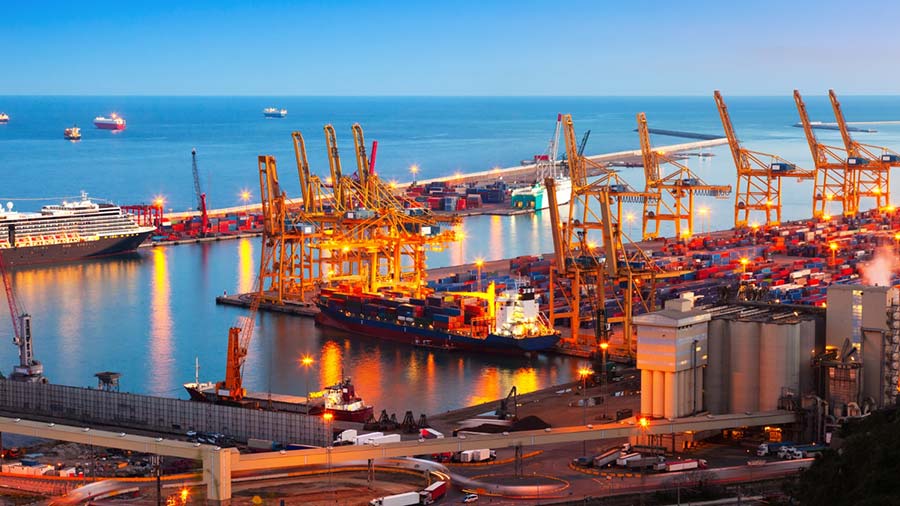
Logistics costs have remained elevated since Houthi attacks on commercial vessels in the Red Sea forced major carriers to reroute around Africa’s Cape of Good Hope from late 2023. Container traffic through the Suez Canal fell 90 percent by early 2025 compared to its 2023 peak, according to maritime analytics firm Sino Shipping. The detour adds 10 to 15 days to Asia-Europe voyages, increases fuel consumption by up to 40 percent, and has kept spot freight rates 39 to 68 percent above pre-crisis levels, according to freight analyst Xeneta.
Recent conflict escalations are worsening the situation, exposing increasing cost burdens that weaken business resilience.
Dao Trong Khoa, Chairman of the Vietnam Logistics Business Association (VLA), has noted that disrupted shipping schedules slow container circulation, compounding cash-flow risk for import-export firms. War-risk surcharges and peak-season premiums add further pressure on sectors including textiles, footwear, wood products, steel, and electronics.
Looming trade barriers
Tariff exposure remains a key challenge for businesses. Following the Supreme Court’s ruling striking down reciprocal tariffs imposed under the International Emergency Economic Powers Act (IEEPA), the Trump administration has continued efforts to reinstate broad-based tariff measures.
The US government has subsequently introduced a temporary import tariff of 10-15 percent for a 150-day period on selected goods categories. This mechanism enables authorities to impose tariffs more rapidly, bypassing the longer investigative procedures typically associated with anti-dumping and countervailing duties.
However, the 150-day timeframe should not be interpreted as a pause in policy direction. Experts emphasized that the current window represents a critical period for businesses to adopt scenario-based planning. Despite its temporary nature, the policy does not signal stability. With tariffs applied on a broad scale, close monitoring and contingency planning for the post-150-day period are increasingly important, particularly for export-oriented sectors and supply chains with complex, US-linked structures.
The US absorbed US$153.2 billion of Vietnam’s exports in 2025, up 28 percent year on year. In parallel, the EU is tightening requirements for origin verification and financial transparency, particularly for wood products, steel, and electronics.
Pressure from currency depreciation adds further
Currency pressure completes the picture. The VND has faced depreciating pressure against the US dollar, inflating import costs and USD-denominated freight payments simultaneously. For manufacturers operating on thin margins, the squeeze is sustained.
Together, these pressures are compressing margins and raising the cost of doing business, especially for exporters with high logistics exposure, imported inputs, or concentrated market dependence.
Corporate restructuring in practice: How Vietnamese companies are adapting
The 2026 Annual General Meeting (AGM) season shows that Vietnamese companies are not waiting for conditions to improve. Companies are already moving to restructure. The pattern across sectors is consistent: diversify revenue streams, restructure governance, and invest in technology and compliance.
- Digiworld Corporation is transitioning from a direct operating model to a holding company structure, separating capital management and investment oversight from its operating units. The company targets 2026 revenue of US$1.26 billion and after-tax profit of US$26.4 million, up 18 percent and 20 percent, respectively, from 2025.
- FPT Retail is building across two pillars simultaneously: expanding the Long Chau pharmacy ecosystem into prescription and next-generation pharmaceuticals, and diversifying FPT Shop’s product mix and leveraging demand for AI-integrated consumer devices. Its 2026 guidance of VND 59.5 trillion (approx. US$2.38 billion) in revenue explicitly flags geopolitical and supply chain uncertainty as operating variables.
- Southern Fertilizer JSC is concentrating on the domestic market while maintaining selective exports to Cambodia and the Philippines, managing input cost pressure from China policy volatility and elevated energy prices.
- Vietnam Timber and Forest Product Association (VIFOREST) reports active market diversification into the Middle East, India, and Australia, alongside a shift toward higher-value, sustainably certified products that meet green procurement standards in Europe and the US.
The pattern across sectors is consistent. These examples show how Vietnamese companies are linking restructuring to governance upgrades, capital allocation, and market diversification.
Why corporate restructuring is becoming a strategic priority in Vietnam
In the current environment, corporate restructuring is increasingly a proactive strategy rather than a last-stage response to distress. Beyond addressing operational pressure, companies are using restructuring to realign ownership structures, unlock capital, and reposition supply chains in response to shifting trade dynamics.
For foreign investors, this shift is particularly relevant. Restructuring can support market entry, facilitate joint ventures, or prepare entities for capital raising, while also improving governance transparency. As external risks, from tariffs to logistics disruptions, become more persistent, the ability to adapt corporate structures has become a key component of long-term competitiveness in Vietnam.
Key restructuring mechanisms available to investors
Under the Law on Enterprises 2020, companies can adopt four primary restructuring mechanisms, depending on ownership structure, capital needs, and strategic objectives:
- Merger: One or more companies are absorbed into an existing entity, with the merged companies ceasing to exist. The surviving company inherits all assets, rights, and obligations, including debts and labor contracts. Transactions triggering a combined market share of 30–50 percent require notification to the competition authority, while those exceeding 50 percent are prohibited.
- Consolidation: Two or more companies combine to form a new legal entity, with all predecessor companies dissolved upon completion. This structure is typically used to integrate complementary assets under a new vehicle and is subject to the same competition thresholds as mergers.
- Conversion: A company changes its legal form without dissolution, with the converted entity retaining all rights and obligations. Common routes include conversions between limited liability companies and joint stock companies. This mechanism is often used to facilitate capital raising or streamline ownership structures, particularly for foreign-invested enterprises.
- Separation: A company transfers part of its assets to establish one or more new entities while continuing operations. The original and new companies share liability for pre-separation obligations unless otherwise agreed. This approach is commonly used to carve out business units or isolate specific divisions.
New insolvency framework expands restructuring pathways
Vietnam’s Law on Recovery and Bankruptcy 2025 introduces a shift in approach, positioning business recovery as the primary objective rather than liquidation. This marks a significant development for investors evaluating restructuring options in the market.
Several features of the new framework are particularly relevant. Companies may initiate recovery proceedings before formal insolvency, allowing earlier intervention to preserve enterprise value. A statutory moratorium on enforcement actions provides temporary protection during restructuring, while provisions on rescue financing improve access to new capital by granting priority to post-filing funding.
Together, these mechanisms complement existing restructuring tools under enterprise law, giving businesses a broader set of options to stabilize operations and reorganize effectively. For investors and creditors, the new framework requires a reassessment of recovery timelines, enforcement strategies, and risk allocation in Vietnam-based operations.
Strategic considerations for 2026 and beyond
Reassessing risk and recovery strategies
Vietnam’s 2025 insolvency framework reshapes the risk and opportunity landscape for lenders, creditors, and investors. Businesses should review enforcement assumptions, security arrangements, and recovery timelines in light of the new legal provisions. The introduction of rescue financing priority strengthens protection for new capital, making bridge financing a more viable tool in restructuring viable but distressed entities.
Managing cross-border restructuring risks
Cross-border restructuring requires early alignment with Vietnam’s creditor protection regime. Vietnamese courts may reject foreign judgments that disadvantage local creditors, while the statutory moratorium takes precedence over external enforcement actions during recovery proceedings. Investors should ensure that regional holding structures and recovery strategies are designed with these constraints in mind from the outset.
Ensuring labor law compliance
Labor obligations remain a critical component of any restructuring plan. Companies undertaking structural or economic reorganization must implement a formal labor utilization plan, covering workforce retention, retraining, or compensation. The associated costs and procedural timelines should be factored into transaction planning, particularly for foreign investors.
Preparing for evolving regulatory pressures
Emerging regulatory frameworks are increasingly shaping market access conditions. Mechanisms such as the EU Carbon Border Adjustment Mechanism (CBAM), alongside stricter US supply chain transparency requirements, are expected to function as non-tariff barriers. The Vietnam Chamber of Commerce and Industry has emphasized that digitalization and green transformation are long-term strategic priorities. Companies investing early in traceable, low-emission supply chains and ESG-aligned reporting will be better positioned as these standards become mandatory.
Positioning for the next growth phase
As external volatility persists, the focus shifts from short-term resilience to structural readiness. Companies that proactively strengthen governance, optimize capital structures, and align with evolving compliance requirements will be better placed to protect value and compete in Vietnam’s next phase of growth.
(With input from Vu Nguyen Hanh.)